Is Power Electronics News Defining How Agile Data Center Power Evolves
The Future of Data Center Power Is Agile
The next generation of data centers is defined by agility. Traditional static power systems are giving way to intelligent, modular, and software-defined infrastructures that respond instantly to load variations. This shift is driven by artificial intelligence workloads, renewable integration, and the rising cost of inefficiency. Agility in power infrastructure is no longer optional—it’s the foundation for scalability, sustainability, and operational resilience in a digital-first world.
The Shifting Landscape of Data Center Power Infrastructure
The rapid evolution of computing models has transformed how data centers consume and manage energy. From hyperscale facilities to edge nodes, every design decision now revolves around balancing density, efficiency, and adaptability.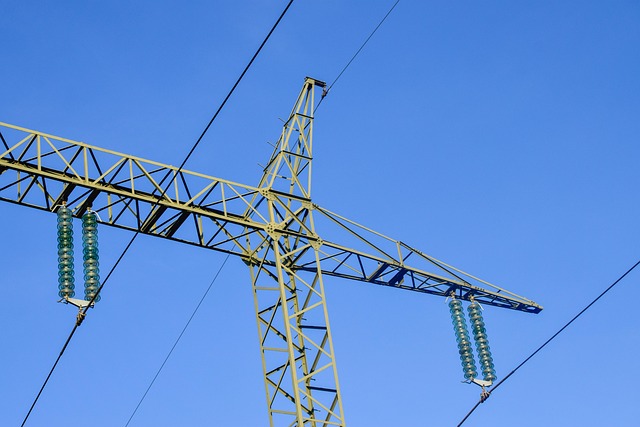
Evolving Demands on Modern Data Centers
AI training clusters and high-performance cloud workloads have pushed power densities beyond 30 kW per rack in some facilities. This intensity demands precision cooling and electrical distribution capable of scaling without downtime. Energy efficiency has become a strategic metric rather than a compliance checkbox. Operators are adopting liquid cooling, direct DC power paths, and intelligent load balancing to reduce conversion losses. Agile systems—those that can flex with fluctuating demand—are essential for maintaining uptime while cutting waste.
The Role of Power Electronics in Data Center Transformation
Power electronics underpin this transformation. Advanced converters and rectifiers reduce energy loss during AC/DC transitions, while modular topologies allow incremental capacity expansion without overhauling entire systems. Digital control loops now monitor voltage stability in real time, preventing cascading faults across distributed nodes. These innovations make it possible to operate closer to maximum efficiency thresholds without compromising reliability or safety.
How Power Electronics News Reflects Industry Evolution
Industry publications serve as both mirrors and catalysts for technological change. The narratives they highlight often shape where investment flows next.
Trends Highlighted in Power Electronics News Publications
Recent coverage in power electronics news emphasizes wide-bandgap materials like silicon carbide (SiC) and gallium nitride (GaN), which enable higher switching frequencies and smaller form factors. There’s also strong focus on intelligent power modules integrating sensors and microcontrollers for predictive control. Another recurring theme is renewable integration—how data centers can interact dynamically with the grid through smart inverters and storage interfaces.
Influence of Industry Reporting on Technological Direction
Media analysis plays an underrated role in steering innovation priorities. When journals highlight a new semiconductor process or UPS topology, it validates research directions for manufacturers and investors alike. Breakthrough stories accelerate adoption cycles by reducing perceived risk among early adopters. Continuous reporting also keeps R&D aligned with market realities rather than purely theoretical goals.
The Emergence of Agile Power Architectures in Data Centers
Agility has become the defining trait of modern infrastructure design. It’s not just about speed—it’s about resilience under uncertainty.
Defining Agility in Power Infrastructure Design
Agile power means being able to reconfigure electrical pathways or capacity allocation within minutes instead of months. Modular uninterruptible power supply (UPS) systems exemplify this: operators can add or remove modules as loads grow or shrink. Software-defined power layers abstract physical circuits into programmable resources that respond automatically to telemetry signals from servers or cooling units.
Engineering Principles Behind Agile Systems
Decentralized control architecture eliminates single points of failure common in legacy centralized designs. Each node—whether a rack-level converter or battery pack—can make autonomous adjustments based on local measurements while staying synchronized through digital communication protocols like IEC 61850 or Modbus TCP/IP. Dynamic voltage regulation maintains performance even when demand fluctuates rapidly during AI inference bursts or backup transitions.
Technological Innovations Driving the Next Phase of Power Agility
The technologies enabling agility are maturing fast, led by semiconductor advances and pervasive digitalization across electrical ecosystems.
Wide-Bandgap Devices Enabling Efficiency Gains
SiC MOSFETs and GaN transistors dramatically cut switching losses compared to traditional silicon IGBTs. Their ability to operate at higher frequencies allows smaller inductors and capacitors, shrinking overall footprint while improving transient response times. Despite cost barriers and packaging challenges, their adoption curve mirrors that of LEDs two decades ago—slow at first but inevitable once economies of scale take hold.
Digitalization and Software Control in Power Management
Digital controllers now orchestrate distributed energy assets with millisecond precision. Firmware updates can roll out new algorithms without changing hardware—a crucial advantage when uptime expectations exceed 99.999%. Integrated analytics platforms correlate energy metrics with IT workloads, revealing inefficiencies invisible to manual monitoring. As IEEE standards evolve toward unified digital twins for power systems, this convergence will only deepen.
Sustainability as a Core Driver of Agile Power Evolution
Environmental responsibility is no longer separate from performance; it defines competitiveness itself.
Integrating Renewable Energy Sources into Data Center Operations
Many hyperscale operators deploy on-site solar arrays or contract wind farms through long-term PPAs to offset carbon intensity. Smart inverters manage bidirectional flow between renewables, batteries, and grid supply while maintaining phase synchronization within milliseconds per IEC 61000-3-2 standards. Hybrid AC/DC microgrids allow facilities to ride through grid disturbances seamlessly—a capability increasingly valued amid global energy volatility.
Energy Storage as a Catalyst for Flexibility and Reliability
Battery technology has moved far beyond simple backup roles. Lithium-ion remains dominant due to its maturity, but sodium-ion and solid-state chemistries promise safer operation at lower cost per cycle. Integrated battery management systems (BMS) communicate directly with UPS controllers to coordinate charge-discharge patterns that extend lifespan while supporting peak shaving during high-tariff periods.
Strategic Implications for Industry Stakeholders
Every stakeholder—from component supplier to policy maker—faces new expectations shaped by agile paradigms.
For Equipment Manufacturers and Designers
Manufacturers must prioritize interoperability across modular components so operators can mix vendors without costly redesigns. Lifecycle efficiency metrics such as total harmonic distortion (THD) reduction or mean time between failures (MTBF) now influence procurement decisions more than upfront price tags. Collaboration between semiconductor producers and system integrators accelerates converter innovation cycles through shared simulation models validated against IEEE 1515 test procedures.
For Data Center Operators and Policy Makers
Regulators are beginning to adapt frameworks around hybrid topologies that blur lines between consumer load and active grid participant. Incentives tied to energy performance indices encourage investment in adaptive infrastructure rather than static redundancy models. Technical journalism continues playing a subtle yet powerful role by translating complex engineering progress into actionable insights for global markets—a feedback loop critical for sustained innovation momentum.
FAQ
Q1: What makes agile power different from traditional data center designs?
A: Traditional systems rely on fixed capacity planning with limited flexibility, while agile architectures use modular hardware and software-defined controls that scale instantly with workload changes.
Q2: Why are SiC and GaN devices considered game changers?
A: They offer higher efficiency at elevated voltages and frequencies, enabling smaller converters with less heat generation—ideal for high-density environments.
Q3: How do renewables integrate into data center grids?
A: Through smart inverters that synchronize renewable output with grid frequency while managing bidirectional flow between batteries, generators, and utility feeds.
Q4: What role does software play in modern UPS systems?
A: Software enables real-time diagnostics, predictive maintenance alerts, remote configuration updates, and adaptive load sharing across distributed nodes.
Q5: Are agile power systems cost-effective long term?
A: Yes; though initial capital costs may be higher due to advanced components, reduced downtime risk and improved energy utilization typically yield faster payback within three to five years depending on facility scale.