Could Faulty Capacitor For Ceiling Fan Be Linked To The Panjab University Incident
Panjab University Student Hurt as Ceiling Fan Falls on Him in Classroom
A ceiling fan collapsing in a Panjab University classroom has raised serious concerns about maintenance standards and electrical safety in educational institutions. The incident, which left one student injured, points to potential neglect in inspection routines and component aging. Early reports suggest that while structural fatigue may have been the immediate cause, electrical irregularities such as a degraded capacitor for ceiling fan operation could have contributed to long-term vibration and stress. This event underscores the need for integrated mechanical and electrical audits across campus facilities.
Overview of the Panjab University Ceiling Fan Incident
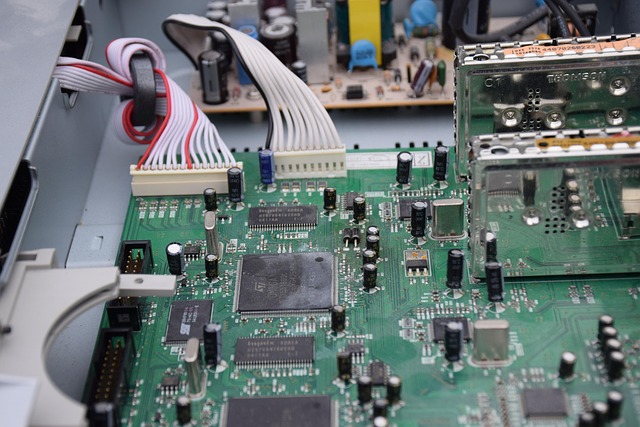
The accident at Panjab University serves as a case study in how aging infrastructure, deferred maintenance, and overlooked electrical components can converge into a safety hazard.
Summary of the Reported Event
The incident occurred during a regular class when a ceiling fan detached from its mounting and struck a student seated below. Witnesses described the collapse as sudden, with no prior signs of instability. The university administration responded by suspending classes in nearby rooms and initiating an internal inquiry into maintenance records. Immediate medical assistance was provided to the injured student, who sustained minor head injuries but was reported to be stable after treatment.
Context of the Incident Within Campus Infrastructure and Maintenance Practices
Panjab University’s campus includes several mid-century buildings where many fixtures date back decades. Routine inspections often focus on visible wear rather than internal electrical integrity. In such settings, even small imbalances or loose fittings can accumulate stress over time. The event highlights how resource constraints and fragmented responsibilities between departments can delay preventive maintenance actions.
Immediate Response and Institutional Reaction Following the Event
Following the incident, university officials ordered a comprehensive audit of all ceiling fans across departments. Contractors were instructed to verify both mechanical anchoring and capacitor health before reinstallation. Public statements emphasized student safety as a top priority, though many faculty members questioned whether prior complaints about flickering fans or unusual noise had been ignored.
Examination of Possible Technical Failures
To assess what went wrong technically, it is necessary to examine both mechanical assembly and electrical performance since these systems interact closely during operation.
Potential Mechanical and Electrical Causes Behind Ceiling Fan Detachment
A ceiling fan’s stability depends on balanced rotation, secure mounting bolts, and consistent torque delivery from its motor. If any of these parameters deviate—due to worn bearings or capacitor failure—the resulting oscillation can loosen joints over time. Vibration-induced fatigue at the junction between downrod and hook plate is one of the most common precursors to detachment.
Role of Regular Inspection and Preventive Maintenance in Avoiding Such Accidents
Preventive maintenance programs should include torque testing of fasteners, insulation resistance checks, and capacitor value measurement under load conditions. Industry best practices recommend biannual inspection cycles for institutional buildings where continuous operation accelerates wear. Documentation of each inspection provides traceability for safety compliance audits.
Common Points of Failure in Ceiling Fan Installations in Institutional Buildings
Frequent failure points include corroded suspension rods, stripped threads on mounting clamps, cracked canopy plates, or degraded wiring insulation near terminals. Electrical faults like shorted windings may cause overheating that weakens adjacent metallic parts through expansion cycles.
Understanding the Function of a Capacitor in Ceiling Fans
To determine whether an electrical fault could have contributed indirectly to structural failure, it is crucial to analyze how capacitors influence fan performance.
Electrical Role of a Capacitor for Ceiling Fan Operation
A capacitor for ceiling fan use creates phase shift between current flows in auxiliary and main windings of the single-phase induction motor. This phase difference generates starting torque that initiates blade rotation. Once running, the same capacitor stabilizes speed by maintaining voltage balance across coils. If capacitance drops significantly due to dielectric breakdown, torque becomes irregular and vibration amplitude increases.
Relationship Between Capacitor Efficiency, Motor Performance, and Vibration Levels
Efficient capacitors maintain uniform magnetic fields within motor coils. When capacitance drifts below nominal values—often around 2 µF to 4 µF for domestic models—motor slip rises sharply. The resulting pulsating torque produces low-frequency vibration that propagates through mounting hardware. Over months or years, these micro-oscillations may loosen nuts or damage plaster ceilings supporting anchor hooks.
Impact of Capacitor Degradation on Current Flow and Motor Heating
A failing capacitor alters current distribution within windings, causing unbalanced magnetic pull that raises temperature at specific stator points. Elevated heat accelerates insulation decay and can indirectly affect mechanical stability by softening polymer bushings used in suspension joints.
Types and Specifications of Capacitors Used in Ceiling Fans
Different capacitor designs serve distinct operational stages within single-phase motors used in ceiling fans.
Overview of Start Capacitors Versus Run Capacitors in Single-Phase Induction Motors
Ceiling fans typically employ run capacitors rather than start types because they require continuous phase shift during operation rather than short-term starting assistance. Run capacitors use metallized polypropylene film capable of enduring continuous AC voltage without significant loss over time.
Typical Capacitance Values and Tolerance Ranges for Domestic Ceiling Fans
Most domestic ceiling fans operate efficiently with capacitors rated between 2 µF to 6 µF at 440V AC with ±5% tolerance. Deviations outside this range reduce efficiency or introduce humming noise due to phase imbalance between windings.
Influence of Capacitor Quality Standards on Fan Reliability and Safety Compliance
Capacitors certified under IEC 60252-1 or IS 2993 standards undergo endurance testing at elevated temperatures to simulate long-term use conditions. Using uncertified components increases risk not only of premature failure but also potential fire hazards due to dielectric rupture under voltage spikes.
Investigating Whether a Faulty Capacitor Could Contribute to Structural Failure
While mechanical faults are usually blamed for falling fans, subtle electrical irregularities might accelerate deterioration through vibration transfer mechanisms.
Electrical Malfunction Leading to Mechanical Stress
When a capacitor partially fails, alternating torque fluctuations generate cyclical stress on bearings and mounting bolts. Over prolonged exposure, even minor imbalances create resonance frequencies matching structural natural modes of ceilings or rods—eventually leading to crack propagation around anchor points.
The Cumulative Effect of Prolonged Vibration on Mounting Brackets or Suspension Rods
Repeated oscillation acts like slow-motion fatigue testing: microscopic fractures expand until metal yields under normal load weight alone. In older installations where rod threads are rusted or misaligned, this process accelerates dramatically once damping materials harden with age.
Correlation Between Electrical Instability and Mechanical Fatigue Over Time
Electrical instability from fluctuating current flow translates directly into uneven rotational inertia forces acting on blades and shafts. Continuous exposure causes cumulative deformation around bolt holes that might not be visible externally until catastrophic separation occurs.
Other Contributing Factors Beyond the Capacitor Issue
While an aged capacitor could initiate imbalance, broader systemic issues often amplify its impact within institutional environments.
Role of Installation Integrity, Fastener Strength, and Ceiling Material Condition
Improperly sized hooks or substandard fasteners may fail under dynamic loads even if other components function normally. In some classrooms built decades ago using lime plaster ceilings instead of reinforced concrete slabs, anchor pullout strength remains insufficient for modern high-speed fans.
Influence of Environmental Factors Such as Humidity, Corrosion, or Dust Accumulation
High humidity levels typical in northern Indian climates promote corrosion at threaded joints while dust accumulation inside housings disrupts airflow cooling paths around motors—both contributing indirectly to thermal expansion stress cycles that weaken mounts over time.
Maintenance Oversight as a Potential Amplifier of Minor Electrical or Structural Defects
Without systematic recordkeeping or qualified supervision by certified engineers, minor anomalies like humming sounds often go uninvestigated until failure occurs. Institutions relying solely on reactive repairs instead of predictive monitoring face higher cumulative risk across large inventories of fixtures.
Safety Protocols and Preventive Measures for Ceiling Fan Installations
Robust preventive frameworks combining electrical diagnostics with structural inspections are essential for avoiding recurrence incidents similar to Panjab University’s case.
Inspection Standards for Electrical Components in Fans
Capacitor performance should be tested annually using capacitance meters under operational voltage conditions rather than idle measurements alone since dielectric loss factors vary with load temperature. Visual signs like bulging casings or oil leakage indicate impending failure requiring immediate replacement with certified parts bearing ISI marks or equivalent international approvals.
Structural Safety Checks for Mounting Systems
Installation teams must verify alignment angles between downrod axes and ceiling planes before tightening couplers; any deviation beyond two degrees increases lateral load significantly during rotation cycles. Periodic tightening combined with lubrication reduces oscillation amplitude that otherwise accelerates metal fatigue near joints.
Integration of Electrical Safety Audits With Structural Maintenance Schedules
Merging both audit types into unified digital logs allows cross-referencing between component age profiles (like capacitors) and physical inspection outcomes (like bracket wear). Such integration supports predictive analytics capable of identifying high-risk units before physical symptoms appear.
Broader Implications for Institutional Infrastructure Management
The incident reveals systemic weaknesses not limited to one classroom but reflective of broader facility management challenges across public universities nationwide.
Enhancing Maintenance Policies in Educational Institutions
Institutions should formalize preventive schedules specifying inspection intervals based on equipment age rather than fixed calendar dates alone. Training custodial staff to recognize early warning signs such as flickering lights or wobbling fans enables faster escalation before accidents occur.
Training Maintenance Personnel To Identify Early Warning Signs in Electrical Fittings
Technicians must learn how subtle acoustic changes signal deteriorating bearings or unbalanced magnetic fields caused by failing capacitors—skills rarely covered during basic electrician training but vital for high-density environments like classrooms filled daily with students.
Implementing Digital Asset Management Systems To Track Repair Histories And Safety Compliance
Modern asset tracking software can log installation dates, component replacements (including every capacitor for ceiling fan units), inspection results, and responsible technician names—creating accountability loops essential for institutional transparency during audits or inquiries after incidents occur.
Encouraging Accountability Through Engineering Oversight
Beyond procedures lies human responsibility: oversight by qualified professionals ensures consistency between design intent and field execution quality levels expected under engineering ethics codes such as IEEE guidelines on public safety assurance frameworks.
The Role Of Certified Electrical Engineers In Approving Installation Designs And Materials
Every new installation should receive sign-off from licensed engineers verifying load calculations against ceiling structure ratings while confirming use only of compliant materials tested per relevant IEC standards covering both mechanical anchorage strength (IEC 60364) and motor component reliability (IEC 60034).
Importance Of Third-Party Auditing To Ensure Adherence To Safety Codes And Standards
Independent audits provide unbiased evaluation free from internal administrative pressure; periodic external certification reinforces credibility among stakeholders including parents concerned about campus infrastructure safety integrity following incidents like this one at Panjab University.
Promoting Awareness About Component Quality Control Among Procurement Departments
Procurement teams must prioritize sourcing from verified manufacturers whose capacitors meet endurance benchmarks defined by international standardization bodies; cost-saving substitutions often compromise long-term reliability leading eventually toward avoidable hazards similar seen here.
FAQ
Q1: What immediate steps should institutions take after such an incident?
A: Suspend operations in affected areas immediately, inspect all similar fixtures campus-wide, document findings digitally, replace any suspect components including capacitors showing wear signs before reopening rooms.
Q2: How often should ceiling fan capacitors be replaced?
A: Typically every five years depending on usage hours; earlier if measured capacitance deviates more than ten percent from rated value under full operating voltage conditions.
Q3: Can vibration alone cause a ceiling fan fall?
A: Yes; persistent unbalanced rotation generates cyclic stress exceeding fatigue limits even without overt structural damage initially visible externally.
Q4: Why are certified components critical?
A: Certified parts undergo standardized endurance tests ensuring predictable behavior under thermal cycling preventing unexpected failures common among counterfeit imports lacking compliance documentation.
Q5: What role does humidity play in such failures?
A: High humidity accelerates corrosion reducing thread friction coefficients thus lowering holding strength especially when combined with temperature fluctuations typical inside non-air-conditioned classrooms.