
How Automotive Electronics News Reflects the Rise of ADAS in Indian Mobility
How ADAS Sensors and Automotive Electronics Are Changing Indian Mobility
India’s mobility sector is shifting from mechanical engineering to digital intelligence. Automotive electronics now form the core of this transformation, driving safer, cleaner, and more connected vehicles. The rapid adoption of Advanced Driver Assistance Systems (ADAS) is reshaping how vehicles interact with both drivers and infrastructure. These technologies are no longer limited to premium cars; they are reaching mid-range models through localization and cost innovation. As government policies encourage electrification and connectivity, ADAS sensors—radar, cameras, LiDAR, and ultrasonic systems—are becoming the foundation for India’s next phase of smart mobility.
The Growing Role of Automotive Electronics in Indian Mobility
The evolution of automotive electronics in India has been steady but transformative. Over the past decade, vehicles have transitioned from being mechanically driven to electronically managed machines that rely on complex sensor networks and embedded control units.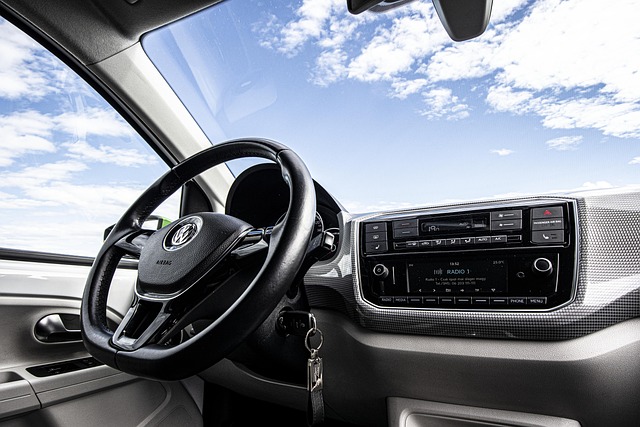
Evolution of Vehicle Electronics in India
Indian automakers have moved from basic electronic control units (ECUs) for engine management to integrated systems that coordinate braking, steering, and infotainment. This shift mirrors global trends where digital architectures dominate vehicle design. Modern cars now feature dozens of ECUs communicating over high-speed networks such as CAN or Ethernet. The integration of sensors—accelerometers, gyroscopes, proximity detectors—has made diagnostics faster and performance more predictable. Global influence is evident in the rise of software-defined vehicles being assembled locally with imported chipsets but increasingly programmed by Indian engineers.
Market Drivers for Advanced Automotive Electronics
Several forces push this transformation forward. Government programs such as FAME II promote electric mobility and encourage the inclusion of connected features for safety compliance. Consumers expect comfort and efficiency comparable to global markets; hence adaptive lighting, automatic parking assist, and real-time navigation are becoming standard even in compact models. Local R&D centers established by major OEMs collaborate with semiconductor firms to develop region-specific solutions that balance cost with reliability. This ecosystem supports a surge in innovation reported across automotive electronics news outlets focusing on India’s growing role in global supply chains.
ADAS: The Technological Core of Modern Mobility
As vehicles become smarter, ADAS emerges as their most visible intelligence layer. It blends hardware precision with software analytics to interpret surroundings and assist drivers under complex conditions.
Understanding ADAS and Its Components
ADAS includes features such as adaptive cruise control that maintains distance from the vehicle ahead, lane departure warning that alerts when drifting occurs, and automatic emergency braking that prevents collisions. These systems rely on multiple sensing modalities—radar for distance measurement, LiDAR for 3D mapping, cameras for visual cues, and ultrasonic sensors for near-field detection. Sensor fusion algorithms combine these inputs into a single environmental model enabling reliable decision-making even when one sensor type fails or misreads data.
Integration Challenges in Indian Driving Conditions
Indian roads present a unique challenge for ADAS calibration due to inconsistent lane markings, mixed traffic patterns, and unpredictable pedestrian behavior. AI models trained on Western datasets often misinterpret local scenarios like two-wheelers weaving between lanes or animals crossing highways. To address this, automakers collect region-specific datasets using test fleets across diverse terrains—from monsoon-soaked highways to dusty rural routes—to refine perception accuracy. Sensor housings are being redesigned with hydrophobic coatings and temperature-resistant materials to maintain performance amid heat and humidity variations typical of Indian climates.
How Automotive Electronics News Mirrors the Rise of ADAS Adoption
Media coverage often reflects technological maturity before mass adoption occurs. In India’s case, industry reports highlight how ADAS has moved from concept demonstrations to commercial pilots within a few years.
Trends Highlighted by Industry Coverage
Automotive electronics news frequently discusses breakthroughs in radar-on-chip design and software-defined vehicle platforms that allow remote updates via over-the-air connections. Collaborations between OEMs and Tier 1 suppliers dominate headlines as companies race to secure semiconductor partnerships amid global chip shortages. Policy discussions around autonomous-ready frameworks further emphasize how regulators view driver assistance as a stepping stone toward future automation rather than an isolated feature set.
Media Insights into Market Readiness
Reports show pilot programs testing Level 1–2 autonomy features like adaptive cruise control in cities such as Pune or Bengaluru where traffic data density supports algorithm training. Analysts note that while consumers appreciate convenience features like parking assist or blind-spot monitoring, trust remains low for full automation due to unpredictable road users. Cost remains another concern; therefore manufacturers focus on modular architectures allowing selective activation of premium functions through software licensing rather than expensive hardware bundles.
The Interplay Between Connectivity, Data, and Safety Systems
Connected mobility forms the backbone for scaling ADAS capabilities beyond what onboard sensors can perceive. Data exchange between vehicles and infrastructure enhances predictive safety measures critical for dense urban environments.
Role of Telematics and V2X Communication in Enhancing ADAS Performance
Telematics units enable real-time communication between vehicles (V2V) or with infrastructure (V2I), extending awareness beyond direct line-of-sight sensors. When combined with cloud analytics platforms processing fleet-wide data streams, predictive alerts can warn drivers about hazards before they appear visually—like sudden braking ahead or slippery road sections detected by other vehicles’ traction systems. Integration projects under smart city initiatives link roadside cameras with vehicle ECUs through standardized protocols improving cooperative safety responses during congestion or emergencies.
Cybersecurity Implications in Advanced Automotive Electronics
As connectivity grows, so does vulnerability. Each ECU linked via wireless channels becomes a potential entry point for cyberattacks targeting sensor data manipulation or unauthorized control commands. Manufacturers adopt encryption standards aligned with ISO/SAE 21434 guidelines focusing on secure communication protocols across vehicle networks. Risk assessment frameworks now form part of homologation processes ensuring not only mechanical safety but also digital integrity before market release.
The Future Landscape of ADAS Development in India
The trajectory toward higher autonomy depends on local innovation capacity combined with regulatory clarity and infrastructure readiness.
Localization Strategies for Sensor Technologies
India’s push toward self-reliance under its semiconductor mission encourages domestic production of radar modules and camera chips used in ADAS suites. Partnerships between universities and industry aim to design cost-efficient architectures optimized for local road conditions rather than replicating imported designs meant for Western highways. This localization reduces dependency on imports while fostering specialized talent capable of sustaining long-term R&D momentum within the country’s manufacturing ecosystem.
Path Toward Higher Levels of Autonomy in Indian Contexts
Full autonomy remains distant but incremental progress continues through assisted-driving deployments supported by updated vehicle safety norms under AIS standards. Infrastructure modernization—smart traffic lights, consistent signage—is crucial before advanced automation becomes viable nationwide. Fleet operators experimenting with driver-assist trucks already report fuel savings from smoother acceleration patterns guided by semi-autonomous controls hinting at broader commercial benefits once technology scales across logistics networks.
FAQ
Q1: What factors are accelerating the adoption of automotive electronics in India?
A: Policy incentives promoting electric mobility, rising consumer demand for connected features, and growth in domestic R&D facilities collectively drive adoption across all vehicle segments.
Q2: Why is localization important for ADAS sensor development?
A: Localization lowers costs by tailoring sensor designs to regional needs while building domestic expertise essential for sustaining supply chains independent of imports.
Q3: How do telematics improve driver assistance performance?
A: By sharing real-time data among vehicles and infrastructure nodes, telematics expand situational awareness beyond what onboard sensors detect alone.
Q4: What cybersecurity measures protect modern automotive electronics?
A: Manufacturers implement encryption standards based on ISO/SAE 21434 ensuring secure communication among ECUs against external interference or unauthorized access.
Q5: When will fully autonomous vehicles become common on Indian roads?
A: Gradual deployment will follow improvements in infrastructure consistency and regulatory approval; widespread use may still take several years given current variability in driving environments.