How Does CBB65 Capacitor Performance Change Under Continuous Load
New Research Explores Durability of CBB65 Capacitors Under Load
Recent studies on the CBB65 capacitor reveal that its durability under continuous load depends heavily on dielectric stability, heat dissipation, and environmental sealing. Data from endurance testing show that metallized polypropylene film capacitors maintain performance for thousands of hours when operated within rated conditions. However, prolonged exposure to elevated temperature or overvoltage accelerates degradation mechanisms such as ESR growth and capacitance drift. The research concludes that optimizing metallization patterns and casing integrity significantly extends service life in HVAC and industrial motor applications.
Structure and Function of CBB65 Capacitors
The CBB65 capacitor is widely used in motor circuits where both reliability and thermal endurance are critical. Its structural design directly determines how it responds to electrical stress during long-term use.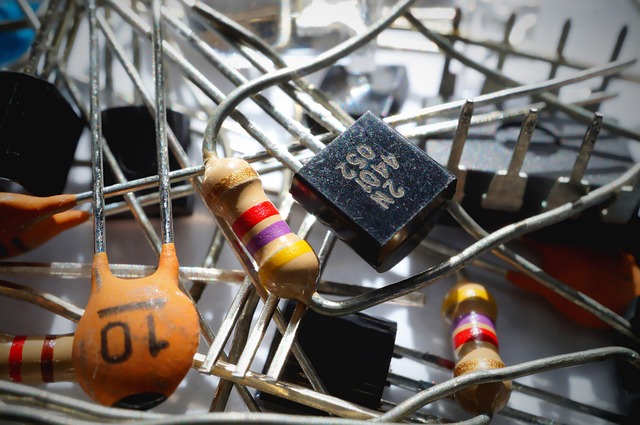
Key Design Characteristics of CBB65 Capacitors
CBB65 capacitors are built with metallized polypropylene film enclosed in a hermetically sealed aluminum case filled with insulating resin. This construction provides high insulation resistance and low dielectric loss, making them ideal for AC motor start and run functions. The metallization layer allows self-healing when minor dielectric breakdowns occur, preventing catastrophic failure. These capacitors typically feature dual terminals for connection flexibility in compressor or fan motors.
Electrical and Thermal Operating Parameters
The rated voltage for most CBB65 units ranges between 250V and 450V AC, aligning with common single-phase motor systems. They operate effectively from -40°C to +85°C depending on insulation class. Capacitance stability varies slightly with frequency, voltage stress, and ambient temperature changes. For example, at higher frequencies, dielectric losses increase marginally due to molecular polarization lag within the polypropylene film.
Mechanisms Affecting Performance Under Continuous Load
When subjected to continuous AC operation, internal electrical fields repeatedly stress the dielectric material. Over time, this repetitive cycling leads to molecular fatigue within the polymer film.
Dielectric Stress and Energy Dissipation
Each AC cycle imposes an alternating electric field across the dielectric layer. This repetitive charge–discharge process generates minor energy losses manifested as heat. In micro-defected regions of the film, partial discharge events can occur, forming localized hot spots that accelerate aging. The cumulative effect increases the risk of insulation weakening even if no immediate breakdown occurs.
Thermal Aging Processes in Continuous Operation
During sustained load conditions, internal heating caused by dielectric losses raises core temperature beyond ambient levels. Elevated temperature accelerates oxidation of metallized surfaces and polymer chain scission within the film substrate. Although the self-healing mechanism burns away damaged spots to restore insulation, repeated events gradually erode metallization thickness, diminishing overall self-repair capability over years of use.
Electrical Degradation Patterns Observed in Long-Term Use
Electrical degradation manifests through measurable parameters such as capacitance reduction and ESR increase. Monitoring these indicators helps predict remaining service life.
Capacitance Drift Over Extended Operation
Capacitance drift occurs as the effective electrode area shrinks due to loss of metallization or polymer embrittlement. In long-term tests exceeding 10,000 hours at rated voltage, typical drift remains below 5%, though severe thermal stress can double this rate. Drift magnitude correlates strongly with duty cycle intensity—continuous-duty systems experience faster decline than intermittent ones.
Increase in Equivalent Series Resistance (ESR)
As contact interfaces oxidize or lose compression over time, ESR gradually rises. A higher ESR causes additional joule heating during current flow, reinforcing a feedback loop where more heat accelerates further resistance growth. This process often defines end-of-life criteria for motor capacitors since excessive ESR leads to efficiency loss or circuit imbalance.
Influence of Environmental Conditions on Load Performance
Environmental exposure plays a decisive role in determining how well a CBB65 capacitor maintains stability over its operational lifetime.
Temperature and Humidity Effects on Durability
High humidity environments can compromise sealing integrity around terminals or casing joints. Moisture ingress into the dielectric film increases leakage current while reducing insulation resistance by several orders of magnitude. Repeated thermal cycling—such as daily HVAC start-stop sequences—induces mechanical expansion mismatches among aluminum casing, epoxy resin filler, and wound film layers, leading to micro-gaps that invite further moisture penetration.
Vibration and Mechanical Stress Factors
In industrial compressors or air conditioning units mounted on vibrating frames, mechanical stress affects terminal connections and internal windings. Repeated vibration may loosen electrode tabs or deform winding geometry slightly, altering electric field distribution inside the capacitor roll. Such structural shifts eventually reflect as irregular capacitance readings or intermittent contact failures during operation.
Evaluating Longevity Through Accelerated Testing Methods
Manufacturers rely on accelerated life testing to simulate years of service within controlled laboratory periods lasting weeks or months.
Endurance Testing Under Rated Load Conditions
Endurance tests apply rated voltage continuously at elevated temperatures—often around 70°C—to replicate harsh field conditions. Parameters such as capacitance retention, ESR evolution, and insulation resistance are recorded periodically until deviation exceeds specified limits (for instance ±5% capacitance change). These datasets allow engineers to estimate mean time to failure (MTTF) for different application classes like continuous-duty fans versus intermittent pumps.
Overload and Surge Voltage Assessment
Beyond steady-state testing, surge voltage experiments expose capacitors to transient spikes exceeding nominal ratings by up to 20%. Such tests identify breakdown thresholds within the dielectric structure and evaluate resilience against common power anomalies like switching surges or lightning-induced transients in outdoor installations. Results define safe operating margins critical for industrial compliance with IEC 60252-1 standards governing AC motor capacitors.
Practical Implications for Design and Application Optimization
Insights from durability research guide both manufacturers and system designers toward improved reliability strategies suited for real-world load profiles.
Selecting Appropriate Capacitor Ratings for Continuous Duty Systems
For continuous-duty systems like refrigeration compressors running round-the-clock, engineers typically derate voltage by 10–15% below nameplate values to reduce electric field intensity across the dielectric film. Selecting a capacitor with higher thermal class also helps mitigate self-heating effects under sustained reactive current flow.
Enhancing Reliability Through Material and Design Improvements
Recent design advancements include segmented metallization patterns that confine self-healing discharges within microscopic boundaries rather than across large surface areas. Upgraded sealing compounds based on silicone-modified epoxy offer superior moisture resistance compared with traditional polyurethane resins. Optimized winding geometry distributes current density evenly through the foil layers, minimizing localized heating during extended operation cycles—a subtle but impactful improvement visible only after thousands of hours of endurance testing.
FAQ
Q1: What is a CBB65 capacitor used for?
A: It is primarily applied in AC motor circuits such as air conditioners or compressors where stable capacitance supports starting torque and running efficiency.
Q2: How long does a typical CBB65 capacitor last?
A: When operated within rated voltage and temperature limits, lifespan often exceeds 30,000 operating hours before noticeable performance decline appears.
Q3: Why does capacitance decrease over time?
A: Gradual deterioration of metallized electrodes reduces effective surface area while polymer aging changes dielectric constant slightly.
Q4: Can vibration damage a CBB65 capacitor?
A: Yes. Persistent vibration can loosen internal connections or deform winding alignment leading to inconsistent electrical behavior over years of use.
Q5: What testing standard applies to these capacitors?
A: Industrial-grade models are usually tested according to IEC 60252-1 which specifies endurance criteria under defined electrical and thermal conditions.