What Are LED Components and How Do You Choose the Right Ones?
What Are LED Components in a Complete Lighting System?
When you buy led components for lamps, signs, strips, panels, or outdoor fixtures, you are not buying one single part. You are putting together a small electrical and optical system. The light source is important, but the driver, board, lens, heat path, wiring, and control parts often decide how the finished product works after months in use. This is where many low cost projects start to have trouble.
LED Packages and Modules
The LED package is the part that turns electrical energy into visible light. Common types include SMD LEDs, COB LEDs, high power emitters, and LED modules with several chips mounted on one board. A small indicator light may need one small package, while a warehouse high bay may use many high power packages or one large COB array. When you compare packages, check luminous flux, forward voltage, rated current, color temperature, CRI, bin code, and junction temperature limits.
Drivers and Power Supplies
LEDs need controlled power, not just any power source that fits the wattage. A driver changes AC or DC input into the right current or voltage for the LED load. Constant current drivers are common for high power modules, while constant voltage supplies are often used for LED strips and signage. Do not select a driver only from the watt number on the label. Match output current, voltage range, dimming method, power factor, surge rating, and operating temperature, because a clean label can still hide a poor electrical match.
PCBs Connectors and Wiring
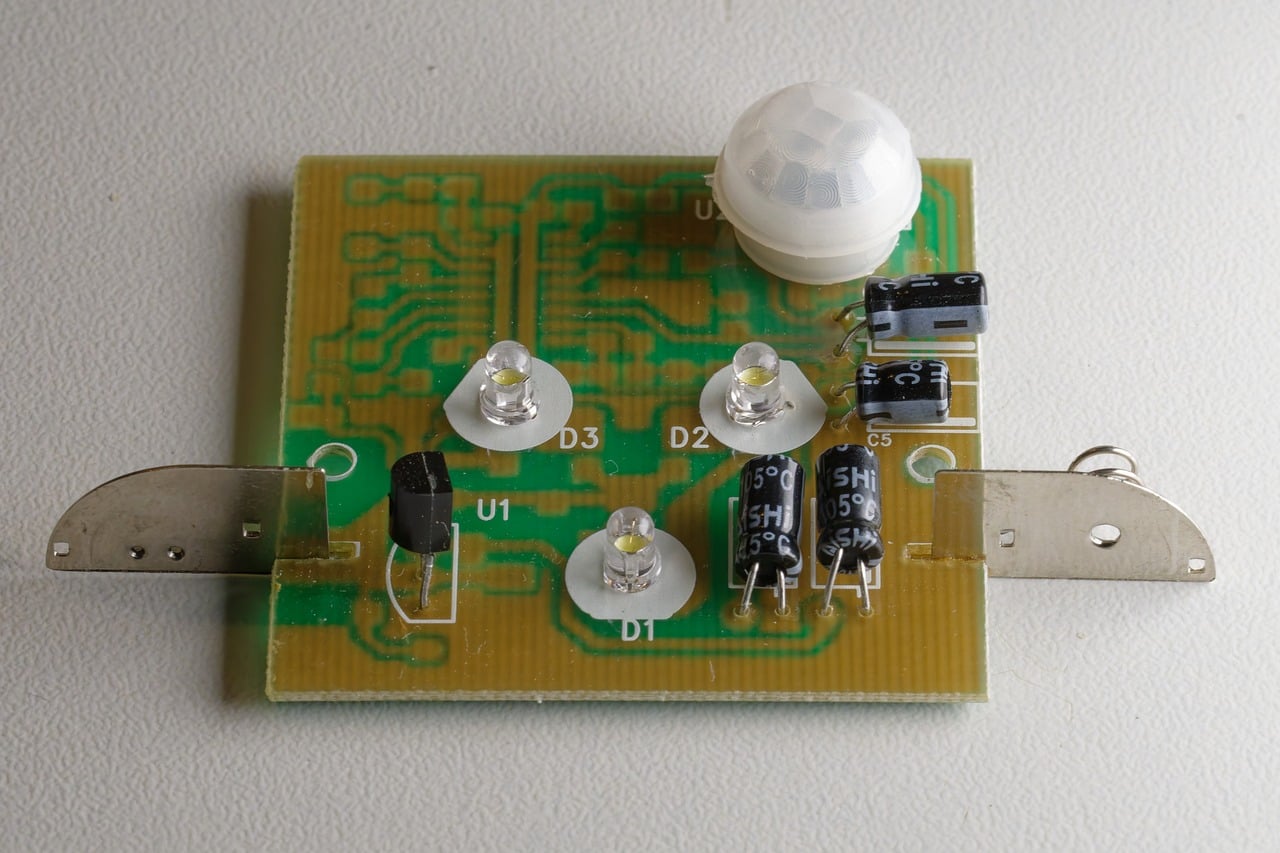
The printed circuit board carries current and gives the LEDs a route to move heat away. Aluminum PCBs are common in lamps and luminaires because they spread heat better than standard FR4 boards. Connectors, terminals, and wire gauges may look like simple parts, but loose contacts can make heat spots and flicker. In trade projects, these small parts around the LED are often the reason for field returns.
Which LED Components Affect Brightness Color and Efficiency?
Brightness is not only about choosing a higher rated chip. Light output depends on the LED package, driver efficiency, optics, thermal design, and how the fixture sends light to the work area. The U.S. Department of Energy says LED lighting now offers the highest luminous efficacy among light source technologies, but it also points out that source efficacy and full luminaire efficacy are different. In daily buying work, this means a good chip can still look weak inside a poor fixture. (energy.gov)
Luminous Flux and Efficacy
Luminous flux, measured in lumens, shows total light output. Efficacy, measured in lumens per watt, shows how much light you get from each watt. The International Energy Agency reported in March 2026 that typical halogen lamps produce about 20 lm/W, CFLs about 50 lm/W, and LEDs sold today average close to 100 lm/W, with some premium and professional LEDs above 200 lm/W. The point for buyers is clear enough: better LED components can reduce power demand, but only when the full system is designed and built properly. (iea.org)
Color Temperature and CRI
Color temperature changes how a space feels to the user. Warm white around 2700K to 3000K works well for hotels, homes, and restaurants. Neutral white around 4000K is common in offices and retail areas. Cool white around 5000K to 6500K is often used for task lighting, garages, and some industrial areas. CRI shows how natural colors look under the light. For most indoor lighting, CRI 80 is acceptable, but cosmetics, food counters, art, and clothing displays often need CRI 90 or a better TM 30 report.
Optics Lenses and Diffusers
Optics control where the light goes. A narrow lens can send light down an aisle, while a diffuser can make a panel light softer and reduce glare. A reflector can help a downlight look brighter without increasing wattage. Since LEDs send light in a more directional way than incandescent or CFL sources, optical design is a real advantage. Even so, every lens or diffuser brings some light loss, so it is better to choose the right beam angle and material than simply use the thickest cover available.
Why Do Drivers and Thermal Parts Decide Service Life?
A long LED life claim usually assumes good heat control, stable power, and normal ambient temperature. Real sites are not always that kind, especially in factories, kitchens, parking lots, and sign boxes. ENERGY STAR explains that LED heat sinks absorb heat and move it into the surrounding air, and that higher operating temperature makes light degrade faster. That is why the heat sink, although easy to ignore, often decides the service result. (energystar.gov)
Constant Current Driver Matching
For high power LEDs, current is the main point to control. If the current is too high, the LED may look bright at the beginning, then lose output faster or shift color. If the current is too low, the fixture may not reach the lumen target. The driver output range must cover the total forward voltage of the LED string in both cold and hot conditions. For outdoor lighting, add surge protection and check the driver case temperature rating, because a driver inside a sealed pole head has a harder working life than one in open air.
Heat Sinks Thermal Pads and Airflow
Heat moves from the LED junction to the board, then through thermal paste or pads, then into the heat sink and air. If any layer is weak, the whole heat path slows down. Dust, paint, blocked fins, small housings, and plastic covers can all make heat worse. For a 50 W street light head, a few degrees can matter after years of use. Ask for thermal test data at the fixture level, not only the LED datasheet. If a supplier cannot give the test condition, treat the lifetime claim with care.
Dimming Controls and Flicker Risk
Dimming is useful, but it can also bring flicker, noise, or dead travel on the dimmer. The driver must match the control type, such as 0 to 10 V, TRIAC, DALI, PWM, Bluetooth, Zigbee, or DMX. For cameras, offices, schools, and healthcare spaces, flicker can be more than a comfort problem. Sample testing is worth doing here. A light may look fine to the eye but show heavy bands on a phone camera, which is a quick first check even if it is not a full lab test.
How Should You Select LED Components for Indoor and Outdoor Projects?
The right selection starts from the final use. A hotel cove light, a freezer cabinet strip, a tunnel lamp, and a machine vision light do not need the same component setup. Do not force one standard BOM into every project only to make purchasing easier. That shortcut can turn into expensive service work later.
Application Load and Environment
Check input voltage, working hours, ambient temperature, humidity, dust, vibration, and exposure to water or chemicals. Indoor office lighting may run 10 hours per day in a clean ceiling. A gas station canopy light may run all night, face summer heat, and meet insects, water spray, and voltage spikes. For outdoor and industrial projects, look for the proper IP rating, corrosion resistance, surge protection, UV stable lenses, and enough thermal mass.
Safety Marks and Regional Compliance
Safety rules change from market to market. UL 8750, revised on August 1, 2024, covers LED equipment used as part of LED luminaires and lighting systems, including drivers, controllers, arrays, modules, and packages. For exporters, component approval is not the same as full product approval. You still need to check the final luminaire, wiring, insulation, enclosure, and label rules for the target market. (shopulstandards.com)
Replacement Access and Maintenance Cost
If the fixture is hard to reach, the component choice becomes more important. Think about a ceiling above a shopping mall atrium or an outdoor sign mounted high on a building. A cheaper driver may save a few dollars during assembly, then cost much more when a lift truck is needed for replacement. For projects with high labor cost, choose LED modules and drivers with a known service record, clear part numbers, and stable supply. See also: Gadgets.
What Quality Checks Matter Before Bulk Purchase?
Bulk buying should not begin with a glossy catalog. A workable buying process checks documents, samples, test records, packaging, and traceability before the deposit is paid. This may feel slow at the start, but it is still faster than sorting thousands of flickering lamps after delivery.
Datasheets and Bin Codes
Ask for the LED datasheet, driver datasheet, LM 80 or related reliability data when available, photometric files for fixtures, and bin information for color and voltage. Binning matters because two LEDs with the same nominal CCT can still look different side by side. For linear lights and panels, color mismatch is easy to see on a white wall. One slightly green batch can damage a premium retail installation.
Sample Testing and Burn In
Sample tests should cover power, lumen output, CCT, CRI, temperature rise, startup behavior, dimming, flicker, and visual inspection. A basic burn in test can find early driver failures and poor solder joints. For high volume orders, test samples from real production parts, not only hand built sales samples. If the supplier changes the LED brand, driver capacitor, thermal pad, or lens resin, repeat the key tests.
Supplier Traceability and Packaging
Traceability helps when one batch has a problem. Request lot numbers, date codes, driver labels, and package marks before bulk shipment. Good packaging also matters because LED lenses scratch, solder joints crack, and reels absorb moisture if storage is poor. Moisture sensitive LEDs need proper sealed bags and baking rules before reflow. It is not exciting paperwork, but it protects your margin when a claim happens.
Are LED Components Worth the Cost for Trade Buyers?
LED parts can cost more than older lighting parts at the first purchase, but the full cost picture often favors good LEDs. Energy use, replacement labor, warranty risk, and project reputation all count. Public data supports the market shift, though it does not mean every single component deserves a higher price.
Energy Use and Utility Savings
ENERGY STAR states that certified LED lighting products use 90% less energy and can last 25 times longer than traditional incandescent lighting. That does not mean every LED on the market reaches that level, and it does not cover poor quality private label products with no testing. The useful takeaway for buyers is simple: efficient certified products can reduce running cost, especially in hotels, stores, warehouses, and exterior lighting that runs long hours. (energystar.gov)
Adoption Signals from Public Data
The U.S. Energy Information Administration reported from its 2024 Residential Energy Consumption Survey that 90% of U.S. households used LED bulbs, and the share using mostly LED bulbs for indoor lighting rose from 4% in 2015 to 63% in 2024. For exporters, this shows LED lighting is no longer a niche product in mature markets. Buyers now compare component quality, smart control support, and warranty service instead of asking whether LED itself is new. That changes how suppliers need to present their BOM and test records. (eia.gov)
Total Cost Beyond Unit Price
For trade buyers, the best choice is rarely the cheapest LED chip or the heaviest heat sink. It is the combination that meets the light target, passes compliance, survives the environment, and can be supplied again next quarter. If a supplier claims a special lifetime number but gives no public standard, no test method, and no sample record, there is no reliable public data to cite. Treat that claim as unverified and ask for measurable proof.
FAQ
Q1: What Are the Main LED Components in a Lamp? A: The main parts are LED packages or modules, a driver, a PCB, optics, heat sink parts, wiring, connectors, housing, and sometimes sensors or dimming controls.
Q2: Is a Higher Wattage LED Always Brighter? A: No. Brightness depends on lumens, LED efficacy, driver losses, optics, and heat control. A lower wattage fixture with better components can outperform a higher wattage fixture with poor design.
Q3: Which LED Driver Should You Choose? A: Choose by output current or voltage, wattage headroom, voltage range, dimming type, surge rating, efficiency, safety approval, and operating temperature. It must match the LED load, not just the label.
Q4: Why Do LEDs Fail if They Are Supposed to Last Long? A: Many failures come from overheated drivers, weak solder joints, poor heat paths, voltage surges, moisture, bad dimmer matching, or low grade capacitors. The LED chip is not always the failing part.
Q5: What Should You Ask a Supplier Before Buying LED Components? A: Ask for datasheets, bin codes, test reports, sample records, compliance files, warranty terms, packaging details, lead time, and notice rules for any component change.