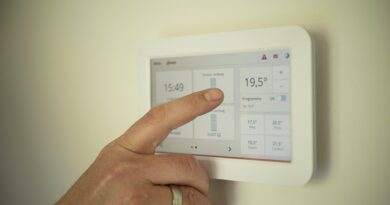
IoT smart home explained with devices, standards and security considerations
What an IoT smart home means now
An IoT smart home is a home where connected devices collect data, exchange instructions and automate everyday functions such as lighting, climate control, access, safety alerts, entertainment and energy use. In practical terms, the phrase iot smart home no longer means only a few app-controlled gadgets. It describes a layered system of devices, local networks, cloud services, mobile apps, voice assistants, hubs and security policies. The strongest systems are not just connected; they are understandable, maintainable and able to work across more than one platform.
This shift matters because the connected home market is maturing. Parks Associates reported in 2026 that U.S. internet households average 17.8 connected devices, while earlier 2025 research estimated that about 54 million U.S. internet households owned at least one smart home device. More devices can add convenience, but they also increase setup friction, cybersecurity exposure and interoperability questions.

For readers following broader connected living trends, the Smart Home section covers related developments in devices, platforms and home automation.
How IoT smart home systems work
A smart home system has four basic layers. The first is the device layer: sensors, cameras, thermostats, switches, plugs, locks, speakers, appliances and energy equipment. These products either sense events or perform actions. A contact sensor reports that a door has opened. A thermostat adjusts HVAC behavior. A smart plug can turn a load on or off and, in some models, report energy consumption.
The second layer is connectivity. Wi-Fi is common for high-bandwidth or mains-powered devices such as cameras, speakers and appliances. Thread is designed for low-power mesh networking and is often used with battery sensors, switches and other compact devices. Zigbee and Z-Wave remain widely used in installed systems and many legacy hubs. Bluetooth Low Energy is common for setup and short-range device interaction, although newer Matter releases are reducing the need to rely on Bluetooth for every commissioning flow.
The third layer is control. This may be a dedicated hub, a smart speaker, a phone, a wall panel or software running on a home server. In many homes, several controllers coexist: a phone app for daily use, a voice assistant for convenience and a hub for local automation.
The fourth layer is logic. Automations connect triggers to actions. A simple rule might turn on hallway lights when motion is detected after sunset. A more advanced routine might combine occupancy, energy pricing, indoor temperature and a user’s comfort preference before adjusting HVAC settings. This is where an IoT smart home becomes more than remote control.
Why interoperability is the central issue
Interoperability is the ability of products from different brands and ecosystems to communicate in a predictable way. Without it, consumers can end up with separate apps for lights, cameras, locks, appliances and thermostats. That fragmentation makes setup harder and can reduce the value of automation because one system may not understand what another system is doing.
Matter, developed by the Connectivity Standards Alliance, is the most important current attempt to address this problem for consumer smart homes. The Alliance released Matter 1.0 on October 4, 2022, as an IP-based smart home standard with certification. Since then, the specification has expanded through a series of releases. The dates below show how the standard has moved from basic interoperability toward larger homes, energy management, cameras and multi-ecosystem coordination.
| Release | Date | Why it matters for smart homes |
|---|---|---|
| Matter 1.0 | October 4, 2022 | Established the first certified foundation for cross-brand smart home interoperability over IP networks. |
| Matter 1.3 | May 8, 2024 | Expanded support for energy reporting, water and energy management, EV chargers and major appliances. |
| Matter 1.4 | November 7, 2024 | Added stronger tools for multi-admin sharing, home routers and access points, Thread network credential handling and energy devices. |
| Matter 1.4.2 | August 11, 2025 | Focused on security, scalability, certification improvements, Wi-Fi-only commissioning and more efficient device reporting. |
| Matter 1.5 | November 20, 2025 | Introduced support for cameras, closures, soil sensors and additional energy management capabilities. |
| Matter 1.6 | June 17, 2026 | Focused on easier setup, Joint Fabric for multi-ecosystem administration, thermostat suggestions and improved device status communication. |
The important caveat is that a specification release does not instantly mean every product supports every feature. Device makers, platforms and firmware teams adopt capabilities on their own timelines. For buyers, the practical question is not only whether a product has a Matter logo, but which device type, feature set, transport method and ecosystem support are actually available.
Benefits that are realistic today
The clearest benefit of an IoT smart home is convenience. Lights can respond to presence. Locks can be checked remotely. Appliances can send status notifications. Sensors can warn about leaks, smoke, carbon monoxide or unexpected entry. These benefits are most useful when devices are organized around routines rather than controlled one by one.
Energy management is another major use case. ENERGY STAR describes smart thermostats as Wi-Fi enabled devices that automatically adjust heating and cooling settings for improved performance, and it notes that certified models are evaluated using actual field data for energy savings. In a broader IoT smart home, thermostats can also interact with occupancy sensing, window coverings, solar systems, batteries or utility programs, although the level of integration depends heavily on device and platform support.
Safety and maintenance are also becoming stronger categories. A water-leak sensor near a washing machine can trigger an alert before damage spreads. A connected smoke or CO alarm can report status to an app. Matter 1.6 adds a standardized way for smoke and CO alarms to indicate an unmounted state, which helps users understand whether a safety device is still properly installed.
For households, the most valuable systems usually share three characteristics: they solve a recurring problem, they can still perform core functions when internet service is unavailable, and they do not require constant app management. A smart home that needs daily troubleshooting is not truly smart from a user’s perspective.
Limits and failure points to plan for
Interoperability standards reduce friction, but they do not remove every limitation. Some device functions may remain available only in a manufacturer’s own app. A camera, for example, may expose live video through a standard interface while advanced analytics, storage options or subscription features remain proprietary. A thermostat may support standard control but still reserve some advanced HVAC diagnostics for the brand app.
Network design is another common weak point. Wi-Fi cameras placed far from the router may drop connections. Too many low-quality Wi-Fi devices can congest a network. Thread devices need a reliable Thread Border Router and a healthy mesh layout. If multiple hubs create separate Thread networks instead of sharing credentials, the home may become less reliable rather than more reliable. See also: Gadgets.
Power and lifecycle support also matter. Battery sensors are convenient only if alerts, battery reporting and replacement routines are clear. Mains-powered devices may need professional installation, especially for in-wall switches, thermostats, doorbells or energy equipment. Firmware updates can improve security and features, but they also depend on the manufacturer’s support policy. A cheap device with no clear update plan can become a long-term risk.
Security and privacy should be part of the design
Every connected device adds a possible point of failure. A secure IoT smart home should be planned around the whole product, not just the physical device. NIST IR 8425, published in September 2022, frames consumer IoT cybersecurity as a set of outcomes for the full IoT product. That includes areas such as product identification, secure configuration, data protection, interface access control, software updates, cybersecurity state awareness, documentation and vulnerability management.
In the United States, the U.S. Cyber Trust Mark was launched on January 7, 2025, as a voluntary cybersecurity labeling program for wireless consumer IoT products. The program is intended to help consumers identify products that meet defined cybersecurity criteria, but the FCC’s rulemaking also makes clear that a label does not mean risk has been completely eliminated. That distinction is important: certification can improve trust, but good home network practices are still necessary.
Before adding a connected device, check these security basics:
- Use unique passwords for manufacturer accounts and enable multi-factor authentication where available.
- Prefer products with a clear software update policy and visible update controls.
- Separate guest devices and untrusted devices from primary computers when your router supports network segmentation.
- Remove devices from accounts before selling, recycling or giving them away.
- Review what data the device collects, whether cloud storage is optional and how long recordings or logs are retained.
- Keep routers, hubs and smart speakers updated because they often act as control points for the rest of the home.
A practical buying framework
The best way to build an IoT smart home is to start with use cases, not device categories. A household concerned about water damage should prioritize leak detection and shutoff options. A household trying to reduce HVAC costs should focus on thermostat compatibility, home insulation behavior and utility program support. A renter may prefer portable sensors, plugs and bulbs, while a homeowner may consider in-wall controls and wired doorbells.
Use this checklist before purchasing:
- Compatibility: Confirm the product works with the ecosystem you actually use, not only with a standard in general.
- Connectivity: Match the device to the right network. Cameras usually need strong Wi-Fi; small sensors may be better on Thread, Zigbee or Z-Wave.
- Local function: Check whether core automations still work if the internet connection fails.
- Security: Look for update commitments, account protection and, where available, recognized cybersecurity labeling.
- Installation: Verify wiring, voltage, HVAC compatibility, door dimensions or neutral-wire requirements before buying.
- Lifecycle: Prefer products that can be reset, transferred, updated and documented without relying on unclear cloud services.
For many households, the sensible path is gradual. Start with a reliable platform, improve the home network, add a few high-value devices, and expand only after the first automations prove useful. The market is moving toward better interoperability, but careful selection still matters.
Frequently asked questions
Is an IoT smart home the same as home automation?
They overlap, but they are not identical. An IoT smart home refers to connected devices and data exchange. Home automation refers to rules or routines that make things happen automatically. A smart plug controlled only from an app is connected, but it becomes part of automation when it responds to schedules, sensors or conditions.
Does Matter replace Wi-Fi, Thread, Zigbee or Z-Wave?
No. Matter is an application-layer standard that helps devices and platforms understand each other. It can run over network technologies such as Wi-Fi, Ethernet and Thread. Zigbee and Z-Wave remain separate technologies with large installed bases, often connected to newer platforms through bridges or hubs.
Should every new smart home device support Matter?
Matter support is increasingly useful, especially for common categories such as lighting, plugs, sensors, locks, thermostats and compatible appliances. However, the answer depends on the device. Some categories or advanced features may still work better through a manufacturer’s app or a mature legacy protocol. Check the exact supported functions before buying.
What is the biggest risk in a connected home?
The biggest risk is not one device by itself, but unmanaged complexity. Weak passwords, abandoned devices, unsupported firmware, poor Wi-Fi coverage and unclear privacy settings can make a smart home unreliable or insecure. A smaller system with strong maintenance is usually better than a large system that nobody manages.
Can smart home devices save energy?
They can, but results depend on the device, home, climate, user behavior and utility program. Smart thermostats have the clearest consumer energy case because they can adjust HVAC operation based on schedules, occupancy and remote control. Energy monitoring plugs, smart panels, batteries and EV chargers can add more insight when they are properly integrated.