Anti snoring device reviews and how to choose the right type
What anti snoring device reviews should answer first
Useful anti snoring device reviews should not try to crown one universal winner. They should first separate simple noise reduction from possible obstructive sleep apnea, then match the device category to the likely source of the snoring. Mouthpieces that move the lower jaw forward have the strongest practical case for primary snoring and for some mild to moderate obstructive sleep apnea when they are fitted and monitored properly. Positional trainers can help when breathing is worse on the back. Nasal strips and dilators may help nasal blockage, but they are unlikely to solve throat or tongue collapse. EPAP valves and daytime tongue stimulation devices are more specialized and should be selected with medical guidance.
The safety issue is as important as the buying decision. The American Academy of Sleep Medicine says only a medical provider can diagnose obstructive sleep apnea or primary snoring, and FDA consumer guidance notes that sleep apnea diagnosis requires a sleep study at home or in a lab. If snoring is accompanied by choking, witnessed pauses, morning headaches, severe daytime sleepiness, or high blood pressure, a product review is not a substitute for evaluation.
For more device comparisons across consumer technology and home electronics, visit our Reviews section.
Quick comparison of anti-snoring device types
| Device type | How it works | Where it may fit | Main limitations |
|---|---|---|---|
| Custom mandibular advancement device | Holds the lower jaw forward to reduce airway narrowing behind the tongue | Primary snoring without sleep apnea, and selected obstructive sleep apnea cases under professional care | Needs dental fitting, follow-up, and monitoring for jaw pain, tooth movement, or bite changes |
| Boil-and-bite mouthpiece | Uses a self-molded tray to advance the jaw | Short trial for uncomplicated snoring when no red-flag symptoms are present | Fit is less precise; not a reliable self-treatment for diagnosed sleep apnea |
| Tongue retaining device | Uses suction to hold the tongue forward | Some users who cannot tolerate jaw advancement or have dental limitations | Can cause tongue soreness, drooling, or poor comfort |
| Nasal strip or nasal dilator | Opens the nasal valve or nostril passage | Snoring linked to nasal stuffiness, allergies, or restricted nasal airflow | Limited value when snoring is mainly from throat collapse or sleep apnea |
| Nasal EPAP valve | Creates resistance during exhalation to help maintain airway pressure | Selected users with mild to moderate obstructive sleep apnea or snoring, depending on product labeling and clinician advice | May be hard to tolerate with nasal obstruction; response varies |
| Positional trainer | Uses a pillow, wearable vibration, or body-position barrier to reduce back sleeping | Positional snoring or positional obstructive sleep apnea | Works only if supine sleep is a major trigger; long-term adherence matters |
| Daytime tongue muscle stimulator | Stimulates tongue muscles while awake to reduce nighttime airway collapse | Adults with snoring and mild obstructive sleep apnea within device indications | Prescription-only in the U.S. for indicated use; not intended for moderate or severe sleep apnea |
Mouthpieces and tongue devices have the strongest everyday evidence, but fit matters
Mandibular advancement devices
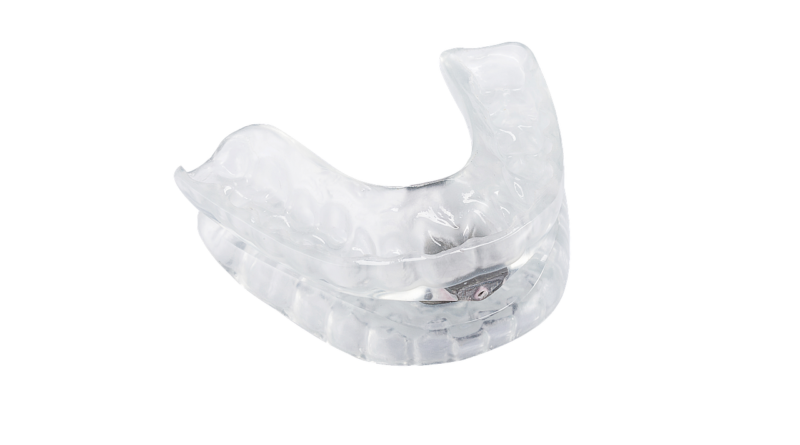
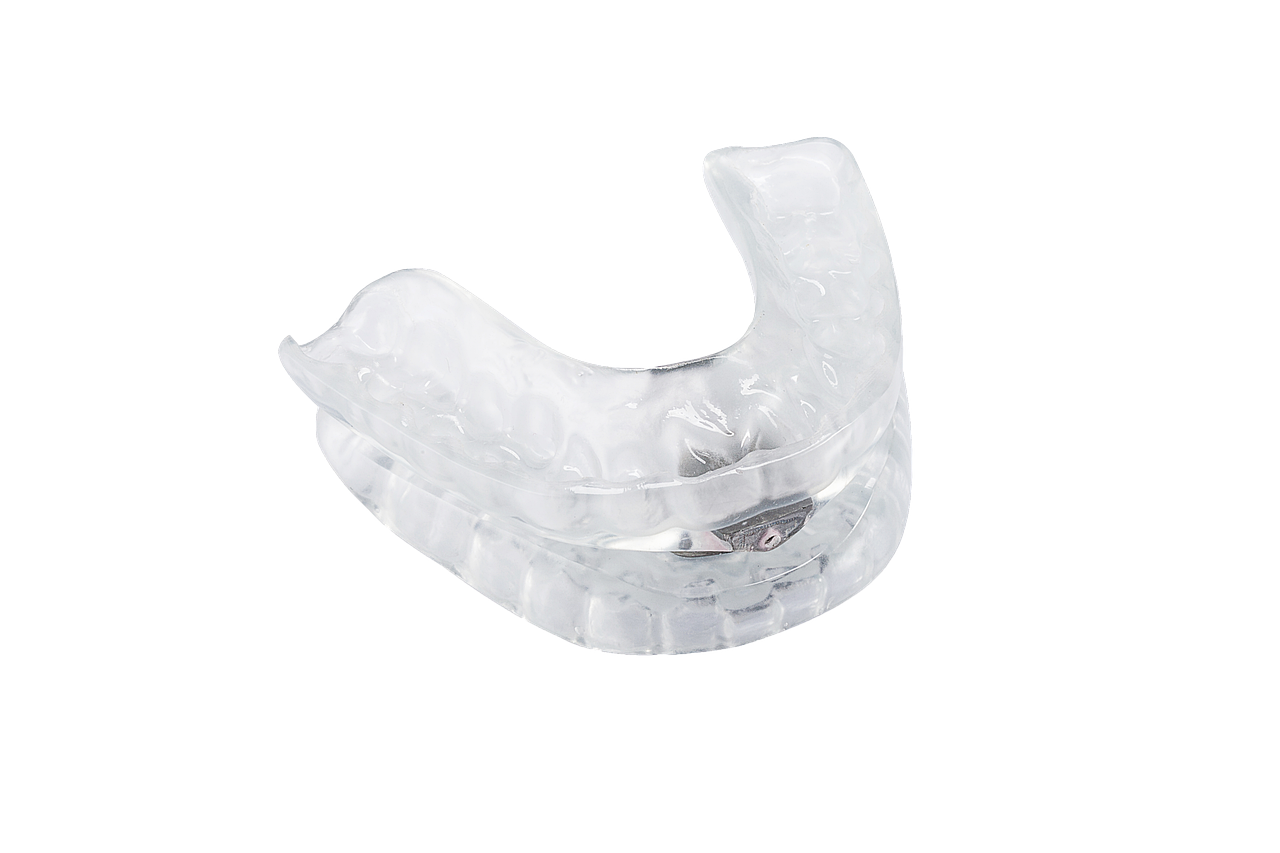
Mandibular advancement devices, often called MADs, are the mouthpieces most buyers mean when they talk about anti-snoring mouth guards. They work mechanically by bringing the lower jaw forward. This can pull the tongue and soft tissues away from the back of the throat, reducing vibration and partial airway blockage.
The 2015 joint guideline from the American Academy of Sleep Medicine and the American Academy of Dental Sleep Medicine recommends oral appliances rather than no therapy for adults who request treatment for primary snoring without obstructive sleep apnea. For obstructive sleep apnea, the same guideline suggests a custom, titratable oral appliance provided by a qualified dentist when oral appliance therapy is prescribed, rather than a non-custom oral device.
That distinction should shape any review. A low-cost boil-and-bite device is easy to buy and may be reasonable as a short trial for uncomplicated snoring, but it cannot be adjusted and monitored in the same way as a custom titratable appliance. A custom device costs more and takes longer to obtain, yet it is more closely aligned with professional guidance when sleep apnea is involved. The trade-off is not only price; it is precision, follow-up, and safety.
Possible side effects include dry mouth, salivation, jaw discomfort, tooth soreness, gum irritation, and gradual bite changes. A good review should therefore look beyond headline claims and compare adjustability, material comfort, return policy, dental oversight, and whether the seller clearly states who should not use the device.
Tongue retaining devices
Tongue retaining devices do not move the jaw as aggressively. Instead, they use suction to hold the tongue forward during sleep. This category may suit some users who cannot tolerate mandibular advancement, have missing teeth, wear dentures, or experience jaw joint discomfort with jaw-forward designs.
The main drawback is comfort. Some users dislike the sensation of suction on the tongue. Others report tongue soreness, excess saliva, or difficulty keeping the device in place through the night. A tongue retaining device can be a reasonable option to consider, but it should not be treated as a universal replacement for a professionally fitted oral appliance.
Nasal aids, EPAP valves, and tongue stimulation solve different problems
Nasal strips and nasal dilators
Nasal strips and internal nasal dilators are popular because they are simple, inexpensive, and low risk for many users. They work by widening the nasal passage, not by moving the jaw or preventing the tongue from falling backward. They make the most sense when snoring appears to worsen with congestion, allergies, a deviated nasal passage, or mouth breathing related to poor nasal airflow.
They are less convincing when a person snores loudly in all positions, gasps, has pauses in breathing, or feels unrefreshed despite enough sleep. Recent systematic review evidence on nasal dilators has described objective sleep-disordered breathing outcomes as uncertain, even though individual users may feel improved airflow. In practical terms, nasal aids are worth considering as a comfort aid for nasal restriction, but they should not be presented as a stand-alone treatment for obstructive sleep apnea.
Nasal EPAP valves
Nasal expiratory positive airway pressure devices, usually called EPAP valves, are placed at or in the nostrils. They make exhalation slightly more resistant, which can help maintain pressure in the upper airway. FDA consumer guidance describes EPAP as an option that uses disposable or reusable valves and does not require electricity or batteries.
A systematic review and meta-analysis of nasal EPAP devices reported improvements in apnea-hypopnea index, oxygen desaturation index, and sleepiness measures across included studies. It also noted that predictors of success were not clear and that high nasal resistance may be linked with treatment failure. For buyers, the sensible conclusion is measured optimism. EPAP may suit a specific profile, but it is not the same as CPAP and should not be chosen blindly when sleep apnea is suspected.
Daytime neuromuscular tongue stimulation
Daytime tongue stimulation is a newer category than mouthpieces and nasal strips. In the U.S., FDA records identify eXciteOSA as a neuromuscular tongue muscle stimulator for reducing snoring and mild obstructive sleep apnea in adults. Its De Novo marketing authorization was granted on February 5, 2021, and later FDA records list a May 16, 2024 510(k) substantial equivalence decision for updated versions. See also: Gadgets.
The device is used while awake rather than during sleep. FDA decision materials describe a therapy pattern of 20 minutes a day for a six-week period. This may appeal to people who dislike wearing a mouthpiece at night, but the indication matters: it is for adults with snoring and mild obstructive sleep apnea, not for people who have or may have moderate or severe sleep apnea. Reviews should not blur that boundary.
Positional therapy is useful when back sleeping is the trigger
Some snoring is strongly positional. The airway may narrow more when a person sleeps on the back because gravity affects the tongue and soft tissues differently than when sleeping on the side. Positional therapy devices try to reduce supine sleep with a special pillow, a wearable trainer, a vibration alert, or a physical barrier.
A Cochrane review of positional therapy for obstructive sleep apnea included randomized studies comparing positional therapy with CPAP or inactive control. It found that CPAP reduced apnea-hypopnea index more than positional therapy, while positional therapy performed better than inactive control for apnea-hypopnea index and sleepiness measures. The review also noted limitations, including short study durations and risk of bias.
That evidence supports a balanced buying conclusion. Positional therapy can be a sensible option for positional snoring or positional obstructive sleep apnea, especially when the problem is clearly worse on the back. It is less persuasive when snoring continues in all positions. Wearable vibration trainers may be easier to tolerate than a tennis-ball-style barrier, but comfort and adherence should be judged over weeks, not one night.
Safety checklist before buying an anti-snoring device
Before choosing any anti-snoring device, use a safety checklist rather than relying only on star ratings. Many reviews focus on comfort, shipping, and price, but snoring sits close to a medical category. The wrong device may delay diagnosis or cause dental problems.
- Screen for sleep apnea signs. Seek medical evaluation if there are witnessed breathing pauses, choking or gasping, morning headaches, excessive daytime sleepiness, high blood pressure, irregular heartbeat, or major fatigue.
- Know what the device is designed to change. Jaw-forward devices target airway narrowing behind the tongue. Nasal aids target nasal airflow. Positional devices target back sleeping. A mismatch lowers the chance of benefit.
- Check dental suitability. Loose teeth, gum disease, active dental pain, temporomandibular joint problems, braces, implants, or dentures can change whether an oral device is appropriate.
- Prefer adjustability when using a mouthpiece. Gradual jaw advancement is usually easier to tolerate than a fixed aggressive position.
- Look for clear contraindications. A credible seller should explain who should not use the device, not only who might benefit.
- Measure results realistically. Partner feedback and snoring apps can track noise, but they cannot diagnose or rule out sleep apnea.
- Plan follow-up. If a device is used for obstructive sleep apnea, professional follow-up and objective testing may be needed to confirm that breathing has improved.
For uncomplicated snoring with no red flags, it can be reasonable to start with the least invasive device that matches the suspected cause: a nasal aid for nasal restriction, a positional trainer for back-sleeping snoring, or a conservative mouthpiece trial for likely oral airway vibration. For suspected sleep apnea, start with diagnosis rather than shopping.
Frequently asked questions
Which anti-snoring device type is most likely to work?
For many habitual snorers, a mandibular advancement device has the strongest practical rationale because it directly addresses airway narrowing behind the tongue. However, the right choice depends on the cause. Nasal devices may help nasal restriction, and positional trainers may help when snoring is mainly on the back.
Can an anti-snoring device treat sleep apnea?
Some devices are used in sleep apnea care, including professionally fitted oral appliances, EPAP valves, positional therapy devices, CPAP, and certain prescription tongue stimulation devices. That does not mean every anti-snoring product can treat sleep apnea. Diagnosis and treatment selection should involve a medical provider.
Are boil-and-bite mouthpieces worth trying?
They can be a lower-cost trial for simple snoring, but they are less precise than custom titratable appliances and may be uncomfortable. They are not a reliable way to self-manage diagnosed obstructive sleep apnea, especially if symptoms are moderate or severe.
Do nasal strips stop snoring?
They may reduce snoring when nasal airflow is the main problem. They are less likely to help if snoring comes from tongue collapse, soft-palate vibration, obesity-related airway narrowing, alcohol-related muscle relaxation, or sleep apnea.
How long should someone test a device before judging it?
A few nights can reveal obvious discomfort, but effectiveness is better judged over several weeks with consistent use. Track snoring intensity, sleep position, morning symptoms, and partner feedback. If daytime sleepiness, choking, or witnessed pauses continue, stop relying on trial and error and seek evaluation.