
Electronic components price list guide for 2026
What an electronic components price list can and cannot tell you
An electronic components price list is useful for early budgeting, supplier comparison, and bill of materials review. It should not be treated as a live purchase quote. Prices move with quantity breaks, packaging, lead time, authorized-channel availability, qualification grade, freight, tariffs, and manufacturer allocation. As of October 17, 2026, public market indicators point to a higher-cost environment than many buyers saw in 2023–2024, especially for semiconductors, power devices, memory-linked products, and some passive components. A practical approach is to use a price list as a planning baseline, then validate critical parts through authorized distributors, manufacturer representatives, or contract-pricing requests before committing a design or production build.
For more component purchasing and selection articles, see the Components section.
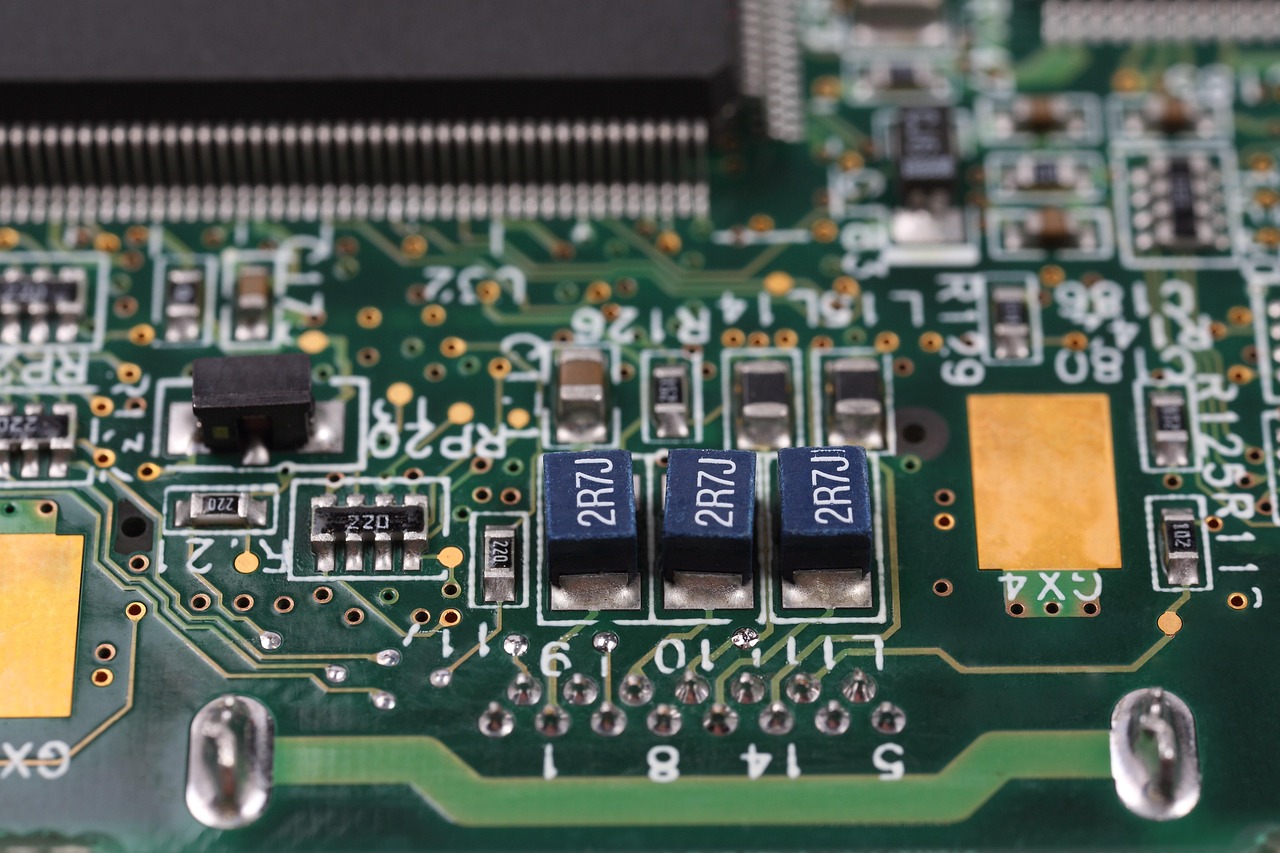
Indicative electronic components price list by category
The table below is an editorial planning guide, not a seller quotation. The ranges describe common catalog-grade parts in U.S. dollars and use broad bands because component prices vary sharply by brand, tolerance, package, electrical rating, qualification, and order volume. Specialized automotive, aerospace, medical, high-reliability, RF, high-current, or wide-temperature parts may fall well outside these ranges.
| Component category | Common examples | Indicative unit price band | Main price drivers |
|---|---|---|---|
| Commodity chip resistors | 0603, 0402, 0805 thick-film resistors | Below $0.01 to $0.05+ | Tolerance, power rating, package size, reel quantity, AEC-Q qualification |
| MLCC ceramic capacitors | X7R, X5R, C0G capacitors | Below $0.01 to $0.50+ | Capacitance, voltage, case size, dielectric, automotive grade |
| Aluminum and polymer capacitors | Electrolytic and polymer bulk capacitors | $0.05 to $3.00+ | Voltage, ripple current, lifetime rating, low-ESR construction |
| Inductors and ferrite beads | Power inductors, EMI beads, RF inductors | $0.02 to $2.00+ | Current rating, DCR, shielding, core material, metal cost |
| Small-signal semiconductors | Diodes, BJTs, ESD protection, small MOSFETs | $0.01 to $0.50+ | Package, voltage, speed, surge rating, tape-and-reel quantity |
| Power semiconductors | MOSFETs, rectifiers, drivers, regulators | $0.05 to $5.00+ | Voltage/current rating, RDS(on), thermal package, silicon carbide or gallium nitride content |
| Linear and logic ICs | Op amps, comparators, gates, level shifters | $0.03 to $3.00+ | Performance grade, noise, offset, speed, package, manufacturer lifecycle |
| MCUs, memory, and connectivity ICs | Microcontrollers, EEPROM, flash, wireless chips | $0.50 to $20.00+ | Memory size, core, security features, radio certification, supply allocation |
| Connectors and electromechanical parts | Headers, terminals, switches, sockets | $0.03 to $10.00+ | Pin count, plating, mating cycles, current rating, mechanical tooling |
| Sensors, relays, and modules | Temperature sensors, IMUs, relays, RF modules | $0.50 to $30.00+ | Calibration, package, certification, isolation rating, integrated firmware or antenna design |
For early design work, it is safer to budget by category and supply risk than by one displayed price. A low-cost resistor may be predictable across many suppliers. A microcontroller tied to a specific package, memory size, security feature, and software dependency can become a single-source cost risk even when the catalog price looks acceptable.
Why component prices are higher and more uneven in 2026
Public data suggests that 2026 component pricing is not moving as one uniform market. The U.S. Bureau of Labor Statistics September 2026 Producer Price Index release showed electronic components and accessories up 26.8 percent year over year. Federal Reserve Economic Data, using BLS data, showed semiconductor and other electronic component manufacturing prices up 26.0 percent year over year in September 2026. These are producer-price indicators, not distributor catalog prices, but they help explain why buyers are seeing tougher negotiations and more frequent cost reviews.
Demand is also uneven. The Semiconductor Industry Association reported on July 27, 2026 that global semiconductor sales reached $795.6 billion in 2025 and cited a World Semiconductor Trade Statistics projection for 2026 sales to reach $1.5 trillion. Gartner’s April 2026 semiconductor outlook also pointed to strong AI processing, data-center networking, power, and memory price inflation as key growth drivers. In practical sourcing terms, parts connected to servers, power delivery, acceleration hardware, memory, and high-performance computing can face very different pricing pressure from slow-moving consumer or commodity categories.
Passive components are not immune. TrendForce reported in April 2026 that higher silver, aluminum, and copper prices contributed to average price increases of 10–15 percent for some passive components such as ferrite beads, inductors, and resistors, effective April 1. That does not mean every resistor or inductor line increased by the same amount. It does show why even simple parts should remain in regular cost reviews.
How quantity breaks change the real price
Most electronic component price lists show tiered pricing: 1 piece, 10 pieces, 100 pieces, 1,000 pieces, full reel, tray, or production-volume quotation. The unit price often falls sharply at the first meaningful break, then declines more slowly at higher volumes. A design engineer looking only at one-piece prices may overestimate production cost. A buyer using ideal full-reel pricing may underestimate prototype, service-spares, or low-volume maintenance cost.
- Prototype quantity often carries the highest unit price, cut-tape handling, and limited room for negotiation.
- Engineering pilot builds usually show whether the selected package, tolerance, and lifecycle status are easy to source.
- Production reels or trays may reduce unit cost but require inventory commitment and stronger demand confidence.
- Contract pricing can beat public catalog prices, but it may depend on annual volume, approved customer status, and forecast accuracy.
- Spot-market buying can solve urgent shortages, but it increases the risk of high premiums, traceability gaps, and counterfeit exposure.
The most useful price list is therefore not a single table. It is a BOM-level view showing expected annual usage, approved alternates, distributor stock, manufacturer lead time, packaging, minimum order quantity, and lifecycle status.
What to check before relying on a price list
Authorized channel and traceability
ECIA-backed distributor resources emphasize authorized-channel price and availability data because genuine sourcing matters as much as the number on the price list. A cheaper source is not necessarily cheaper if it increases counterfeit risk, warranty exposure, test burden, or production delays. For safety-critical, high-reliability, automotive, industrial, or medical products, traceability should be part of the cost comparison.
Lifecycle status
A low price can hide a lifecycle problem. Parts marked not recommended for new designs, last-time-buy, obsolete, or end-of-life may look attractive for a prototype but create redesign cost later. Check manufacturer product notices, PCN history, and replacement recommendations before locking the part into a new design.
Electrical and mechanical substitution risk
Not all alternates are equivalent. A capacitor with the same capacitance and voltage may have different DC bias performance, temperature behavior, ESR, or lifetime. A MOSFET with similar voltage and current ratings may have different gate charge, thermal resistance, avalanche rating, or switching loss. A connector alternate may fail mechanically even when the pin count is identical. Price comparison should never override qualification requirements.
Total landed cost
The displayed unit price is only one part of cost. Freight, customs duties, tariffs, packaging fees, moisture-sensitive handling, programming, testing, incoming inspection, inventory carrying cost, and scrap risk can change the final economics. For imported or allocation-sensitive components, the landed cost may be materially higher than the catalog line suggests. See also: Gadgets.
How to build a more reliable BOM cost model
A useful BOM model separates stable commodity lines from strategic risk lines. Start by ranking parts by extended cost: unit price multiplied by annual usage. Then add a risk score based on the number of approved suppliers, lead time, lifecycle stage, and qualification difficulty. A $0.02 component used millions of times may deserve more attention than a $4 component used in small quantities. A single-source MCU may need executive review even if its extended cost is not the highest line on the BOM.
- Group parts by category. Separate passives, semiconductors, electromechanical parts, sensors, power devices, modules, and custom items.
- Record the pricing basis. Note whether the number came from one-piece catalog pricing, reel pricing, annual quote, contract manufacturer quote, or distributor RFQ.
- Track source date. For volatile categories, a price from three months ago may already be stale.
- Add alternate parts early. Approved alternates reduce exposure to allocation and sudden price changes.
- Model realistic attrition. Include engineering scrap, manufacturing yield, test fallout, and safety stock.
- Review high-risk parts monthly. Memory, power semiconductors, high-density connectors, and allocated MCUs may need more frequent review than commodity passives.
ECIA’s September 2026 update noted that its August and Q3 Industry Pulse sentiment index moderated from a June high but remained elevated compared with the prior multi-year period. That type of signal supports a cautious planning stance: avoid panic buying, but do not assume that every price spike will quickly reverse.
Practical ways to reduce component cost without increasing risk
Cost reduction should start at the design stage. Engineers can often save more by broadening specifications than buyers can save through late negotiation. For example, allowing two capacitor case sizes, approving several resistor vendors, avoiding unnecessarily tight tolerances, or choosing a widely supported MCU family can reduce supply risk and improve pricing leverage.
- Use standard values and packages where performance permits, because common packages usually attract broader competition.
- Avoid unnecessary over-specification in voltage, tolerance, temperature grade, plating, and lifecycle class.
- Qualify alternates before production rather than during a shortage.
- Compare extended BOM impact instead of focusing only on the highest visible unit price.
- Negotiate by forecast and family when multiple parts come from the same manufacturer or distributor.
- Check packaging economics because full reels can lower price but raise inventory exposure.
- Monitor lifecycle notices so last-time-buy decisions are planned rather than rushed.
The lowest price is not always the lowest cost. A cheaper part that requires redesign, extra inspection, firmware change, or emergency freight can quickly erase the savings. The better objective is controlled cost with known technical and supply-chain risk.
Frequently asked questions
Is an electronic components price list the same as a distributor quote?
No. A price list is a reference point. A distributor quote is usually tied to a specific part number, quantity, date, delivery schedule, packaging type, and commercial terms. For production purchasing, the quote is more reliable than a generic list.
Why do the same components have different prices at different distributors?
Differences can come from inventory cost, manufacturer authorization, regional pricing, reel versus cut-tape packaging, freight terms, demand timing, and existing customer agreements. A lower public price should still be checked for traceability and lifecycle status.
Which components are most price-sensitive in 2026?
Based on public 2026 market indicators, semiconductors linked to AI infrastructure, memory, data-center power, and advanced computing are among the more sensitive categories. Some passives, inductors, ferrite beads, and metal-linked components also face cost pressure from raw material changes.
How often should a BOM price list be updated?
For stable prototypes, quarterly updates may be enough. For production programs using memory, power semiconductors, allocated MCUs, high-current connectors, or long-lead components, monthly review is safer. Always refresh pricing before major purchasing decisions.
Can catalog prices be used for product margin planning?
They can be used for early estimates, but final margin planning should use validated quotes, realistic build quantities, landed cost, scrap assumptions, and approved alternates. Catalog pricing alone can either overstate or understate true production cost.