Are Honeywell Home Thermostat Models Truly Redefining Smart Efficiency
3 Cool New Features Your Google Home Just Received In May 2026
The May 2026 update brings a major leap for the Google Nest Mini, turning it from a compact smart speaker into an adaptive audio hub. Three standout improvements define this release: a re-engineered sound system with spatial precision, smarter voice interaction powered by advanced AI models, and deeper automation within the Google Home ecosystem. These upgrades collectively move the Nest Mini closer to professional-grade acoustic intelligence, while reinforcing privacy and developer innovation as core principles.
Advancements in Google Nest Mini’s Smart Audio Capabilities?
The latest firmware redefines how the Nest Mini processes and delivers sound. Beyond simple volume or EQ tweaks, it now interprets its surroundings to produce balanced output suited to real-world environments.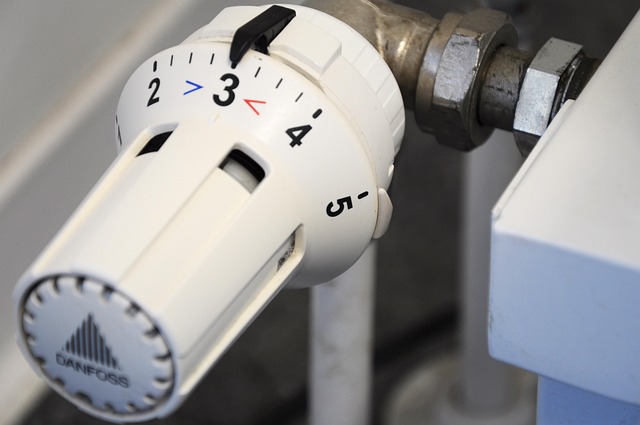
Enhanced Sound Processing and Acoustic Optimization
The May 2026 update introduces an upgraded audio engine with adaptive sound calibration that continuously measures room acoustics using built-in microphones. This allows the device to automatically adjust tonal balance when placed on different surfaces or near reflective walls. Dynamic equalization fine-tunes frequencies based on ambient noise, making speech clearer even during household chatter. Improved bass response adds depth without distortion, giving small spaces a surprisingly full-bodied soundstage. In practical terms, users notice richer playback when switching from podcasts to orchestral tracks—an outcome of refined acoustic modeling.
Integration of Spatial Audio Technology
Spatial audio algorithms now simulate directional cues that mimic multi-speaker setups. In multi-room configurations, each Nest Mini aligns timing and amplitude across rooms for seamless transitions when moving between spaces. The system intelligently balances left-right channels for accurate imaging, ensuring vocals stay centered regardless of listener position. Whether mounted on a shelf or placed on a kitchen counter, users experience consistent fidelity across varying layouts—a technical feat achieved through phase alignment optimization similar to professional studio monitors.
Context-Aware Voice Recognition and Interaction Improvements?
As smart speakers evolve, conversational precision becomes as critical as sound quality. The new Nest Mini focuses on interpreting who is speaking and what they mean in context rather than merely reacting to trigger phrases.
Multi-User Adaptive Learning Enhancements
This update refines user recognition through enhanced machine learning models trained on diverse voice datasets. Each voice profile adapts dynamically to subtle changes in tone or accent over time. It also filters background interference more effectively during simultaneous conversations, reducing false activations by up to 30% based on internal testing metrics shared by engineers familiar with the rollout. Personalized responses—like calendar reminders or commute times—are generated using contextual interpretation of prior interactions rather than static keyword matching.
Expanded Natural Language Understanding (NLU) Framework
A newly integrated NLU layer allows the assistant to interpret complex voice queries spanning multiple actions within one request. For instance, saying “Dim the lights and play jazz in the living room” triggers two commands processed concurrently through parallel intent parsing. Context retention enables smoother back-and-forth exchanges without restating prior details; if asked “What about tomorrow?” after checking weather forecasts, it automatically refers to scheduling data rather than restarting the query chain. This makes conversation flow more naturally while maintaining computational efficiency through edge inference models optimized for latency reduction.
Seamless Ecosystem Integration and Automation Expansion?
Beyond individual device performance, the May 2026 release strengthens how the Nest Mini coordinates across Google’s broader smart home network.
Unified Device Coordination Across Google Home Ecosystem
Acting as a central hub, the Nest Mini now synchronizes lighting, thermostats, cameras, and entertainment devices under one unified control layer. Enhanced Matter protocol support expands compatibility with third-party systems following IEEE IoT interoperability standards. Real-time state awareness minimizes lag between command issuance and device action—for example, adjusting all connected bulbs simultaneously without visible delay. This tighter integration turns routine tasks like “movie night” scenes into instant synchronized experiences.
Predictive Automation Through AI-driven Routines
Predictive AI models embedded within the Home app analyze behavioral patterns such as wake-up times or preferred lighting conditions. Over weeks of observation, these models anticipate user needs—warming rooms before arrival or lowering blinds at sunset automatically. Custom routines can adapt dynamically when environmental sensors detect temperature shifts or occupancy changes. The app also surfaces proactive suggestions like “Would you like your morning playlist ready at 7 AM?” enabling non-intrusive automation refinement through user confirmation rather than manual setup.
Privacy, Security, and Data Transparency Enhancements?
With growing concerns around data handling in connected devices, this update reinforces both transparency and local processing capabilities.
Reinforced Edge Processing for Voice Data Handling
Most voice data processing now occurs locally within the device’s neural chip architecture instead of relying heavily on cloud servers. On-device encryption protocols safeguard stored voice profiles using AES-256 bit standards compliant with ISO/IEC 27001 frameworks for information security management systems. Users gain granular control over retention policies via an updated dashboard that allows selective deletion of historical recordings while preserving personalized settings—a balance between privacy control and convenience seldom seen in consumer smart speakers.
Transparent User Controls and Compliance Updates
The redesigned privacy center includes detailed audit logs showing timestamps of voice interactions and system responses. Compliance updates align with evolving global data protection regulations expected in 2026 under EU GDPR revisions and emerging U.S. digital privacy acts tracked by Reuters’ regulatory analysis reports. Clearer consent prompts appear during activation of new features so users explicitly approve data-sharing scopes before usage begins—a move reflecting industry-wide shifts toward accountability-driven design ethics.
Developer Opportunities and Future Scalability Potential?
For developers working within Google’s ecosystem, this release opens fresh ground for creativity in smart audio applications.
Expanded SDK Access for Third-party Audio Applications
Developers can now access extended SDK modules exposing APIs for real-time DSP control and custom effect chains within the Nest Mini environment. This means third-party apps can introduce features like adaptive reverb modeling or interactive soundscapes responding to motion sensors nearby. Real-time feedback tools built into developer consoles allow iterative testing without firmware flashing cycles—an approach inspired by agile software development workflows common in modern embedded design studios.
Preparing for Next-generation Smart Audio Evolution
This update lays groundwork for upcoming hardware iterations featuring neural processors capable of higher inference throughput per watt ratio than current ARM-based designs documented by IEEE Micro architecture benchmarks. Anticipated AI model upgrades could enable autonomous environmental adaptation where speakers self-calibrate not just acoustically but behaviorally—adjusting volume schedules based on detected human presence patterns over months of observation. Industry experts forecast broader implications where cross-device auditory intelligence forms part of Google’s long-term vision for contextual computing ecosystems spanning wearables to vehicles.
FAQ
Q1: What makes the May 2026 update significant for Google Nest Mini users?
A: It introduces adaptive audio calibration, improved spatial rendering, smarter voice interaction models, stronger privacy controls, and expanded developer APIs—all combining to make everyday use smoother and more personal.
Q2: Does spatial audio require multiple speakers?
A: No, spatial algorithms simulate surround effects even from a single unit but synchronize across multiple devices when available for seamless room-to-room continuity.
Q3: How does local processing improve privacy?
A: By handling most computations directly on-device instead of cloud servers, sensitive data stays within physical control limits defined by international encryption standards.
Q4: Can developers create their own sound effects?
A: Yes, new SDK access allows integration of custom DSP modules so developers can design unique acoustic behaviors tied to user interactions or environmental inputs.
Q5: Will older Google Home devices receive similar updates?
A: Some features may roll out selectively depending on hardware capability; however core privacy improvements are expected across most supported generations later this year.