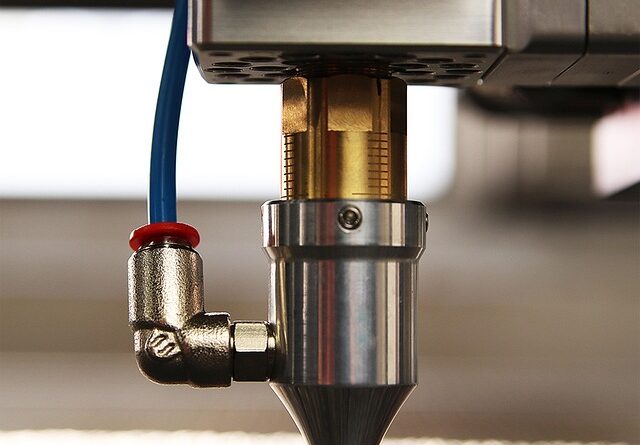
Are Cricut Engraving Projects Redefining Precision in Laser Cutter Design
The Best Laser Cutters and Engravers Can Help You Through an Array of Creative Projects
Modern engraving has evolved into a precise digital craft that merges artistry with automation. The best laser cutters and compact systems like Cricut have expanded creative boundaries, allowing professionals to achieve intricate detail once limited to industrial setups. Today’s engraving tools combine hardware precision with software intelligence, offering scalable solutions for both prototyping and production. Among these, cricut engraving projects stand out for their adaptability across materials and their ability to deliver professional-grade finishes in small studios or home workshops.
The Evolution of Precision in Modern Engraving Technologies
The shift from manual craftsmanship to automated control systems redefined how engraving is executed. Precision once depended on steady hands; now it relies on calibrated motion systems, firmware logic, and controlled energy delivery.
From Manual Engraving to Automated Systems
Traditional engraving involved artisans manually guiding burins or chisels across metal or wood surfaces. Each piece carried the maker’s unique touch but also human error. Automation changed this dynamic by introducing programmable paths that replicate designs flawlessly across multiple items. Mechanical pantographs gave way to CNC routers, which later evolved into digitally controlled cutters capable of sub-millimeter accuracy. This transformation reduced waste, improved repeatability, and made mass customization feasible without sacrificing quality.
The Emergence of Laser and Smart Cutting Tools
Laser technology introduced a new era of micro-level precision. Focused beams could vaporize material along exact coordinates, producing clean edges even on complex geometries. Meanwhile, smart consumer tools such as Cricut brought this level of control into accessible form factors. These devices use stepper motors guided by software algorithms that adjust pressure and path dynamically. Firmware updates continuously refine motion control, improving depth consistency and edge fidelity across diverse materials like acrylics, aluminum sheets, or coated leathers.
Understanding Cricut Engraving Projects as a Design Innovation
Digital fabrication has blurred the boundary between professional manufacturing and desktop creativity. Cricut’s adaptive system exemplifies this shift by combining physical tooling with intelligent software coordination.
What Sets Cricut Engraving Apart from Conventional Techniques
Cricut machines employ an adaptive tool system capable of handling materials from soft leather to anodized aluminum sheets without thermal deformation. Unlike laser cutters that rely on heat-induced ablation, Cricut engravers apply calibrated mechanical pressure to etch surfaces cleanly. This approach avoids burn marks and maintains color integrity on coated substrates. Internal calibration routines measure tool resistance during operation to maintain consistent results even after repeated runs—critical for batch production or multi-part assemblies.
Integration of Software Ecosystems in Cricut Design Workflow
Cricut’s Design Space platform functions as both design interface and process controller. It accepts vector-based input files that define precise movement paths for the engraver head, minimizing rounding errors common in raster-based systems. Designers can modify parameters like line weight or pressure directly within the interface before execution. Because the platform is cloud-connected, firmware and software improvements are deployed automatically, meaning each device benefits from incremental accuracy refinements without hardware upgrades.
Comparing Cricut Engraving with Professional Laser Cutters
While both technologies aim for precision fabrication, their mechanisms differ fundamentally—thermal versus mechanical—and so do their optimal applications.
Material Compatibility and Application Range
Industrial laser cutters handle dense substrates such as stainless steel or hardwood through controlled heat application that melts or vaporizes material along programmed lines. Cricut engravers specialize in finer details on thinner materials where excessive heat could cause warping or discoloration. For jewelry prototypes or personalized accessories, the tactile finish achieved by pressure-based engraving often feels more natural than a laser-burned surface. Choosing between them depends on project scale: lasers excel at throughput; Cricut excels at delicate precision.
Accuracy Metrics and Repeatability Standards
High-end laser cutters use optical encoders capable of micron-level positioning accuracy—a standard often required in aerospace component marking or microelectronics labeling under ISO 11145 classifications for laser processes. In contrast, Cricut engravers maintain sub-millimeter tolerances suitable for decorative work or product mockups where visual alignment matters more than dimensional certification. Both technologies employ closed-loop feedback mechanisms that monitor motor position during operation to sustain repeatability across long production runs.
Redefining Design Precision Through Hybrid Workflows
Many studios now combine different fabrication tools within a single workflow to exploit each system’s strengths—speed from lasers and texture control from mechanical engravers.
Combining Laser Cutting with Cricut Engraving Techniques
Designers frequently laser-cut structural outlines first due to the method’s rapid cutting speed through thick stock materials like plywood or acrylic panels. They then use Cricut engraving heads for branding marks or surface textures requiring subtle depth variations that lasers cannot achieve without charring edges. This hybrid approach balances efficiency with aesthetic refinement while maintaining digital consistency between processes through shared vector files.
The Role of Digital Calibration in Multi-System Setups
When multiple machines operate sequentially on one workpiece, calibration becomes crucial. Cross-platform coordinate mapping aligns engraved graphics precisely within pre-cut shapes, reducing cumulative tolerance drift over several passes. Using standardized reference grids ensures positional consistency whether switching between a CO₂ laser cutter and a pressure-driven engraver like the Cricut Maker series. Such synchronization minimizes material waste while enabling complex layered designs across different fabrication stages.
Future Directions in Precision Fabrication for Creative Industries
The next generation of engraving technologies will likely merge smarter mechanics with predictive algorithms derived from real-time data analysis.
Advancements in Tool Head Engineering and Material Science
Emerging tool heads integrate micro-actuators capable of adjusting pressure thousands of times per second based on surface hardness feedback. This allows deeper engraving without damaging thin substrates such as polymer films used in electronics packaging or wearable devices. Parallel advances in composite sheet materials—like fiber-reinforced acrylics—expand what compact desktop machines can process safely while maintaining structural integrity post-engraving.
AI-Assisted Design Optimization for Engraving Projects
Machine learning models trained on historical cut data can now predict ideal force settings for specific material combinations, reducing trial-and-error cycles during setup. AI-driven path planning also distributes wear evenly across tool tips by varying entry angles subtly between passes—a technique already explored in industrial CNC machining per IEEE robotics research standards—to extend consumable lifespan while preserving consistent depth profiles throughout long production sequences.
The Expanding Role of Cricut Engraving Projects in Professional Design Practice
As precision tools become smaller yet smarter, their role within professional workflows continues to grow beyond hobbyist experimentation into serious design prototyping.
Bridging Consumer Tools with Industrial Standards
Professional designers increasingly adopt cricut engraving projects during early prototyping phases because they offer quick turnaround without outsourcing costs associated with industrial equipment rentals. Once validated at small scale, these prototypes transition smoothly into full-scale manufacturing using industrial-grade systems calibrated against ISO dimensional standards—a workflow bridge once considered impractical due to equipment disparity but now made feasible by shared digital file compatibility.
Impact on Customization and Small-Batch Manufacturing Trends
Customization drives modern product value perception more than mass uniformity does. Compact engraving tools enable artisans and boutique manufacturers to personalize goods—from jewelry plates to electronic casings—within hours rather than days. Small-batch producers benefit particularly since they can iterate quickly based on customer feedback while maintaining consistent detail quality comparable to larger operations using automated inspection metrics aligned with IEC 62899 guidelines for printed functional layers.
FAQ
Q1: What materials can be used for cricut engraving projects?
A: Compatible materials include anodized aluminum sheets, acrylics, leather hides, coated plastics, and certain types of wood veneers depending on thickness tolerance.
Q2: How does a cricut engraver differ from a laser cutter?
A: A cricut engraver uses mechanical pressure applied through a stylus tip rather than heat; it physically displaces surface material instead of vaporizing it.
Q3: Can cricut engraving achieve industrial-grade precision?
A: While not equivalent to micron-level laser systems used in manufacturing certification contexts, it achieves sub-millimeter consistency sufficient for most design applications.
Q4: Is hybrid use of laser cutting and cricut engraving common?
A: Yes; many studios combine both methods—laser cutting defines structure quickly while cricut adds fine textures or branding details afterward.
Q5: What future improvements are expected in desktop engraving systems?
A: Upcoming developments include AI-guided path correction, adaptive pressure sensors for variable hardness surfaces, and expanded compatibility with new composite materials developed through advanced material science research initiatives under ISO frameworks.