How Can You Choose Electronic Components Manufacturers for Safer Global Sourcing?
Why Do Electronic Components Manufacturers Matter More in 2026?
When you search for electronic components manufacturers, you are doing more than checking catalog parts and unit prices. The supplier you choose can affect product life, repair rate, export documents, and the delivery date you promised to your customer. For more component sourcing topics, you can also visit the Components section. The market has become larger and faster, and small mistakes now cost more time than they did a few years ago.
Semiconductor Growth Raises Buyer Pressure
The Semiconductor Industry Association reported in February 2026 that global semiconductor sales reached 791.7 billion US dollars in 2025, up 25.6 percent from 630.5 billion US dollars in 2024, based on World Semiconductor Trade Statistics data. This is good news for the market, but it also means more buyers are trying to book stable factories, wafer starts, packaging capacity, and qualified lots. A low quote may help at the start, but it does not mean much if the maker cannot keep allocation for your second and third order. For export buyers, supply continuity often matters more than saving a few cents on the first PO.
Component Choice Shapes Product Reliability
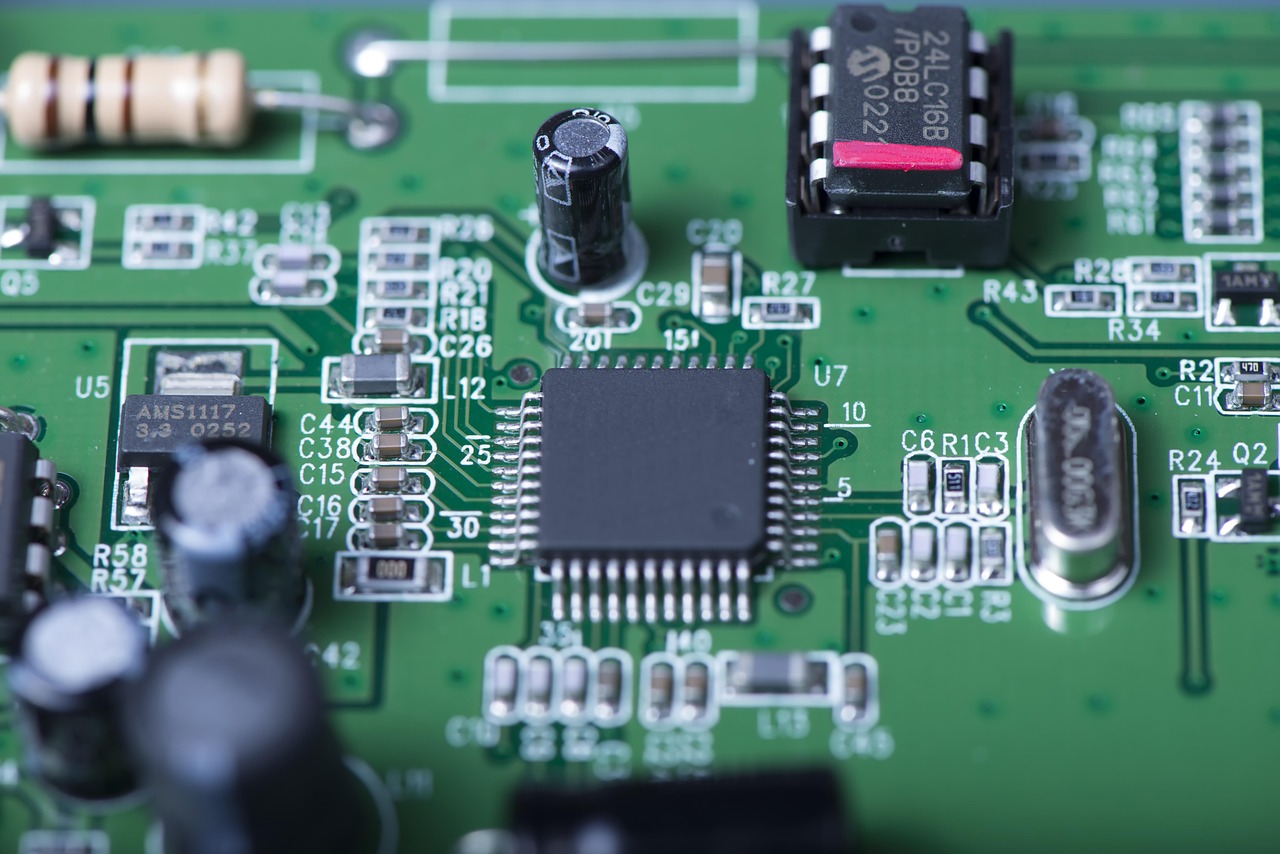
A resistor, MOSFET, relay, connector, or sensor can look easy to replace when it sits on a BOM line. After shipment, the same part may face heat, vibration, moisture, voltage spikes, and rough handling by the end user. A good manufacturer gives you datasheets, derating guidance, test limits, and clear packaging rules. A weak one may only send a part number and a clean product photo, which is not enough for a product expected to work for years.
Supplier Fit Saves Redesign Time
Supplier fit is not the same as company size. A large chip company may be the right choice for standard power ICs, while a smaller maker may handle magnetic components or custom cable assemblies with better support. If you sell industrial controls, smart meters, EV chargers, or LED drivers, check whether the manufacturer can support your voltage range, working temperature, certification path, and expected product life. A part that looks cheap on day one is no longer cheap if it causes a PCB redesign later.
How Can You Compare Manufacturers Beyond Unit Price?
Price still matters, and no buyer wants to explain a higher BOM cost without a reason. Even so, a proper comparison should put price next to quality systems, process control, documents, and technical support. In real purchasing work, the better supplier is usually the one that brings lower total risk for your actual product, not just the lowest line price.
Quality Systems and Test Evidence
Start with the quality system. ISO describes ISO 9001 as a globally recognized quality management standard, and many component makers use it as a basic requirement. Automotive projects often ask for IATF 16949, which AIAG describes as a quality management standard for automotive production, service, and accessory parts. A certificate does not prove every shipment is perfect, but it gives you something to check during supplier review. Ask for the certificate scope, expiry date, issuing body, and the factory address shown on the certificate.
Process Capability and Factory Capacity
Capacity is not only the number of machines shown on a website. Ask about monthly output for the exact package, series, or value you plan to buy. A factory may have strong capacity for 0603 resistors but limited support for high-voltage thick-film parts. A connector maker may ship standard pin headers fast, while custom tooling may still take weeks. Good manufacturers can talk about yield, key inspection points, and normal lead time without turning the answer into a sales pitch.
Compliance Documents That Travel With Parts
Export buyers often need RoHS, REACH, halogen-free statements, conflict minerals reports, safety files, or automotive material declarations. The European Commission describes RoHS as restricting certain hazardous substances in electrical and electronic equipment. For your order, the point is not only whether a part is compliant. The documents should match the exact part number, revision, and production lot, and they should stay with your purchase order, incoming inspection report, and shipment record.
What Proof Shows a Manufacturer Is Reliable?
A reliable manufacturer leaves records behind. Those records should be clear, repeatable, and easy to match with the goods in your warehouse. If each order depends on a salesperson checking details by hand, mistakes will show up sooner or later, especially when a project grows from 100 samples to 100,000 production pieces.
Traceable Date Codes and Lot Records
Traceability starts with date code, lot code, package label, and packing slip. For moisture-sensitive semiconductors, you may also need MSL level, bake condition, dry-pack status, and humidity indicator cards. For relays, terminals, and connectors, plating batch and material lot may also matter. A good manufacturer can link the parts in your box back to production records, and that link becomes very important if a claim or field failure appears.
Authorized Channel Support
Direct purchase is not always possible, so authorized distributors are still important. ECIA explains that its work brings together electronic component manufacturers, authorized distributors, and manufacturer representatives. Its quality resources also reference SAE AS6496 for authorized or franchised distribution and AS6081 for independent distribution. In daily sourcing terms, ask whether the distributor has a formal agreement for that line card. If the answer is not clear, slow down and check the channel before you pay.
Clear Obsolescence and PCN Handling
Product change notices and end-of-life notices can damage a stable product if they arrive too late. Ask how the manufacturer sends PCNs, how much notice is normally given, and whether last-time-buy support is available. This matters a lot for long-life products such as power supplies, medical accessories, building controls, and industrial boards. A maker with a clear PCN process gives you time to plan a redesign instead of dealing with a line stop on a Friday afternoon.
Which Risks Should You Check Before Placing Orders?
Many sourcing problems can be seen before payment if the buyer asks the right questions. The problem is that busy teams often stop at price, MOQ, and lead time. Add a few risk checks before the first order, and you may avoid months of emails after shipment.
Counterfeit Parts in Open Markets
The OECD and EUIPO reported in 2025 that counterfeit goods accounted for an estimated 467 billion US dollars in global trade in 2021. That number covers many product groups, not only electronics, but it shows how large the counterfeit trade has become. The U.S. GAO also found that suspect counterfeit electronic parts can appear on internet purchasing platforms, especially for obsolete, rare, or impossible date-code parts. If a discontinued IC suddenly appears in large quantity at a soft price, treat it as a warning sign and check the source carefully.
Lead Time Gaps and Allocation
Lead time should be checked by part family, not only by supplier name. The Global Electronics Association reported in 2026 that new orders, shipments, and backlogs had moved into expansion territory, while labor cost, material cost, workforce, and capacity pressures still remained. This means availability can get better in one category and become tight in another. Ask for factory lead time, stock lead time, and allocation rules. Also ask what happens if your forecast moves up or down by 30 percent.
Hidden Changes in Materials or Packaging
Small changes can create big trouble on the production line. A resin change may affect reflow behavior, and a plating change may affect solderability. A new reel supplier may affect feeder performance, while a different die revision may change leakage current or EMI behavior. For mature products, ask whether the maker has changed materials, tooling, marking, country of origin, or test flow during the last 12 months. The answer should be written down, not given as a casual comment in a chat. See also: Gadgets.
How Should You Build a Shortlist for Global Trade?
A shortlist works better when it is built from your BOM risk, not from search results alone. Do not put every part through the same heavy review. A common LED indicator and a safety-related current sensor do not carry the same risk, so they should not take the same amount of sourcing time.
BOM Review by Criticality
Split your BOM into three groups. The first group is critical parts that can stop compliance, safety, or core function. The second group is hard-to-replace parts with long lead time or special footprint. The third group is standard parts with many approved alternates. Spend most of your review time on the first two groups. For these parts, compare at least two electronic components manufacturers or one manufacturer plus one authorized channel. It is a simple method, but it works well in real purchasing work.
Sample Orders With Measured Results
Samples should be tested like a small production lot, not treated like a gift from a trade show booth. Check packaging, labels, dimensions, solderability, electrical values, and temperature performance if your product needs it. For connectors, do mating and pull tests. For power parts, run heat checks on the real PCB. Record results by lot code, because a sample that passes only at room temperature may still fail inside a sealed plastic box in summer.
Commercial Terms That Match Production
Good commercial terms make production planning easier. Ask for MOQ, price breaks, payment terms, warranty handling, cancellation rules, and forecast windows. If your production is seasonal, tell the supplier early. If you need stable pricing for six months, ask whether raw material swings can change it. Some buyers do not like asking these questions, but it is better to know before tooling, certification, and packaging have already been paid.
When Is Direct Buying Better Than Distributor Buying?
There is no single route that fits every order. Direct factory buying, authorized distribution, and a mixed model can all work. The right choice depends on volume, customization, engineering support, risk level, and how many line items your team needs to control.
Direct Deals for Custom or High Volume Parts
Buy direct when you need custom transformers, cable assemblies, connectors, switches, membrane keypads, or large-volume semiconductors with a clear forecast. Direct communication helps with drawing control, PPAP-style documents, tooling updates, and packaging requirements. It can also improve cost after the volume becomes stable. The tradeoff is also clear: you may face higher MOQ, longer negotiation, and more internal quality checks.
Authorized Distributors for Mixed BOMs
Authorized distributors are useful when your BOM has many brands, smaller quantities, or urgent engineering samples. They can reduce paperwork and help you avoid gray-market risk. For prototypes, repair batches, and early production, this route is often faster than opening many factory accounts. Always check whether the distributor is authorized for the exact manufacturer and product line, because a distributor can be authorized for one brand but not another.
Hybrid Sourcing for Better Resilience
A hybrid model often suits export manufacturers. Use direct factory orders for high-volume or custom parts, then use authorized distributors for samples, shortage cover, and lower-volume brands. Keep approved alternates ready for standard passives, connectors, and protection parts. Do not wait for a shortage to approve a second source, because by then many other buyers may be doing the same thing and the queue gets hard to manage.
FAQ
Q1: How many electronic components manufacturers should you qualify for one key part? A: For a critical or hard-to-replace part, qualify at least two sources when possible. If only one source exists, keep more safety stock and track PCN and EOL notices closely.
Q2: Is the cheapest component manufacturer always risky? A: Not always. Some makers are low-cost because they focus on narrow product families and run them well. The risk starts when low price comes with weak documents, unclear traceability, poor communication, or no test evidence.
Q3: What documents should you request before a production order? A: Ask for datasheets, certificates, RoHS or REACH statements if needed, quality certificates, lot traceability details, packing specifications, and PCN policy. For automotive or safety projects, ask for stricter proof before mass production.
Q4: Should you buy obsolete components from open-market sellers? A: Only after extra checks. Obsolete and rare parts carry higher counterfeit risk. Use authorized aftermarket sources when available, and consider independent lab testing for high-value or safety-related parts.
Q5: What is the simplest first step for supplier screening? A: Match the supplier to the part risk. For critical parts, check quality scope, authorized channel status, traceability, lead time, PCN process, and sample test results before chasing the lowest unit price.