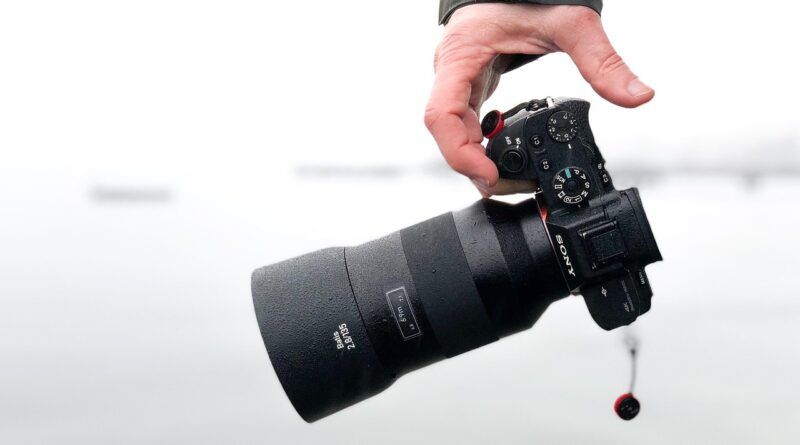
Sony consumer electronics in 2026 product lines, data and strategy
What Sony consumer electronics means in 2026
Sony consumer electronics in 2026 is best viewed as a selective premium hardware and creator-technology business, not a volume race in TVs, phones or headphones. Within Sony Group, most of this activity sits in the Entertainment, Technology & Services segment. That segment covers cameras and lenses, headphones and wireless speakers, televisions and projectors, smartphones, home audio, network services and some professional or creator-support products.
For readers comparing major device makers in the Gadgets space, the main point is clear: Sony is leaning further into imaging, sound and branded home entertainment while restructuring more volatile categories such as displays and smartphones. Figures in this article are based on Sony Group financial filings for the fiscal year ended March 31, 2026, Sony’s FY2026 first-quarter materials released July 31, 2026, and Sony Electronics product announcements through August 2026.
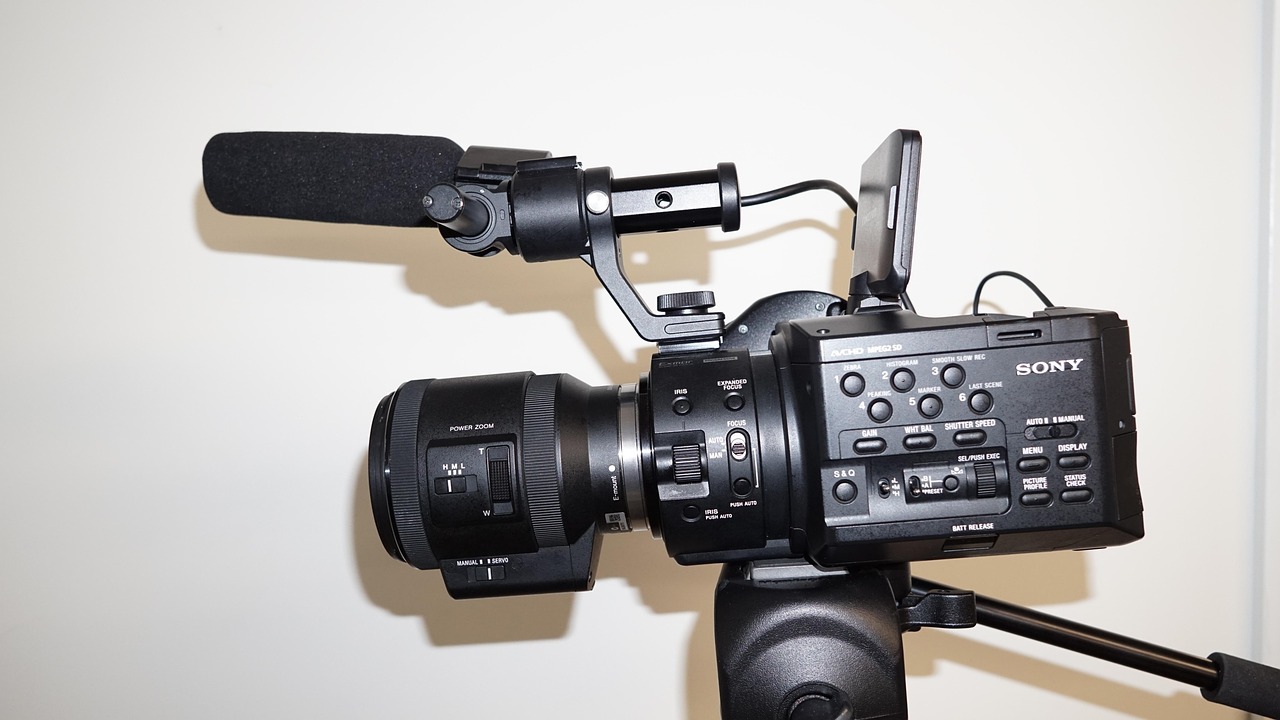
What products are included in Sony consumer electronics
The phrase Sony consumer electronics can be confusing because everyday shoppers often place PlayStation, image sensors and even Sony Pictures home media in the same mental category. Sony’s own reporting is more specific. PlayStation sits in Game & Network Services, image sensors sit in Imaging & Sensing Solutions, and movies and music are reported in separate entertainment segments. The consumer electronics core is mainly in Entertainment, Technology & Services, often shortened to ET&S.
In Sony’s FY2025 reporting, which covers the fiscal year ended March 31, 2026, ET&S was divided into Imaging, Sound, Network Services, Displays and Other. The table below reorganizes that disclosure into a clearer industry view.
| ET&S category | Main product scope | Sales to external customers in fiscal year ended March 31, 2026 | Share of ET&S external sales |
|---|---|---|---|
| Imaging | Interchangeable-lens cameras, lenses, video content creation products and related solutions | 722.5 billion yen | 33.1% |
| Other | Smartphones, home audio, medical equipment, sports officiating support and content production support services | 518.9 billion yen | 23.7% |
| Displays | LCD and OLED televisions, projectors and related display products | 476.3 billion yen | 21.8% |
| Sound | Headphones, wireless speakers and related audio products | 278.8 billion yen | 12.8% |
| Network Services | Internet-related services within ET&S | 188.3 billion yen | 8.6% |
These percentages use external customer sales, not total segment sales, so they exclude intersegment revenue. The split shows why Sony’s electronics identity is now broader than televisions. Imaging was the largest disclosed external-sales category in ET&S, while displays remained a major business but faced the strongest pressure.
The financial picture shows a profitable but more selective hardware business
For the fiscal year ended March 31, 2026, Sony reported ET&S total sales of 2,260.5 billion yen and operating income of 158.6 billion yen. Compared with the previous fiscal year, total segment sales fell from 2,409.3 billion yen, a decline of about 6.2%. Operating income fell from 190.9 billion yen, a decline of about 16.9%.
| Metric | Fiscal year ended March 31, 2025 | Fiscal year ended March 31, 2026 | Approximate change |
|---|---|---|---|
| ET&S total sales | 2,409.3 billion yen | 2,260.5 billion yen | -6.2% |
| ET&S operating income | 190.9 billion yen | 158.6 billion yen | -16.9% |
| Displays sales to external customers | 597.8 billion yen | 476.3 billion yen | -20.3% |
Sony attributed the weaker ET&S performance mainly to lower unit sales in displays, a more competitive display market and tariff pressure. It also said profitability was supported by actions such as disciplined inventory management, operating expense reductions and regional sales adjustments.
In practical terms, Sony is not trying to win every consumer electronics category by volume. It is trying to keep electronics profitable by concentrating on product areas where its technology, brand and creator ecosystem can support higher value.
The most recent quarterly signal available as of August 29, 2026 was Sony’s first quarter of FY2026, covering the three months ended June 30, 2026. ET&S sales were 543.9 billion yen, up from 534.3 billion yen a year earlier, while operating income was 42.6 billion yen, nearly flat with 43.1 billion yen a year earlier. Sony’s July 2026 full-year forecast kept ET&S sales at 2,250 billion yen and operating income at 150 billion yen, pointing to a cautious outlook rather than a sharp rebound forecast.
The strategy is shifting from mass hardware to creator ecosystems
Sony’s segment materials make the strategic direction unusually clear. The company separates the ET&S portfolio into three broad roles. Imaging and Sound are treated as expansion areas, where Sony aims to build stronger ecosystems around creators, listeners and production workflows. Network services, sports technology, life science and new content creation are treated as growth or generation areas. Displays, smartphones and some home audio activities are placed in structural reform or transformation areas.
That wording is important. Sony is not presenting all electronics categories as equal growth engines. Cameras, lenses, cinema tools, audio products and creator solutions receive more strategic emphasis because they connect to Sony’s wider strengths in entertainment, sensors, content production and professional workflows. Televisions and smartphones still carry significant brand value, but they operate in categories where panel costs, scale manufacturing, local competition and replacement cycles make profitability harder to stabilize.
This is why a current view of Sony consumer electronics should focus less on nostalgia for the Walkman era and more on how Sony links devices to creation and experience. Alpha cameras connect to lenses, creator apps and professional video pipelines. Premium headphones connect to spatial audio, music listening and gaming use cases. BRAVIA televisions connect to home cinema, content presentation and home audio. Xperia phones remain in the portfolio, but their role appears narrower and more region-specific than mainstream Android competitors built around global scale.
Recent products show where Sony is putting attention
Sony’s 2025 and 2026 product activity supports the same reading. The company continues to launch consumer-facing devices, but the most visible launches are clustered around high-end imaging, creator video, premium audio and home theater.
| Date | Product or line | What Sony emphasized | Industry meaning |
|---|---|---|---|
| December 2, 2025 | Alpha 7 V | A full-frame mirrorless camera with a newly developed partially stacked sensor and AI-assisted autofocus improvements | Reinforces Sony’s creator-camera ecosystem below its highest-resolution models |
| May 13, 2026 | Alpha 7R VI | Approximately 66.8 effective megapixels, high-speed readout and upgraded professional features | Shows continued investment in high-resolution stills and hybrid creator tools |
| May 19, 2026 | 1000X THE COLLEXION and WH-1000XM6 Sandstone | Premium materials, comfort, noise canceling heritage and design-led personal audio | Positions headphones as lifestyle and sound-quality products, not just commodity accessories |
| May 27, 2026 | BRAVIA 9 II, BRAVIA 7 II and BRAVIA Theater Trio | True RGB televisions, home cinema performance and integrated theater audio | Keeps BRAVIA focused on premium home entertainment despite restructuring |
| July 9, 2026 | RX10 V | All-in-one 24-600mm zoom, AI-powered Real-time Recognition AF and high-speed shooting | Targets enthusiasts who want reach and simplicity without a full lens system |
| July 22, 2026 | FX5 Cinema Line camera | Open Gate shooting, internal RAW recording, high dynamic range and compact production design | Pushes consumer-adjacent electronics toward professional creator workflows |
| August 25, 2026 | Xperia 10 VIII | Brighter display, stronger stereo speakers and everyday usability for selected markets | Shows Xperia continuing, but with availability and positioning that vary by region |
The product pattern is not random. Sony’s camera announcements span enthusiast, hybrid and cinema users. Its headphone announcements emphasize premium design and long-running noise-canceling credibility. Its BRAVIA announcements focus on picture quality and home-theater experience rather than budget TV scale. Xperia remains active, but the company’s own portfolio classification suggests smartphones are part of a transformation area, not the central growth story. See also: Components.
BRAVIA and TCL are the biggest structural change
The most important 2026 business development for Sony consumer electronics was not a single device. It was the restructuring of home entertainment. On March 31, 2026, Sony announced legally binding definitive agreements with TCL Electronics for a strategic partnership in the home entertainment field, following a memorandum of understanding announced on January 20, 2026.
Under that agreement, Sony is expected to establish a company that succeeds to the home entertainment business, including consumer BRAVIA TVs, B2B BRAVIA displays, B2B LED displays, projectors and home audio equipment such as theater systems and audio components. TCL is expected to hold 51% and Sony 49%. The planned company name is BRAVIA Inc., with operations expected to begin in April 2027, subject to regulatory approvals and other closing conditions.
This should not be read simply as Sony leaving televisions. The announced structure indicates that future products are expected to continue using the Sony and BRAVIA names. A more accurate interpretation is that Sony is trying to combine its picture, sound, brand and product-planning strengths with TCL’s display manufacturing scale and supply-chain efficiency. For buyers, the practical questions will be how product quality, software support, panel sourcing and regional model differences evolve after the new structure begins operating.
What this means for buyers, retailers and industry watchers
For buyers, the Sony consumer electronics story points to a straightforward expectation: Sony will likely remain strongest where premium performance, design, imaging quality, sound tuning and ecosystem compatibility matter. A Sony Alpha buyer is not just buying a camera body; they are entering an E-mount lens and accessory system. A BRAVIA buyer is paying for Sony’s approach to image processing, home cinema tuning and audio integration. A 1000X headphone buyer is paying for noise canceling, comfort, app features and a long-running premium audio line.
For retailers and industry watchers, the lesson is different. Sony’s electronics business should not be judged only by unit volume or by the breadth of its entry-level product range. The company is deliberately managing exposure to volatile markets. In displays, the TCL partnership is designed to reduce operational risk while preserving the brand’s premium positioning. In smartphones, product launches continue, but Sony appears more selective by region and use case. In cameras and audio, the company continues to build higher-value products for creators, musicians, filmmakers, gamers and enthusiasts.
There are limits to this strategy. Premium devices depend on consumers being willing to pay more during uncertain economic periods. Creator-focused products face competition from Canon, Nikon, Panasonic, Fujifilm, Apple, Samsung and many others, depending on the category. Hardware also remains exposed to component costs, exchange rates, tariffs and regional distribution decisions. Sony’s advantage is that it can connect electronics to entertainment, sensors, production tools and professional workflows. Its challenge is proving that those connections still matter enough for buyers to pay a premium.
Frequently asked questions
Is PlayStation part of Sony consumer electronics?
In everyday language, many people think of PlayStation as consumer electronics. In Sony’s financial reporting, however, PlayStation is part of Game & Network Services, not the ET&S electronics segment discussed here. That distinction matters when comparing Sony’s camera, TV, audio and smartphone business with its gaming business.
Is Sony leaving the TV market?
Based on Sony’s March 31, 2026 announcement, Sony is not simply abandoning TV products. It has agreed to form a home entertainment joint venture with TCL, planned as BRAVIA Inc., with TCL holding 51% and Sony 49%. The announced products are expected to continue using Sony and BRAVIA names, although the structure remains subject to approvals and closing conditions before the expected April 2027 start.
What is the strongest category in Sony consumer electronics?
By external customer sales in Sony’s ET&S segment for the fiscal year ended March 31, 2026, Imaging was the largest disclosed category at 722.5 billion yen. Strategically, Sony also highlights Imaging and Sound as expansion areas, which suggests these categories are central to the company’s future electronics positioning.
Why does Sony still make Xperia phones?
Xperia gives Sony a smartphone platform that can connect mobile imaging, display, audio and creator ideas. However, smartphones are classified inside a structural reform or transformation area in Sony’s ET&S strategy, and availability can vary by market. That makes Xperia different from mass-market Android brands that prioritize scale above all else.
What should buyers check before choosing a Sony device?
Buyers should check regional availability, warranty terms, software support, accessory compatibility and whether the premium features match their actual use. Sony products often make the most sense when the buyer values imaging quality, sound performance, creator workflows or home-theater integration more than the lowest possible price.