CES best tech 2026 highlights that matter for gadget buyers
Why CES best tech 2026 matters now
CES best tech coverage is most useful when it separates buying signals from show-floor spectacle. CES 2026 ran from January 6 to January 9 in Las Vegas. According to the Consumer Technology Association’s audited summary, the event had 148,392 total verified attendees, including 86,679 industry attendees, 54,676 exhibitor personnel and 7,037 media attendees. CTA also reported more than 4,100 exhibitors, including about 1,200 startups in Eureka Park. That scale matters because CES is not a single product launch event. It is closer to a market map, showing where product categories, component platforms and buyer expectations are moving. (ces.tech)
The most relevant gadgets from 2026 were not only the largest screens or the most eye-catching robots. They were products and platforms that pointed to the next stage of AI hardware, home automation, health monitoring, mobility and battery technology. AI dominated the floor, but the stronger signal was AI becoming physical. Instead of staying inside phones, speakers or cloud apps, AI appeared in robots, appliances, displays, wearables, vehicles and industrial systems. For gadget buyers, the next upgrade cycle will be judged less by raw specifications alone and more by whether a device can sense, decide and act reliably in normal use.
How to read CES awards without treating every prototype as a product
There is no single universal definition of “best tech” at CES. CTA’s official CES Innovation Awards recognize design and engineering across many categories, while the official Best of CES program for 2026 was awarded by CNET Group in partnership with CTA. CTA said CNET Group journalists and editors from brands including CNET, PCMag, Mashable, ZDNET, Everyday Health, IGN and Lifehacker evaluated products and selected winners in 22 categories plus one Best Overall winner. (ces.tech)
Those awards are useful reference points, not buying guarantees. A CES Innovation Award can spotlight a breakthrough technology before pricing, retail availability, regulatory clearance or long-term reliability is clear. A Best of CES editorial award can identify a strong show-floor idea, but the product may still be a prototype, a regional launch or a feature that depends on future software. A buyer-focused CES best tech list should answer three questions: what problem does the product solve, what evidence supports the claim, and how soon can consumers buy and support it?
The strongest signals from CES 2026
Physical AI moved from assistants to machines
One of the clearest shifts at CES 2026 was from conversational AI toward machines that can navigate, manipulate and respond to physical environments. CTA’s Innovation Awards page named Doosan Robotics and Maple Advanced Robotics’ Scan&Go as a 2026 Best of Innovation winner in Artificial Intelligence and an honoree in Robotics. The system is described as an AI-powered autonomous mobile robot solution for large-scale manufacturing, using 3D vision and physics-informed AI to generate tool paths from point-cloud data rather than relying only on static CAD programming. (ces.tech)
Consumer buyers are not about to shop for industrial robots, but the technology direction is relevant. Home and personal devices are moving toward better spatial awareness, more autonomous movement and fewer scripted routines. Hyundai’s MobED platform, a 2026 Best of Innovation winner in Robotics, used independently controlled wheels and an eccentric mechanism to remain stable across uneven surfaces. Roborock’s Saros Rover, covered by AP and specialist vacuum outlets, showed a robot vacuum concept designed to climb and clean stairs, although AP noted that no release date had been given and that it remained in development. (ces.tech)
Displays pushed size, color and home integration
TVs and displays are always central to CES, but the 2026 story was not simply about bigger screens. Hisense’s 163MX won 2026 Best of Innovation in Video Displays. CTA’s description says the 163-inch MicroLED display uses a four-primary RGBY pixel architecture that adds yellow to the traditional red, green and blue structure, with claimed coverage of 95% of the BT.2020 color space. That is a technical signal: premium displays are competing on color volume, self-emissive control and large-format installation, not only resolution. (ces.tech)
At the same time, ultra-thin and design-led displays continued to narrow the gap between TV and interior object. AP’s CES 2026 coverage highlighted LG’s wallpaper-style TV approach, describing a 9-millimeter-thick panel designed to blend into its surroundings. The practical buyer question is whether these advances will move into mainstream sizes and prices, or remain premium showcases for early adopters.
Health tech moved toward monitoring and clinical claims
Health gadgets at CES 2026 went well beyond step counters. CTA listed Earflo as a 2026 Best of Innovation winner in Digital Health, describing it as a non-invasive medical device intended to treat negative middle ear pressure related to otitis media with effusion in young children. The same CTA page states that the device was FDA 510(k) pending and not currently for sale. That kind of detail is essential when CES products make health-related claims. (ces.tech)
AP also reported on Withings Body Scan 2, a smart scale said to measure 60 biomarkers in 90 seconds and expected for spring availability at $600, with an associated subscription. The broader trend is that health devices are moving from general wellness data toward more specific monitoring. That raises the importance of accuracy, privacy, medical labeling and recurring software costs. (apnews.com)
Energy density remained a quiet enabler
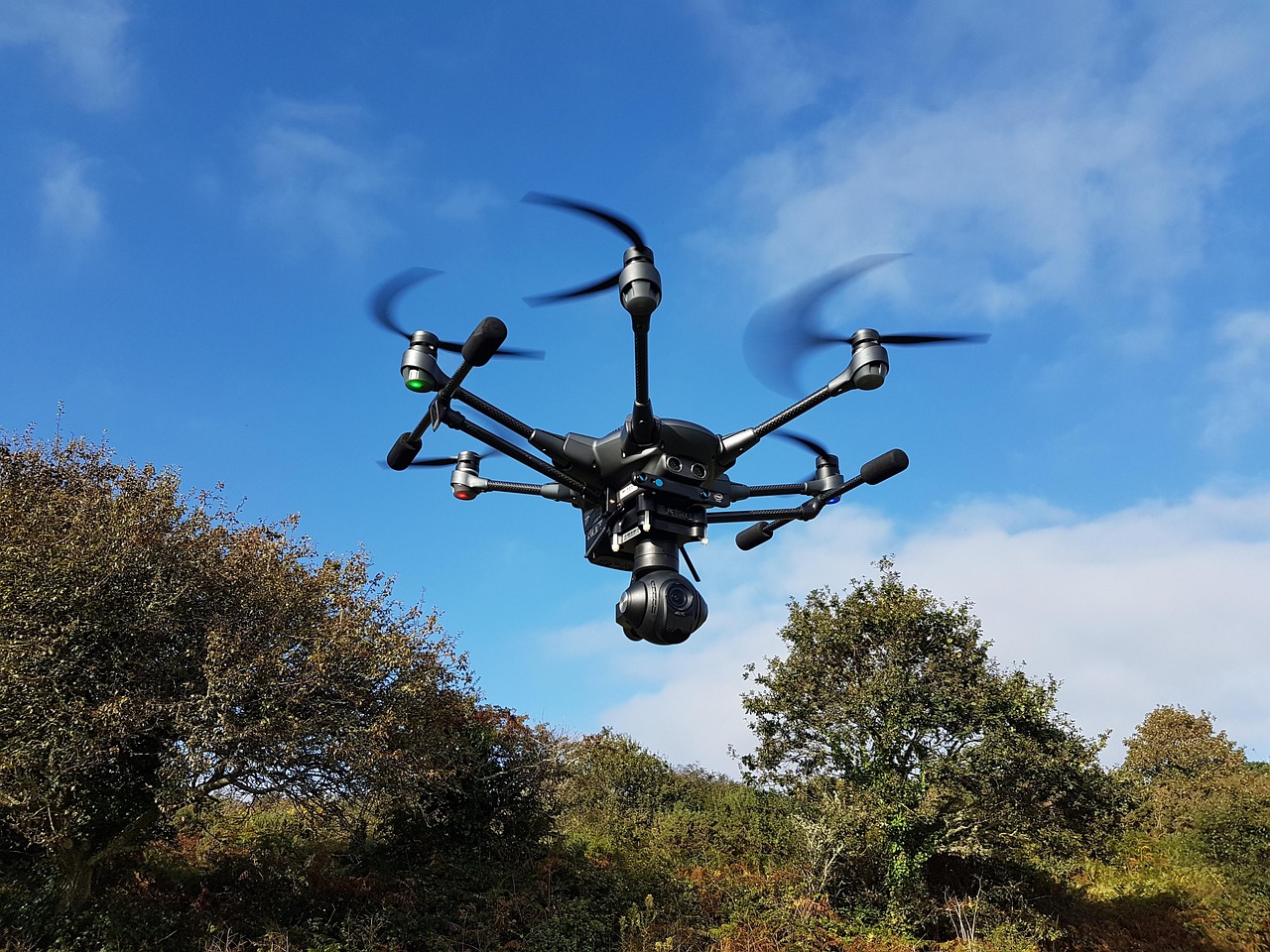
Some of the most important CES technology does not look like a consumer gadget at first glance. Amprius Technologies’ 520 Wh/kg cell won 2026 Best of Innovation in Sustainability & Energy Transition. CTA described it as a silicon-anode battery design with 520 Wh/kg energy density, positioned for drones, electric flight and advanced mobility, and compared it with standard graphite cells at about 260 Wh/kg. If these technologies scale safely and economically, the downstream impact could appear in lighter devices, longer drone flight times and new categories of electric mobility. (ces.tech)
A quick comparison of notable CES tech directions
| Direction | Examples from CES 2026 | What looks meaningful | What buyers should verify |
|---|---|---|---|
| Physical AI and robotics | Scan&Go, MobED, Saros Rover | Better sensing, navigation and real-world movement | Release timing, safety, service support and whether demos work in normal homes |
| Premium displays | Hisense 163MX, thin OLED concepts | Color range, self-emissive pixels and design flexibility | Price, mainstream sizes, ports, gaming latency and repair costs |
| Health monitoring | Earflo, Body Scan 2 | More specific health use cases beyond basic activity tracking | Regulatory status, clinical evidence, data privacy and subscriptions |
| Energy and batteries | Amprius 520 Wh/kg cell | Potential for lighter, longer-lasting mobile systems | Manufacturing scale, safety certification and consumer availability |
| AI appliances and smart home | AI fridges, cameras, companions and assistants | Context-aware automation can reduce friction when it is reliable | Privacy controls, offline function, repairability and whether AI is necessary |
This comparison is more useful than a simple ranked list because CES products mature at different speeds. A display panel can reach premium buyers quickly. A health device may need clearance and careful claims. A robot vacuum prototype may need months or years of reliability testing before it becomes a safe consumer product. See also: Components.
What gadget buyers should verify before trusting the hype
CES rewards imagination, but buyers still need discipline. Before treating any show-floor product as a must-have upgrade, check whether the company has announced a real price, target market, shipping window and support plan. Also check whether the product depends on cloud AI, a paid app, a proprietary cartridge, a subscription or a closed repair system. These details often decide whether a clever gadget remains useful after launch attention fades.
Privacy and repairability deserve particular scrutiny. AP reported that a separate “Worst in Show” list from consumer and privacy advocates criticized several CES 2026 products, including AI refrigerators, AI companions, doorbell camera features, disposable electronics and connected fitness equipment. The point is not that all AI gadgets are bad. The issue is that more sensors, more cameras and more automated decisions create new risks when companies do not clearly explain data handling, security, repair access and long-term software support. (apnews.com)
- Availability: Is it shipping, in development or only a concept?
- Evidence: Are performance claims independently tested, or only demonstrated on a booth floor?
- Privacy: Does the device collect audio, video, biometric or location data?
- Longevity: Can the battery, parts or filters be replaced?
- Interoperability: Does it work with common platforms, or only a closed ecosystem?
- Cost over time: Are core features locked behind subscriptions?
Which CES best tech is closest to everyday impact?
The near-term winners for everyday users are likely to be practical upgrades in categories that already have strong retail channels: laptops, TVs, robot vacuums, smart home devices, earbuds, cameras and health trackers. These products can absorb new AI features without requiring buyers to adopt an entirely new behavior. A better robot vacuum still cleans floors, and a smarter TV still fits a familiar entertainment setup.
The medium-term category is AI wearables and ambient assistants. CTA’s Innovation Awards included Zone HSS1 as a 2026 Best of Innovation winner in Artificial Intelligence, described as a wearable AI interface with cameras, microphones, private spatial audio, on-device processing and privacy controls. That combination points to a future in which wearables act less like notification screens and more like contextual assistants. Even so, buyers should wait for battery-life testing, privacy reviews and clear use cases before assuming smart glasses or AI pins are ready for mass adoption. (ces.tech)
The longer-term category includes advanced batteries, industrial robotics and vehicle platforms. These may not appear in a shopping cart immediately, but they shape the components and capabilities that later reach consumer devices. For continuing coverage of consumer electronics trends, visit the Gadgets section.
Frequently asked questions
What does CES best tech mean?
It usually refers to standout products, concepts and platforms selected by official award programs, editors or industry observers during CES. It should not be read as a universal ranking of every gadget. A useful CES best tech list explains why a product matters, how mature it is and what still needs verification.
Are CES 2026 products already available?
Some are available or close to retail launch, while others are prototypes, concepts or regulated devices awaiting further steps. Health products may require clearance, robotics products may need safety validation, and display technologies may first appear in expensive premium models.
Was AI the biggest CES 2026 trend?
AI was one of the strongest themes. CTA’s audited attendance data listed Artificial Intelligence as the top product category of interest among industry attendees, ahead of robotics, computing, IoT/sensors and vehicle technology. The more important shift was AI being embedded into physical products rather than presented only as software. (ces.tech)
How should I compare different CES award lists?
Compare the criteria behind each list. Official Innovation Awards emphasize design and engineering. Editorial awards often emphasize show-floor impact and reader interest. A buyer-focused view should add availability, price, reliability, privacy and support before calling any product a smart purchase.