IC electronic components explained for design, sourcing and assembly
What are IC electronic components?
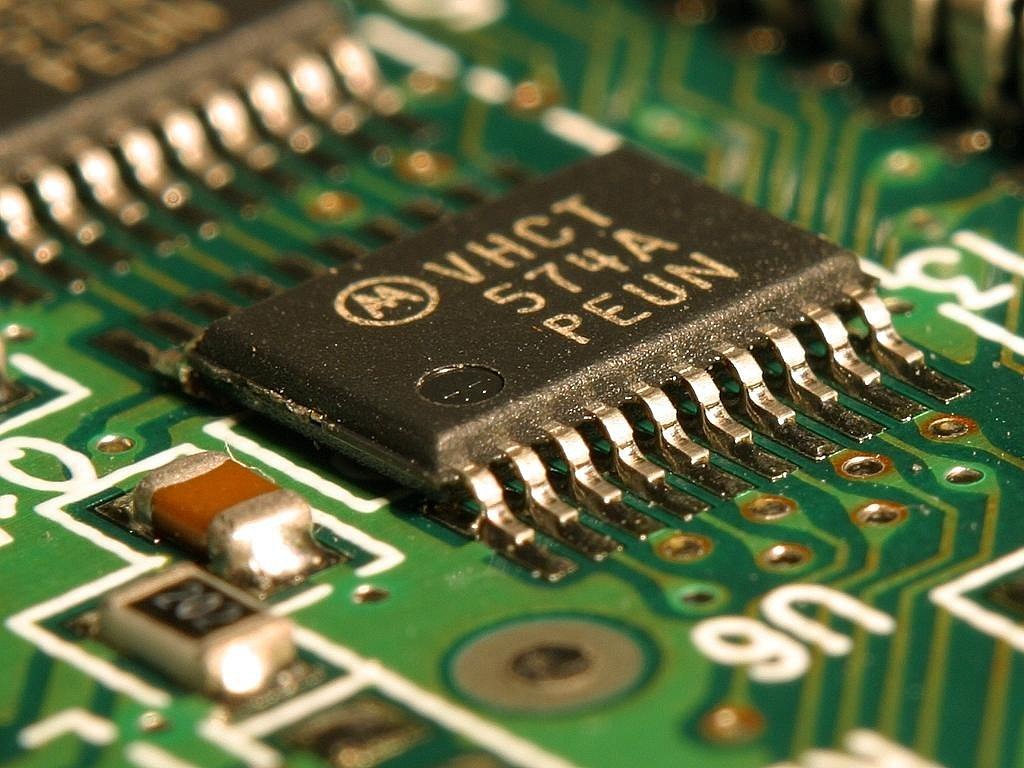
IC electronic components are integrated circuits used to perform defined electrical functions on a printed circuit board. They may process signals, store data, regulate power, drive loads, or connect a device to wired and wireless interfaces. Unlike discrete components such as resistors, capacitors and diodes, an integrated circuit contains many active and passive structures formed on a semiconductor die and protected inside a package.
For design and sourcing teams, an IC is not selected by function alone. It also has to match the circuit voltage, current, speed, temperature range, package, lifecycle, compliance requirements and assembly process. A device that looks suitable in a block diagram can still create problems if the footprint is difficult to build, the thermal margin is too tight, or the ordering code does not match the intended qualification grade.
The category matters because ICs sit at the center of most modern electronics. World Semiconductor Trade Statistics reported in March 2026 that global semiconductor sales reached about $796 billion in 2025, reflecting the role of chips in computing, automotive, industrial control, communications and consumer products. That market figure does not mean every IC is hard to buy, but it explains why selection, documentation and supply-chain discipline are now part of component engineering.
Main types of IC electronic components
ICs are often grouped by function. The boundaries are not always clean, because many modern parts combine analog, digital, memory, power management and communication blocks in one package. Even so, the following categories are useful when comparing components during early design and sourcing.
| IC type | Primary role | Common examples | Key selection factors |
|---|---|---|---|
| Logic ICs | Switch, gate, buffer or translate digital signals | Gates, flip-flops, level shifters, bus transceivers | Logic family, voltage range, propagation delay, drive strength |
| Analog ICs | Condition, amplify or compare continuous signals | Operational amplifiers, comparators, references, filters | Input offset, noise, bandwidth, stability, supply range |
| Mixed-signal ICs | Bridge analog signals and digital systems | ADCs, DACs, sensor front ends, codecs | Resolution, sampling rate, interface, reference accuracy, layout needs |
| Power management ICs | Convert, regulate, protect or distribute power | Buck regulators, LDOs, battery chargers, load switches | Input range, output current, efficiency, thermal resistance, protection features |
| Memory ICs | Store code, configuration or user data | Flash, EEPROM, SRAM, DRAM | Capacity, endurance, speed, interface, retention, availability |
| Microcontrollers and processors | Run software and control system behavior | MCUs, MPUs, SoCs, digital signal processors | Core, peripherals, memory, software ecosystem, security, lifecycle |
| Interface and RF ICs | Connect circuits to networks, radios or buses | USB, Ethernet, CAN, RS-485, Wi-Fi, Bluetooth, RF front ends | Protocol support, certification path, EMC behavior, antenna or line matching |
This classification is a starting point, not a substitute for datasheet review. A power IC can fail because of thermal design even when the output-current rating looks adequate. An analog IC may meet bandwidth requirements on paper but perform poorly on a noisy board. A communication IC can be electrically correct yet difficult to qualify if the end product also needs regulatory certification.
How an IC is specified beyond the part number
A part number is only the entry point. In real projects, the ordering code may encode package, temperature grade, packing method, lead finish, revision, automotive qualification or memory size. Two codes that look similar can carry different electrical limits, compliance documentation or assembly implications.
Package and footprint
The IC package affects board area, routing density, heat flow, inspection and rework. Traditional through-hole packages remain useful in some education, prototyping and rugged applications, but most volume electronics use surface-mount packages. Common examples include SOIC, TSSOP, QFN, BGA, WLCSP and many vendor-specific variations.
JEDEC package standards, including the JESD30 designation system for semiconductor-device packages, exist to make package naming more consistent. Even so, engineers should not rely on package names alone. A QFN from one supplier may have a different exposed pad, body size, pin pitch or recommended land pattern than a similar part from another supplier. The safer workflow is to compare the manufacturer land pattern, mechanical drawing, stencil guidance and assembly house capability before locking the PCB.
Electrical and thermal ratings
Every IC should be checked against operating conditions, not just absolute maximum ratings. Absolute maximum ratings define stress limits; they are not recommended design points. For a regulator, useful checks include input voltage range, dropout or duty-cycle limits, output current, efficiency curve, switching frequency, compensation and thermal resistance. For an op amp, useful checks include common-mode input range, output swing, gain-bandwidth product, slew rate, noise and stability with capacitive loads.
Thermal design deserves a separate review. A small package may advertise high current, but usable current depends on copper area, airflow, ambient temperature and power dissipation. The same IC can behave differently on a compact IoT board, a four-layer industrial controller and a sealed automotive module.
Lifecycle and documentation
Lifecycle status is both a sourcing issue and a design issue. A component marked active may still have long lead times, while a mature but stable IC can be a better fit for a long-life industrial product. Teams should check datasheets, errata, application notes, product change notices, end-of-life notices and authorized distributor listings. For programmable ICs, firmware tools, security updates and long-term software support can matter as much as the silicon.
Where ICs fit in the wider component ecosystem
An IC rarely works alone. It usually depends on passives, connectors, protection devices, timing sources and PCB layout to achieve the performance shown in the datasheet. A microcontroller may need decoupling capacitors, a crystal or oscillator, pull-up resistors, programming headers and ESD protection. A switching regulator may need an inductor, input and output capacitors, feedback resistors and careful current-loop layout. A high-speed interface may require impedance-controlled traces, common-mode chokes, termination and suitable connectors.
This is why component selection should be treated as a system decision. The cheapest IC can raise total cost if it requires a complex power tree, expensive PCB stack-up or unusually tight layout rules. A slightly larger package may reduce assembly risk. A pin-compatible second source may reduce supply-chain risk. A device with stronger application documentation may save engineering time.
For more component-level explainers and category guides, visit the Components section.
Sourcing, authenticity and compliance risks
For IC electronic components, sourcing risk increases when demand is strong, parts are obsolete, or buyers move outside authorized channels. NIST supply-chain guidance identifies counterfeiting, unauthorized production, tampering and hardware insertion as relevant risks for computing devices and electronic supply chains. In practical purchasing terms, the lowest unit price should not be the only decision factor. See also: Gadgets.
Common warning signs include incomplete traceability, inconsistent labels, suspicious date codes, altered packaging, mismatched moisture sensitivity labels, unusually low pricing and sellers that cannot provide manufacturer documentation. For high-reliability sectors such as aerospace, defense, medical, automotive and industrial control, authenticity procedures may include approved vendor lists, incoming inspection, X-ray inspection, electrical testing and documented chain of custody.
Compliance adds another layer. The European Union RoHS Directive 2011/65/EU restricts certain hazardous substances in electrical and electronic equipment. Manufacturers selling into regulated markets may also need to consider REACH, conflict minerals reporting, halogen-free requirements, country-specific safety rules and customer-specific environmental declarations. An IC may be technically correct and still unsuitable if its documentation does not support the target market.
Assembly standards also influence component decisions. IPC J-STD-001 covers requirements for soldered electrical and electronic assemblies, while IPC-A-610 is widely used for acceptability criteria. These standards do not select an IC for the designer, but they shape how solder joints, workmanship and assembly quality are evaluated. Package choice, lead finish, moisture sensitivity and board finish all interact with the assembly process.
A practical checklist for choosing IC electronic components
The best selection process combines electrical engineering, mechanical review, supply-chain checks and manufacturing input. A compact checklist can prevent many common mistakes:
- Define the real function. Identify whether the circuit needs logic, analog conditioning, power conversion, memory, processing, communication or a mixed function.
- Check operating conditions. Review supply voltage, signal levels, load current, clock speed, ambient temperature, duty cycle and transient conditions.
- Read recommended operating ratings. Do not design around absolute maximum ratings except as stress limits.
- Evaluate package and layout. Confirm footprint, exposed pad, routing density, thermal copper, inspection access and rework feasibility.
- Confirm availability. Compare authorized distributor stock, lead time, minimum order quantity, lifecycle status and possible alternates.
- Review compliance data. Check RoHS, REACH, lead finish, moisture sensitivity level, material declarations and customer-specific requirements.
- Look for documentation depth. Prefer parts with current datasheets, application notes, reference layouts, errata and evaluation boards when the design is complex.
- Plan for second sourcing. Where possible, identify pin-compatible or functionally equivalent alternatives before production release.
- Validate in the actual system. Bench tests should include temperature, load, noise, startup, shutdown, fault behavior and realistic board conditions.
The checklist is not a substitute for engineering judgment. It is a way to keep the decision visible. Many component problems are not caused by choosing a bad IC; they are caused by choosing a good IC for the wrong operating condition, package constraint or supply-chain context.
Common mistakes to avoid
One frequent mistake is treating a reference design as a complete production design. Reference circuits are useful, but they are usually built around specific assumptions about input range, load, board stack-up, thermal environment and compliance goals. Another mistake is assuming that a newer IC is automatically better. Newer devices can offer higher integration or better efficiency, but they may also have shorter field history, immature software tools or limited distributor inventory.
Designers should also avoid mixing voltage domains without checking input thresholds and protection structures. A 5 V signal connected to a 3.3 V IC can exceed ratings unless the device is explicitly tolerant. Similarly, replacing one IC with a supposedly equivalent part can change startup timing, output behavior, compensation requirements or electromagnetic emissions. Substitution should be verified with the datasheet and, for production products, validated on hardware.
Frequently asked questions
Are IC electronic components the same as semiconductors?
They overlap, but they are not identical terms. An IC is a semiconductor device that integrates many circuit elements on one die or in one package. Semiconductors also include discrete devices such as diodes, transistors, rectifiers and some optoelectronic parts.
What is the difference between analog and digital ICs?
Analog ICs handle continuously varying signals, such as sensor voltage, audio or precision references. Digital ICs operate on logic states and binary data. Mixed-signal ICs combine both, which is common in converters, wireless chips and sensor interfaces.
Why does IC package choice matter?
The package determines how the chip connects to the PCB, how much board space it uses, how heat leaves the device and how easily it can be inspected or reworked. Electrical performance can also change because package parasitics affect high-speed, RF and precision analog circuits.
Can one IC be replaced by another with the same function?
Sometimes, but function alone is not enough. The replacement must be checked for pinout, voltage range, timing, package, thermal behavior, software compatibility, qualification level and lifecycle status. In production designs, substitutions should be tested before release.
What information should be checked before buying an IC?
At minimum, check the official datasheet, ordering code, package drawing, lifecycle status, authorized supply, compliance declarations and moisture sensitivity level. For critical designs, also review errata, product change notices, application notes and second-source options.