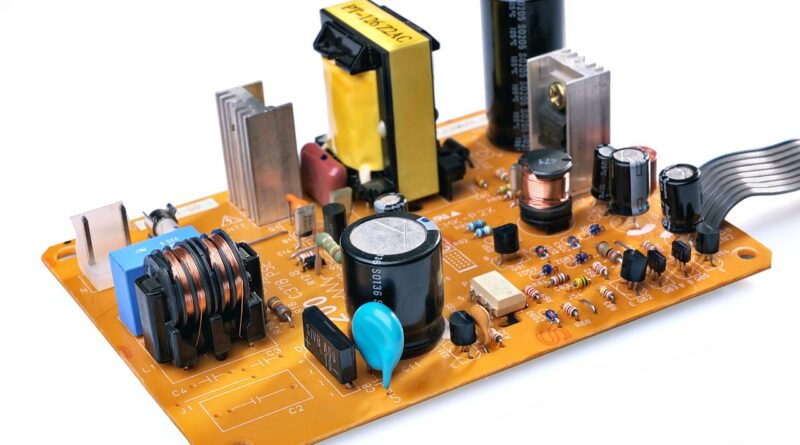
What a run capacitor in an AC unit does and when it fails
Quick answer
A run capacitor in an AC unit is an electrical component that stays in the motor circuit while the system is operating. It helps create the phase shift a single-phase motor needs to produce steady torque, especially in permanent split capacitor (PSC) motors used in many condenser fans, blower motors and compressors. When it weakens or fails, the AC may hum, start slowly, trip a breaker, blow warm air, or run the compressor while the outdoor fan remains stopped. The part is small, but replacement is not a casual decision: the microfarad rating must match the motor requirement, the voltage rating must be suitable, and the capacitor must be discharged and tested safely before handling.
This article explains how the component works, how to read its markings, and how to approach replacement without turning a symptom into a guess. You can also explore more in Components.
What a run capacitor does in an AC motor
Most residential air conditioners use single-phase power, but many AC motors need a rotating magnetic field to start and keep turning correctly. A run capacitor supports that by connecting with the motor’s auxiliary winding and shifting current in relation to the main winding. In practical terms, it helps the motor develop usable torque and operate closer to its intended electrical condition.
The word “run” matters. Unlike a start capacitor, a run capacitor is normally designed for continuous duty while the motor is operating. Industry references for AC motor capacitors, including IEC 60252 documentation, describe a running capacitor as one that is usually connected permanently to the motor winding and remains in circuit during operation. That is why a run capacitor is typically an oil-filled or metallized film type rather than the high-capacitance electrolytic type often used for short start duty.
In an air conditioner, run capacitors commonly appear in three places:
- Outdoor condenser fan motor: helps the fan maintain speed so the condenser coil can reject heat.
- Compressor motor: helps the compressor motor run under load after startup.
- Indoor blower motor: found in some older or PSC blower designs, although many newer systems use electronically commutated motors instead.
Not every modern AC uses the same capacitor arrangement. Inverter-driven systems and ECM motors use electronic controls that differ from a traditional PSC motor and dual run capacitor layout. That is why the correct service information should come from the unit label, motor nameplate, wiring diagram or manufacturer documentation, not from appearance alone.
Run capacitor vs start capacitor vs dual run capacitor
AC capacitor terms can be confusing because several components may sit near each other inside the outdoor unit. The practical distinction is based on when the capacitor is used and what it supports.
| Component | Typical role | How it is used | Common identification clue |
|---|---|---|---|
| Run capacitor | Maintains motor torque and operating condition | Stays in circuit while the motor runs | Lower microfarad value than many start capacitors, often in a metal can |
| Start capacitor | Provides extra starting boost | Used briefly during startup, then removed by a relay or switch | Often higher microfarad value and not intended for continuous operation |
| Dual run capacitor | Serves two run functions in one can | One section for the compressor, one section for the fan | Marked with two capacitance values, such as 45/5 µF |
A dual run capacitor is common in split-system condenser units. It combines two capacitors in one housing and usually has three terminal groups: common, compressor and fan. Labels may read C, HERM and FAN. “HERM” refers to the hermetic compressor section; it is not a generic terminal for any motor.
For buyers comparing parts in the Components category, the key point is that a similar-looking capacitor is not automatically interchangeable. Shape, size and terminal count help identify the part, but the electrical ratings and system documentation determine whether it is correct.
How to read AC run capacitor ratings
The most important markings on an AC run capacitor are capacitance, voltage rating, tolerance, temperature rating, terminal labels and safety approvals. These values are usually printed directly on the can.
Microfarads or MFD
Capacitance is normally shown in microfarads, written as µF, uF or MFD. A single run capacitor might be marked 5 µF, 7.5 µF, 35 µF or 45 µF. A dual run capacitor might be marked 40/5 µF, meaning one section is 40 µF and the other is 5 µF.
The microfarad value should match the motor or equipment requirement. A value that is too low can reduce torque and contribute to hard starting, overheating or poor operation. A value that is too high can also move the motor away from its design condition. Some capacitors list a tolerance, such as ±5%, ±6% or ±10%, but the acceptable replacement should be based on the motor nameplate or equipment service data, not on guesswork.
Voltage rating
The voltage rating is commonly printed as 370 VAC, 440 VAC or a similar AC value. A replacement run capacitor should meet the required voltage rating and is often selected with an equal or higher voltage rating when the manufacturer allows it. A lower voltage rating is not a safe substitute because the capacitor may be exposed to operating stress above its design limit.
Temperature and duty markings
Outdoor condenser compartments can become hot, especially in direct sun or during long cooling cycles. Temperature ratings such as 70°C or 85°C indicate the capacitor’s rated operating environment. Higher temperature capability does not make a wrong capacitance correct, but it can matter in applications exposed to sustained heat.
Safety and certification markings
Capacitors sold for AC motor use may reference recognized standards or safety systems, such as IEC 60252 for AC motor capacitors or UL 810 for capacitor safety requirements. These markings do not prove suitability for a specific AC unit by themselves, but they are part of checking whether a replacement component is built for motor-run service rather than a different electronic application.
Common signs of a weak or failed run capacitor
A bad run capacitor can create several noticeable AC symptoms. However, the same symptoms can also be caused by a seized fan motor, weak compressor, failed contactor, low voltage, damaged wiring, dirty condenser coil or control-board issue. Treat the items below as warning signs, not final proof.
- Outdoor unit hums but the fan does not start: the motor may be energized but unable to develop enough starting or running torque.
- Fan starts slowly or runs only intermittently: a weak capacitor can leave a motor struggling, but worn bearings or motor winding problems can look similar.
- Warm air from vents: if the compressor or condenser fan is not operating correctly, the system may move air without removing enough heat.
- Short cycling or breaker trips: electrical stress or hard starting can lead to protective shutdowns, but breaker trips require broader electrical diagnosis.
- Bulging, leaking or split capacitor case: visible swelling is a strong failure sign and should be handled as an electrical safety issue.
- Compressor runs while condenser fan is stopped: this condition can overheat the outdoor unit quickly, so the system should be shut down and inspected.
The most reliable field confirmation is measurement with a suitable meter after power is disconnected, absence of voltage is verified, and the capacitor is discharged. A visual inspection alone can miss a capacitor that has drifted out of range, while symptoms alone can lead to replacing the wrong part. See also: Gadgets.
Why run capacitors fail
Run capacitors are wear components. They can last for years, but they are exposed to heat, electrical stress and mechanical vibration every cooling season. Over time, capacitance can drift, internal resistance can rise, and protective devices inside the capacitor may open the circuit under fault conditions.
Several factors can shorten service life:
- Heat: high ambient temperature and restricted airflow around the condenser increase stress on electrical components.
- Incorrect capacitance: installing the wrong µF value can make the motor run outside its intended condition.
- Underrated voltage: a capacitor with too low a voltage rating is more likely to fail under normal operating stress.
- Dirty coils or poor airflow: when the outdoor unit cannot reject heat efficiently, compressor and fan components operate under heavier conditions.
- Frequent cycling: repeated starts and stops add electrical and thermal stress.
- Age and environment: moisture, vibration and seasonal heat can degrade seals and internal film over time.
Maintenance sources such as the ENERGY STAR HVAC checklist emphasize routine filter changes and system inspection because airflow and cleanliness affect overall AC operation. A capacitor may be the failed part, but a dirty coil, blocked airflow path or failing motor can be the underlying reason it failed early.
Replacement and safety considerations
An AC run capacitor is not a plug-and-play consumer accessory. It stores electrical energy and is connected to equipment that can operate at hazardous voltage. Electrical safety guidance for capacitors consistently requires power isolation, verification that power is off, and safe discharge before handling. For most homeowners, that means shutting the system off and calling a qualified HVAC technician rather than opening the control compartment.
When a technician or qualified person selects a replacement, the checklist should include:
- Match the capacitance value required by the motor or equipment label.
- Use an equal or properly rated higher voltage capacitor when allowed by the equipment requirements.
- Confirm whether the old part is single run or dual run.
- Match terminal functions, not just terminal position.
- Check the motor nameplate if the fan motor has been replaced previously.
- Inspect the contactor, wiring, condenser fan motor and compressor operation so a deeper fault is not missed.
- Secure the capacitor properly so vibration does not damage the terminals or leads.
Older capacitors deserve extra caution. EPA PCB guidance notes that certain older capacitors manufactured before the late 1970s may require special handling if PCB content is unknown. That issue is not typical for modern residential replacements, but it matters when servicing very old equipment, salvaged parts or obsolete electrical assemblies.
What this means for AC troubleshooting
The run capacitor is a small component with an outsized effect on AC operation. If it is weak, the system may look as if the fan motor, compressor or entire outdoor unit has failed. If it is replaced with the wrong rating, the system may run but still operate outside its design condition.
A useful troubleshooting approach is to separate symptoms from evidence. Humming, slow fan startup and warm air justify inspection. Bulging or leaking strongly suggests a failed capacitor. A capacitance reading outside the accepted range, checked safely with the capacitor removed from the circuit, provides stronger confirmation. Repeated capacitor failure should trigger broader diagnosis of heat, airflow, voltage and motor condition.
For component buyers, the best summary is simple: match the microfarads, do not downgrade the voltage rating, respect terminal labels, and do not treat a start capacitor, run capacitor and dual run capacitor as interchangeable parts. For homeowners, the safest decision is even simpler: turn the AC off if the outdoor unit hums without the fan running, and have the electrical compartment inspected before more damage occurs.
Frequently asked questions
Can an AC run without a run capacitor?
A PSC motor is designed to use its run capacitor. It may fail to start, run hot, lose torque or trip protection if the capacitor is missing or badly out of range. Running the system in that condition can damage the motor or compressor.
Is a higher microfarad capacitor better?
No. The microfarad value should match the motor or equipment requirement. A higher µF value can change motor current and phase relationship in ways the motor was not designed for.
Can I replace a 370 VAC capacitor with a 440 VAC capacitor?
In many service situations, a 440 VAC run capacitor may be acceptable where the capacitance matches and the equipment requirements allow it. A lower voltage rating should not be used as a substitute. The correct answer still depends on the motor and unit documentation.
How do I know whether I need a single or dual run capacitor?
Read the markings and wiring diagram. A single run capacitor has one capacitance value and serves one motor circuit. A dual run capacitor has two values, such as 45/5 µF, and usually serves both the compressor and condenser fan motor.
Does a bulging capacitor always need replacement?
Yes. A bulging, leaking or split capacitor should be treated as failed or unsafe. The AC should be turned off, and the part should be replaced with the correct rated component after safe electrical procedures are followed.