Basic circuit components explained for practical electronics design
Understanding basic circuit components
Basic circuit components are the physical parts that let an electronic circuit control energy, process signals, store charge, switch current, or protect other devices. In practical electronics, the main groups are passive components such as resistors, capacitors, and inductors; semiconductor components such as diodes, transistors, and integrated circuits; and supporting parts such as power sources, switches, connectors, fuses, and sensors. Understanding these roles is more useful than memorizing names because the same type of component can appear in many products, from a simple LED lamp to a motor controller or communication device.
This guide explains how the major component families work, which ratings matter when selecting them, and how to recognize their purpose in a schematic. For more electronics component topics, visit the Components section.
Passive components form the electrical foundation
Passive components do not create gain by themselves. They shape voltage, current, timing, filtering, heating, and energy storage through physical properties such as resistance, capacitance, and inductance. They are usually the first parts to understand because they appear in almost every circuit, including power supplies, sensors, audio equipment, microcontroller boards, and industrial controls.
Resistors limit current and divide voltage
A resistor opposes current flow. Its basic behavior is described by Ohm’s law, which links voltage, current, and resistance. In practical terms, a higher resistance allows less current for the same applied voltage. Resistors are used to limit LED current, set transistor bias points, create voltage dividers, pull digital signals up or down, discharge capacitors, and convert current into a measurable voltage.
The main ratings to check are resistance value, tolerance, power rating, maximum working voltage, temperature coefficient, and package size. A resistor with the correct resistance value can still overheat if its power rating is too low. In low-noise analog circuits, resistor technology and temperature behavior may also matter. In many digital pull-up or pull-down applications, tolerance is less critical than it is in precision measurement circuits.
Capacitors store charge and smooth changes
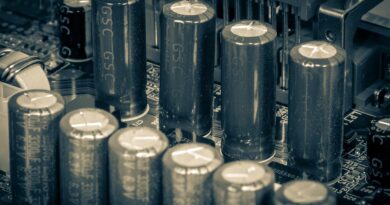
A capacitor stores electrical energy in an electric field. It resists sudden voltage changes, which makes it useful for power supply smoothing, decoupling, timing circuits, AC coupling, filtering, and transient control. A small ceramic capacitor placed near an integrated circuit power pin can reduce local supply noise, while a larger electrolytic capacitor may help a power rail ride through short load changes.
Important capacitor ratings include capacitance, voltage rating, tolerance, dielectric type, equivalent series resistance, leakage current, ripple current, polarity, and temperature range. Ceramic, film, electrolytic, and tantalum capacitors have different strengths and limitations. For example, many electrolytic capacitors are polarized and must be installed in the correct direction. Many ceramic capacitors are non-polarized, but their effective capacitance can fall under DC bias depending on dielectric type and package.
Inductors resist changes in current
An inductor stores energy in a magnetic field and resists rapid current changes. Inductors are common in switching power supplies, radio-frequency circuits, filters, chokes, motor drives, and electromagnetic interference control. In a buck converter, for example, the inductor is central to transferring energy from the switching stage to the load with reduced ripple.
Key inductor ratings include inductance, saturation current, rated current, DC resistance, self-resonant frequency, core material, shielding, and physical size. Saturation current is especially important in power applications because an inductor that saturates can lose inductance and allow excessive current ripple. For high-frequency designs, parasitic capacitance and PCB layout can become as important as the marked inductance value.
Active and semiconductor components control signals and power
Active components can control current flow, provide switching, amplify signals, regulate voltage, or perform logic and computation. Most modern active parts are semiconductors. They are central to electronics because they allow circuits to make decisions, process information, and turn small control signals into larger electrical actions.
Diodes allow current mainly in one direction
A diode is a two-terminal semiconductor component that conducts more easily in one direction than the other. Standard rectifier diodes convert AC to DC, signal diodes steer or clamp small signals, Schottky diodes provide low forward voltage and fast switching in many applications, Zener diodes are used for voltage reference or clamping tasks, and light-emitting diodes convert electrical energy into visible or infrared light.
The ratings to check depend on the diode type. Common items include forward current, reverse voltage, forward voltage drop, switching speed, power dissipation, junction temperature, and surge capability. In rectifier circuits, reverse voltage and current rating are critical. In LED circuits, current limiting is essential because an LED is not normally connected directly across a voltage source without a suitable resistor or driver.
Transistors act as switches or amplifiers
Transistors use one electrical signal to control another. Bipolar junction transistors are often described in terms of base current controlling collector current, while field-effect transistors are controlled by gate voltage. In modern power electronics, MOSFETs are widely used as efficient switches in converters, battery systems, motor drivers, and load switches.
When a transistor is used as a switch, designers check voltage rating, current rating, on-resistance or saturation voltage, drive requirements, switching speed, thermal resistance, and safe operating area. When it is used as an amplifier, biasing, gain, noise, bandwidth, and linearity become more important. A common beginner mistake is treating a transistor as only a larger version of a mechanical switch. In practice, drive conditions and heat dissipation decide whether it works reliably.
Integrated circuits combine many functions
An integrated circuit, or IC, places multiple electronic devices onto one semiconductor die or into one package. ICs can be simple logic gates, operational amplifiers, timers, voltage regulators, microcontrollers, memory devices, sensor interfaces, radio chips, power management controllers, or complete system-on-chip devices. They reduce size and improve repeatability, but they also require careful attention to datasheet limits and recommended application circuits.
For ICs, the component itself is only part of the design. Decoupling capacitors, input protection, thermal layout, clock sources, feedback networks, and grounding choices often determine performance. Manufacturer datasheets, application notes, and standard terminology references such as IEC Electropedia are commonly used to confirm definitions, limits, and recommended operating conditions. See also: Gadgets.
Power, switching, connection, and protection parts are also circuit components
Many people learn resistors and capacitors first, but practical circuits also need parts that deliver power, provide user control, connect assemblies, and prevent damage. These components may look simple, yet they often determine whether a product is safe, serviceable, and reliable.
- Power sources include batteries, adapters, solar cells, bench supplies, and internal power rails. Their voltage, current capability, internal resistance, and protection behavior affect the whole circuit.
- Voltage regulators maintain a target output voltage. Linear regulators are simple and low-noise in many cases, while switching regulators are often preferred when efficiency or high current is important.
- Switches and relays open or close circuits. Mechanical switches are intuitive, while relays use an electrical signal to control another circuit and can provide isolation.
- Connectors join boards, cables, sensors, displays, batteries, and external equipment. Their current rating, contact resistance, insertion cycles, locking method, and environmental sealing can be critical.
- Protection components include fuses, resettable polymer fuses, transient voltage suppressors, metal oxide varistors, thermistors, surge arresters, and reverse-polarity protection devices.
- Sensors and transducers convert physical conditions into electrical signals or convert electrical signals into physical action, such as sound, light, motion, or heat.
Protection deserves careful attention. A fuse does not stop every fault instantly, and a surge suppressor is not a universal shield against all overvoltage events. Protection design depends on the likely fault, available energy, response time, environment, and downstream component limits.
How basic circuit components work together
A useful way to understand components is to ask what job each part performs in the complete circuit. The table below summarizes common roles and practical examples.
| Design role | Common components | Practical example | Typical selection question |
|---|---|---|---|
| Limit current | Resistor, current regulator, driver IC | Setting LED current | What current is safe for the load and the component? |
| Store energy | Capacitor, inductor, battery | Smoothing a DC power rail | How much energy or ripple control is needed? |
| Control direction | Diode, bridge rectifier, MOSFET arrangement | Reverse-polarity protection | What voltage drop, heat, and fault condition must be handled? |
| Switch power | Transistor, relay, MOSFET, solid-state relay | Turning a motor or lamp on and off | Can the switch handle current, voltage, heat, and transients? |
| Process signals | Operational amplifier, filter network, microcontroller | Reading a temperature sensor | What accuracy, speed, noise level, and input range are required? |
| Protect the circuit | Fuse, TVS diode, varistor, thermistor | Input surge protection | What fault energy and response time are expected? |
Consider a simple battery-powered LED indicator. The battery provides energy, the switch controls user input, the resistor limits current, and the LED produces light. If the circuit is expanded into a smart indicator, a microcontroller may drive the LED, a voltage regulator may stabilize the supply, capacitors may reduce noise, and a connector may link the board to a battery pack. The parts are no longer isolated topics; they become a working system.
Key ratings to check before choosing components
Component selection is not only about matching a symbol on a schematic. The same nominal value can behave differently depending on package, material, tolerance, temperature, voltage, frequency, and layout. A professional habit is to confirm operating conditions against the component datasheet rather than relying only on a short catalog description.
- Voltage rating: The component must withstand the highest expected voltage, including transients where relevant.
- Current rating: Conductors, switches, connectors, semiconductors, and protection devices must carry current without excessive heat or failure.
- Power dissipation: Resistors, transistors, regulators, diodes, and ICs convert some electrical energy into heat. Thermal limits must be checked under real operating conditions.
- Tolerance and accuracy: A loose tolerance may be acceptable for an LED indicator but unsuitable for a precision measurement divider.
- Temperature range: Components can drift, age faster, or fail when operated outside their specified temperature conditions.
- Frequency behavior: At high frequencies, capacitance, inductance, equivalent resistance, and PCB layout can change circuit performance.
- Package and mounting: Through-hole, surface-mount, connector style, creepage distance, heat spreading, and assembly process all affect the final design.
- Availability and substitution: A substitute part should be checked for electrical, thermal, mechanical, and regulatory differences, not just the same headline value.
For safety-related circuits, additional standards, certification requirements, and regional regulations may apply. Designers should treat datasheets and applicable standards as controlling references, especially where mains voltage, batteries, high current, heat, medical equipment, vehicles, or industrial machinery are involved.
Common mistakes when learning circuit components
Beginners often learn component names faster than they learn operating limits. The following mistakes are common because a circuit may appear to work briefly even when the design margin is poor.
- Ignoring power rating: A resistor with the right resistance value can still burn if it dissipates too much heat.
- Reversing polarized components: Electrolytic capacitors, many diodes, LEDs, and some connectors have required orientation.
- Assuming ideal behavior: Real components have leakage, tolerance, parasitic resistance, parasitic inductance, thermal drift, and aging effects.
- Leaving ICs without decoupling: Digital and mixed-signal ICs often require local capacitors close to power pins to reduce supply noise.
- Using a transistor without proper drive: A MOSFET may need enough gate voltage, and a bipolar transistor needs adequate base drive for switching.
- Overlooking layout: Short traces, grounding strategy, heat paths, and component placement can matter as much as schematic correctness.
- Replacing parts by appearance only: Two components can look similar while having very different ratings or internal construction.
The best learning approach is to read simple schematics and identify each part by function. Ask whether it limits, stores, switches, senses, protects, connects, or processes. That method turns a long list of basic circuit components into a practical map of how electronics work.
Frequently asked questions
What are the most basic circuit components to learn first?
Start with resistors, capacitors, diodes, transistors, switches, power sources, and LEDs. After that, add inductors, voltage regulators, operational amplifiers, logic ICs, microcontrollers, connectors, and protection devices. This order helps you move from simple current flow to controlled and programmable circuits.
Are resistors, capacitors, and inductors enough to build a circuit?
They are enough for some passive networks, filters, timing behavior, and demonstrations, but many practical circuits also need power sources, switches, semiconductor devices, connectors, and protection. A useful circuit is usually a combination of passive parts, active control, and mechanical or electrical interfaces.
What is the difference between passive and active components?
Passive components shape or store energy without providing gain by themselves. Resistors, capacitors, and inductors are common examples. Active components control current or signals and may provide switching, amplification, regulation, or computation. Transistors, operational amplifiers, voltage regulators, and microcontrollers are common active components.
How do I identify components on a circuit board?
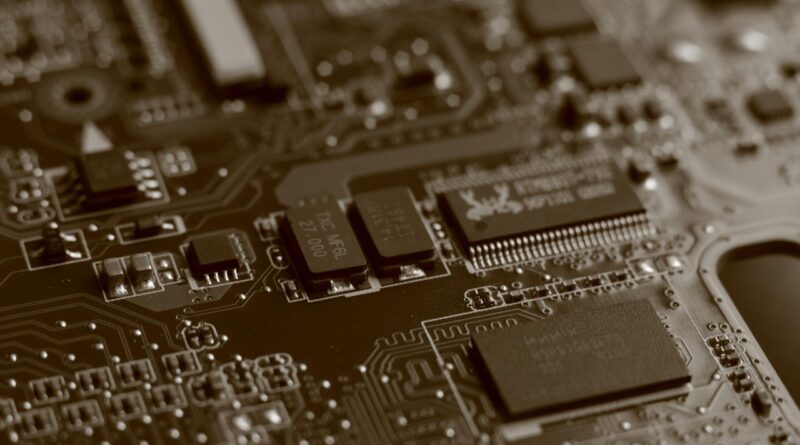
Look for reference designators, package shape, markings, and nearby circuit context. Resistors often use R designators, capacitors use C, inductors use L, diodes use D, transistors use Q, and integrated circuits use U or IC. However, markings vary by manufacturer and package size, so the board schematic or bill of materials is the most reliable source when available.
Why do datasheets matter for basic components?
Datasheets define the limits that a short part name cannot show. A capacitor value does not fully describe voltage rating, dielectric behavior, ripple current, leakage, or temperature range. A transistor part number does not fully explain drive needs, heat limits, switching behavior, or safe operating area. Checking datasheets prevents many avoidable failures.