Is Capacitor Supply the Key Bottleneck as AI Server Demand Surges
AI Server Demand Tightens Passive Component Supply, Lifting Taiwanese Suppliers’ Share
The surge in AI infrastructure spending has reshaped the global electronics supply chain. AI servers built for large language models and data-intensive workloads are consuming unprecedented volumes of passive components, especially capacitors. This shift has tightened supply conditions, favoring manufacturers with advanced process capabilities—most notably those in Taiwan. As demand for high-reliability multilayer ceramic capacitors (MLCCs) rises, Taiwanese firms are expanding capacity and strengthening ties with global OEMs, positioning themselves as indispensable partners in the AI era.
Rising Demand for AI Servers and Its Impact on the Electronics Supply Chain
The rapid buildout of data centers supporting generative AI and cloud computing is driving a new wave of server investment. These systems require immense computational density and stable power delivery, pushing component suppliers to expand production while navigating longer lead times.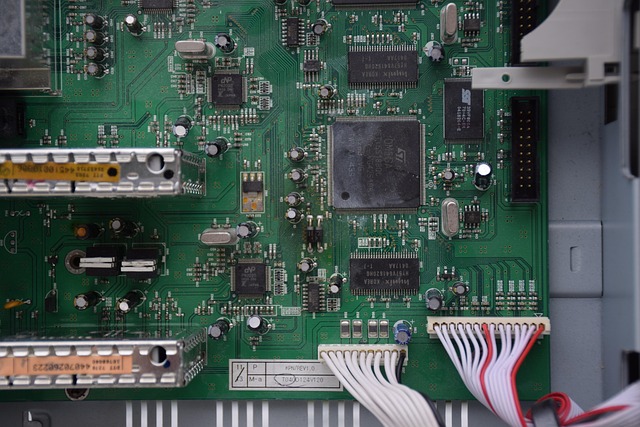
Expansion of AI Infrastructure and Data Centers
AI infrastructure growth is accelerating as hyperscalers deploy clusters capable of training trillion-parameter models. Each rack now integrates multiple GPU nodes drawing hundreds of amps per board. This power intensity increases stress on power management systems and raises demand for high-performance capacitors that stabilize voltage under dynamic load conditions. The scale of these clusters also multiplies consumption of advanced passive components such as MLCCs used near processors and VRMs.
Shifts in Supply Chain Priorities Among OEMs and ODMs
Server OEMs are revising procurement strategies to secure critical components like capacitors well ahead of production schedules. Many have moved toward multi-year agreements with key suppliers to avoid shortages that could delay system shipments. Tiered allocation policies are emerging as a practical response to limited inventories, where preferred customers in data center markets receive priority access to high-capacitance parts.
Capacitors as a Critical Element in AI Server Architecture
As AI servers grow more power-hungry, the capacitor’s role becomes central to maintaining voltage stability across complex power delivery networks (PDNs). The choice of capacitor type directly affects thermal behavior, board layout flexibility, and long-term reliability.
The Role of Capacitors in Power Delivery Networks (PDNs)
Capacitors function as local energy reservoirs that absorb transient voltage fluctuations caused by sudden GPU current surges. In high-current environments typical of AI servers, low Equivalent Series Resistance (ESR) is essential to minimize losses and heat generation. High ripple current capability allows capacitors to handle continuous charge-discharge cycles without degradation. Designers must balance integration density against thermal limits when selecting capacitor configurations for motherboards or power modules.
Types of Capacitors Used in AI Servers
Multilayer Ceramic Capacitors (MLCCs)
MLCCs dominate decoupling applications near CPUs, GPUs, and memory chips due to their fast response and compact form factor. Miniaturization trends push manufacturers toward ultra-thin dielectric layers that deliver higher capacitance per unit volume. For example, 0201-size MLCCs now achieve values once reserved for much larger packages, enabling dense placement around critical ICs.
Aluminum Electrolytic and Polymer Capacitors
Bulk energy storage remains the domain of aluminum electrolytic capacitors paired with polymer variants for improved frequency response. Polymer types exhibit lower ESR and better thermal endurance than traditional electrolytics, making them suitable for VRM input stages exposed to continuous high temperatures inside server enclosures.
Supply Constraints and Market Tightness in the Passive Component Sector
The imbalance between soaring demand from AI deployments and limited manufacturing expansion has led to extended lead times across many capacitor categories. Regional concentration adds another layer of risk for global supply continuity.
Global Production Capacity and Regional Concentration
East Asia continues to dominate capacitor production, with Taiwan, Japan, and South Korea accounting for most global output. However, expansion has been slow because ceramic powder processing requires specialized kilns and long qualification cycles. The concentration of capacity within a few regions heightens vulnerability to geopolitical tensions or transport disruptions affecting raw material flow.
Inventory Cycles and Lead Time Extensions
The surge in orders from cloud service providers has quickly exhausted buffer inventories maintained by distributors. Lead times for high-end MLCCs have stretched beyond six months in some cases, particularly those rated above 100 µF or designed for automotive-grade reliability. To manage scarcity, manufacturers are prioritizing deliveries toward strategic sectors such as data centers over consumer devices like smartphones or laptops.
Taiwanese Suppliers’ Competitive Position in the Global Market
Taiwanese capacitor producers have emerged as major beneficiaries of this structural shift. Their technical expertise aligns closely with the performance requirements of modern AI servers.
Strengths of Taiwanese Capacitor Manufacturers
Taiwanese firms possess advanced process control enabling consistent production of ultra-reliable MLCCs suited for demanding PDN applications. Vertical integration—from ceramic formulation to electrode paste synthesis—gives them cost stability and quality assurance advantages. Long-standing relationships with leading server OEMs further strengthen their market resilience amid fluctuating global demand cycles.
Strategic Expansion Plans Among Leading Firms
Capacity Investments and Product Upgrades
Several major Taiwanese manufacturers are investing heavily in new lines focused on ultra-high-capacitance MLCCs exceeding 470 µF equivalents. Automation upgrades across assembly lines aim to raise yield rates while mitigating labor shortages that persist across East Asia’s electronics sector.
Collaboration with Semiconductor Ecosystem Partners
Joint development projects between capacitor makers and GPU platform designers are becoming common practice. Through early-stage co-design efforts, suppliers can tailor electrical characteristics—such as impedance profiles—to match next-generation GPU architectures requiring ultra-fast transient response within tight thermal envelopes.
Long-Term Outlook for the Passive Component Industry Amid AI Growth
The sustained expansion of AI infrastructure is fundamentally altering demand composition within the passive component industry. Growth now depends less on consumer gadgets and more on enterprise-scale computing hardware.
Structural Changes in Demand Composition
As smartphone markets plateau, industrial-grade components used in servers, EVs, and automation equipment take center stage. The durability standards demanded by data centers drive continuous improvement in reliability metrics such as mean time between failures (MTBF). This structural shift supports multi-year growth potential for capacitors tailored to mission-critical applications.
Potential Risks and Mitigation Strategies for Suppliers
Material Cost Volatility and Supply Chain Diversification
Nickel, palladium, and tantalum remain key materials influencing capacitor pricing volatility. To mitigate exposure, suppliers are diversifying sourcing regions beyond East Asia while exploring alternative dielectric chemistries that reduce dependency on scarce metals. Geographic diversification also helps cushion against export restrictions or natural disasters disrupting localized production hubs.
Technological Innovations to Alleviate Supply Bottlenecks
Innovation remains vital not just for performance gains but also for easing chronic supply constraints that threaten long-term industry balance.
Advances in Materials Science and Manufacturing Processes
Research into next-generation dielectric compounds aims to increase capacitance density without enlarging component size—a critical factor given space limits on densely populated server boards. Thin-film deposition techniques enable more uniform layering across ceramic stacks, improving electrical consistency while reducing defect rates during sintering processes.
Integration Trends: Embedded Capacitors and Power Modules
A growing number of server designs now integrate embedded capacitors within PCB substrates or package-level interposers to save board area. Co-designing these embedded structures alongside power module manufacturers yields better current distribution efficiency under heavy computational loads typical of GPU clusters running deep learning workloads.
FAQ
Q1: Why are capacitors so important in AI servers?
A: They maintain stable voltage across GPUs by absorbing transient spikes caused by rapid current changes during computation-intensive tasks.
Q2: Which types of capacitors dominate modern server designs?
A: MLCCs handle high-frequency decoupling near processors while polymer electrolytics provide bulk energy support at VRM inputs.
Q3: What factors contribute most to supply shortages?
A: Slow capacity expansion combined with concentrated production regions like Taiwan or Japan creates bottlenecks when demand surges suddenly.
Q4: How are Taiwanese companies responding to rising demand?
A: By adding automated production lines focused on ultra-high-capacitance MLCCs and collaborating directly with semiconductor partners on design optimization.
Q5: What technological trends could ease future supply pressure?
A: Advances such as embedded capacitor integration within substrates and new dielectric materials promising higher capacitance density without increasing size may gradually relieve constraints over time.