RS Components Raspberry Pi guide for engineers and buyers
What buyers are looking for when they search RS Components Raspberry Pi
The search phrase “rs components raspberry pi” is usually a sourcing question. Engineers, buyers and makers want to know whether Raspberry Pi boards and accessories can be ordered through RS, and which parts are suitable for a specific project. In many regional stores, the answer is yes: RS lists a range of Raspberry Pi products. The buying decision, however, should not stop at the product tile.
RS Components is now generally branded as RS, and Raspberry Pi hardware has moved well beyond hobby boards into education, prototyping, edge computing and embedded design. The right order depends on board generation, memory, power supply, cooling, I/O, documentation and local stock. This guide explains how to read RS Raspberry Pi listings, when Raspberry Pi 5 or Compute Module 5 may be the better fit, and which procurement checks matter before parts are added to a bill of materials.
RS Components is now RS, but the old search term still matters
Many buyers still type “RS Components” because that name was used for years in electronic component distribution. RS Group’s own corporate history states that RS Components became RS as part of a unified rebrand in 2022, and the Americas rebrand from Allied Electronics & Automation to RS followed in 2023. As a result, older references, purchase records and bookmarks may say RS Components, while current product pages may use RS.
For procurement teams, the naming difference is not just cosmetic. Internal approved-vendor lists, enterprise resource planning records and historic purchase orders may still use the older brand. If a purchasing system cannot find “RS,” try the former RS Components name, the regional RS legal entity or the exact RS stock number from the product page. For design teams, the most reliable identifier is still the manufacturer part number, such as the exact Raspberry Pi 5 memory variant or Compute Module 5 configuration.
Raspberry Pi also operates its own Approved Reseller framework and, in some cases, direct-to-business sales routes. Reseller listings vary by country and can change over time, so buyers should verify the local purchasing route before placing a high-volume or business-critical order. RS may be a practical source for many boards, components and accessories, but the due diligence is the same: confirm the regional page, stock status, delivery terms and product documentation at the time of purchase.
What RS Raspberry Pi listings usually include
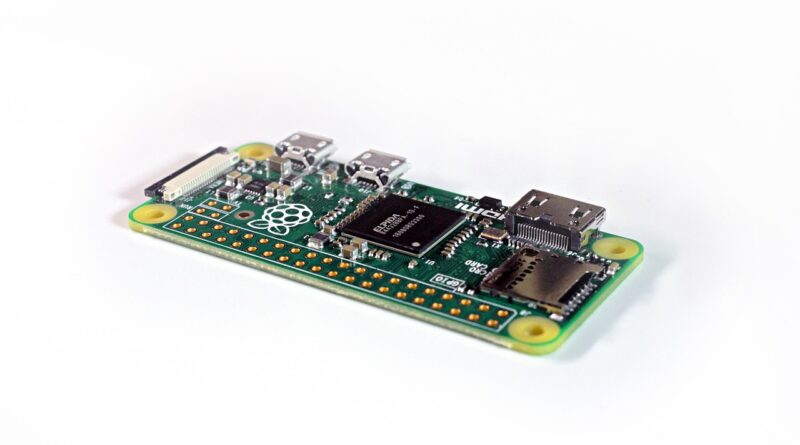
As checked on August 30, 2026, the UK RS Raspberry Pi distributor page showed dozens of Raspberry Pi branded products, including Raspberry Pi 5 boards, Raspberry Pi 4 Model B, Raspberry Pi 3 Model B+, Raspberry Pi Zero WH, cases, power supplies, displays, cameras, PoE add-ons and debug accessories. This is a useful snapshot of product breadth, not a guarantee that the same mix, price or lead time will be available in every country.
For practical buying, it helps to divide the RS Raspberry Pi range into five groups:
- Single-board computers: Raspberry Pi 5, Raspberry Pi 4 and older boards where still listed.
- Compute modules: system-on-module variants intended for custom carrier boards and embedded products.
- Power and thermal parts: USB-C power supplies, official cases, fans and active cooling accessories.
- I/O expansion: HATs, PoE boards, M.2 adapters, cameras, displays and cables.
- Development and test tools: debug probes, starter kits and prototyping accessories.
The product category can be misleading if it is read too quickly. A Raspberry Pi kit may include useful cables and power components, while a bare board may require separate accessories before it can boot reliably. Conversely, a kit may be convenient for lab work but harder to lock into a formal bill of materials if its contents can change. Before approving a purchase, buyers should record the RS stock number, manufacturer part number, memory size, included accessories and expected delivery date.
How to choose between Raspberry Pi 5, Raspberry Pi 4 and Compute Module 5
Raspberry Pi 5 is the main performance step in the current Raspberry Pi single-board family. Raspberry Pi product documentation lists a Broadcom BCM2712 quad-core 64-bit Arm Cortex-A76 processor at 2.4GHz, VideoCore VII graphics, dual 4Kp60 HDMI output, USB 3.0, Gigabit Ethernet, PCIe 2.0 x1 via an adapter, a 40-pin GPIO header, a power button and an RTC function that can use an external battery. Official materials also describe Raspberry Pi 5 as delivering a large performance uplift over Raspberry Pi 4, although the exact gain depends on workload, storage, cooling and software.
Raspberry Pi 4 remains relevant where software compatibility, lower thermal load, older accessory compatibility or cost control matters more than peak performance. Raspberry Pi 3 and Zero boards can still be useful for simple control, teaching and low-throughput tasks if they are available from the buyer’s regional store. For any long-life product, however, older boards should not be selected without checking production status, documentation and substitute options.
Compute Module 5 is a different type of product. Raspberry Pi describes it as bringing Raspberry Pi 5-class processing to a 55 mm × 40 mm module with RAM options up to 16GB and eMMC options up to 64GB, depending on configuration. It is not a drop-in replacement for a full Raspberry Pi 5 board because it needs a carrier board. Its value is in the interfaces and storage choices that are better suited to embedded products, kiosks, automation devices and custom hardware.
| Use case | Likely fit | Reason to choose it |
|---|---|---|
| General desktop, learning, edge computing or higher performance prototyping | Raspberry Pi 5 | Faster CPU, newer graphics, PCIe expansion and memory options up to 16GB |
| Stable legacy projects, education labs or accessories built around older designs | Raspberry Pi 4 or earlier, if available | Broad ecosystem and potentially lower system cost, but check long-term availability |
| Commercial embedded product with a custom enclosure or carrier board | Compute Module 5 | Compact module, optional eMMC, optional wireless and design-oriented documentation |
| Low-cost control, simple GPIO projects or compact builds | Raspberry Pi Zero or Pico family where suitable | Lower cost and smaller form factor, but less compute power than full boards |
Procurement checks before ordering Raspberry Pi from RS
RS product pages are useful purchasing records, but they should not be treated as the only engineering source. Manufacturer documentation remains the authority for electrical limits, connector pinouts, compliance documents, mechanical drawings, product-change notices and production lifetime statements. Before a Raspberry Pi board is approved for a design, the engineering file should include the product brief, datasheet, relevant compliance certificates and any accessories required for safe operation.
For commercial and industrial buyers, the following checks help reduce avoidable rework:
- Match the exact variant: Raspberry Pi 5 boards differ by RAM size, and Compute Module 5 variants differ by RAM, wireless and eMMC storage.
- Confirm regional stock: RS availability, back-order dates and prices can vary by country and change quickly.
- Check power requirements: Raspberry Pi 5 documentation specifies USB-C power and supports higher current operation than earlier boards; underpowered supplies can cause unstable behavior.
- Plan cooling: A Raspberry Pi 5 in an enclosure or under sustained load may need active cooling to maintain performance.
- Review storage strategy: A microSD card may be fine for prototyping, while eMMC or SSD storage may be better for embedded or write-heavy systems.
- Separate board price from system cost: Include power, case, cooling, storage, cables, mounting hardware and compliance testing.
- Record RS and manufacturer identifiers: This helps purchasing teams avoid substituting a similar but incorrect board.
For broader component sourcing and electronics selection topics, see the Components section on Zhuanye Baike. See also: Gadgets.
Accessory selection can make or break a Raspberry Pi order
A common mistake is to buy the board first and deal with the supporting hardware later. With Raspberry Pi 5 especially, accessories affect both performance and reliability. The official 27W-class USB-C power supply is often recommended for full performance headroom, while passive or active cooling decisions depend on enclosure, ambient temperature and workload. A board used for a desktop, camera system or edge AI test will not have the same accessory needs as a headless data logger.
Storage is another important decision. MicroSD remains simple and inexpensive, but it is not always the best answer for industrial logging, frequent writes or field serviceability. Raspberry Pi 5 exposes PCIe through an adapter route, allowing M.2 SSD use when mechanical design and accessory compatibility are planned properly. Compute Module 5 can be ordered with eMMC storage, which may simplify embedded deployments, but it requires correct provisioning and carrier-board planning.
Connectivity should be checked at the connector level. Raspberry Pi 5 uses micro-HDMI display outputs, USB-C power and two four-lane MIPI camera/display connectors. HAT compatibility also needs attention because mechanical clearance, power draw, GPIO use and driver support are not guaranteed by the word “HAT” alone. For PoE applications, Ethernet with PoE support requires a compatible add-on board rather than the main board alone.
How RS fits into a Raspberry Pi sourcing strategy
RS can be useful when Raspberry Pi is only one item in a wider electronics bill of materials. A buyer may want the board, power supply, enclosure, DIN-rail hardware, sensors, connectors, relays and test equipment from a single distributor account. That convenience can reduce administrative friction, especially for engineering teams that already buy passives, electromechanical components and maintenance parts through RS.
The trade-off is that distributor convenience should not replace engineering qualification. RS listings can show current orderability, regional pricing and supporting certificates, while Raspberry Pi documentation provides product-level design information. Treat the two as complementary: use RS for sourcing and transaction records, and use Raspberry Pi’s product documentation for design constraints.
This distinction is especially important for long-life products. Raspberry Pi publishes production lifetime and obsolescence information in product briefs and product information resources, including a stated minimum production horizon for Compute Module 5 until at least January 2036. Published documents can be revised, however, and different products have different commitments. Before committing a product roadmap, verify the current document revision and keep a copy in the project file.
Common mistakes to avoid
- Assuming RS Components and RS are different suppliers: In many contexts, RS is the current brand name for what buyers still remember as RS Components.
- Choosing by price alone: The cheapest board listing may not include the power, cooling, storage or cables needed for a stable system.
- Confusing Raspberry Pi 5 and Compute Module 5: They share a performance generation but target different mechanical and electrical designs.
- Ignoring product-change notices: Embedded products should monitor manufacturer documentation, not just distributor listings.
- Using a consumer kit as an industrial BOM: Kits are convenient for prototypes, but exact contents and substitution rules should be reviewed before volume use.
Frequently asked questions
Is RS Components the same as RS for Raspberry Pi purchasing?
In most current purchasing contexts, yes. RS Components was rebranded as RS under RS Group’s brand unification. Buyers may still see older references in internal systems, historic invoices or search results, but current regional stores commonly use RS branding.
Does RS always have Raspberry Pi stock?
No distributor can be assumed to have every variant in every region at all times. Stock, back-order dates, pricing and shipping terms vary by country and can change quickly. Check the live regional RS page before placing an order.
Which Raspberry Pi should I buy from RS?
For most new high-performance prototypes, Raspberry Pi 5 is the natural starting point. For embedded products with a custom carrier board, Compute Module 5 is usually more appropriate. For legacy education or control projects, Raspberry Pi 4 or smaller boards may still be suitable if availability and support meet the project needs.
Can Raspberry Pi be used in commercial equipment?
Yes, Raspberry Pi hardware is widely used beyond hobby projects, but commercial use requires proper engineering checks. Review power, cooling, storage endurance, mechanical mounting, compliance, software maintenance and long-term availability before committing to a product design.
Why do RS Raspberry Pi prices differ from Raspberry Pi announcements?
Distributor prices may reflect region, tax treatment, currency, service model, stock position, accessories, kit contents and market conditions. Official Raspberry Pi announcements are useful context, but the purchasing price is the live price shown by the seller at the time of order.