Semiconductor components explained for design and sourcing decisions
What semiconductor components are
Semiconductor components are active electronic devices made from materials such as silicon, silicon carbide or gallium nitride, where electrical behavior can be precisely controlled. In design and sourcing work, the term covers integrated circuits, discrete transistors and diodes, power devices, sensors, optoelectronic parts, memory and logic devices. Unlike passive components such as resistors and capacitors, these parts can switch, amplify, compute, store data, detect real-world signals or manage power flow.
For engineers, buyers and technical readers following the components market, the key question is not only what a device does. It is also whether its electrical ratings, package, qualification history, lifecycle status and supply risk fit the end product. A low-cost transistor, a high-bandwidth memory package and an automotive-qualified microcontroller are all semiconductor components, but the design and sourcing risks behind them are very different.
The main families of semiconductor components
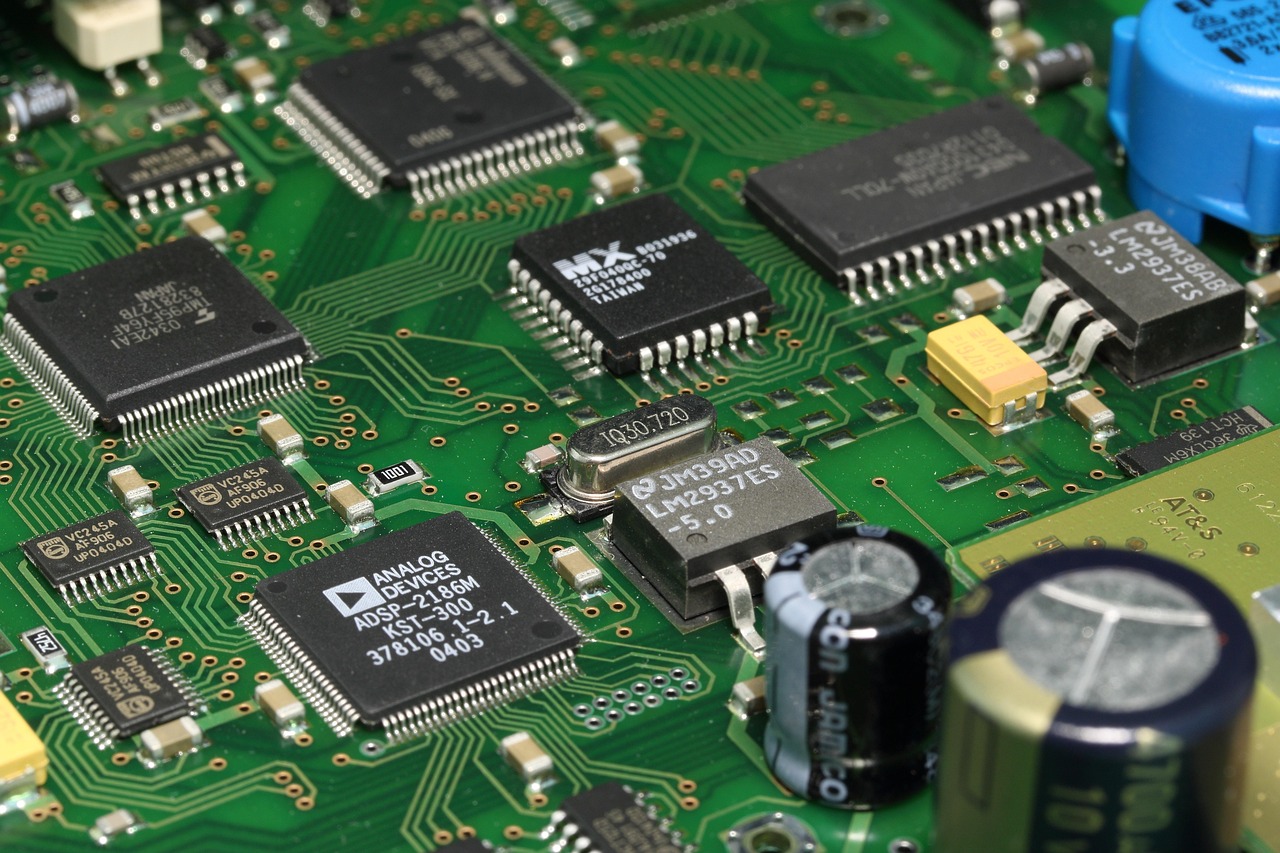
Industry sources such as the Semiconductor Industry Association and World Semiconductor Trade Statistics commonly group semiconductor products into broad families. These categories are useful, but the boundaries are not fixed. A system-on-chip can combine logic, memory interfaces, analog blocks and security functions. A power module may contain several semiconductor dies along with sensors and drivers. The table below summarizes the main families from a design perspective.
| Family | Typical function | Common examples | Key selection questions |
|---|---|---|---|
| Discrete semiconductors | Perform one primary electrical function | Diodes, rectifiers, MOSFETs, BJTs, IGBTs, TVS diodes | Voltage, current, switching speed, losses, surge rating, thermal path |
| Analog ICs | Condition, convert or regulate real-world signals | Op amps, data converters, voltage regulators, power management ICs | Noise, accuracy, bandwidth, efficiency, quiescent current, stability |
| Logic and processors | Perform computation, control and digital signal operations | MCUs, CPUs, GPUs, FPGAs, ASICs, interface logic | Performance, software ecosystem, I/O, security, power budget, lifecycle |
| Memory | Store data temporarily or permanently | DRAM, SRAM, NAND flash, NOR flash, EEPROM, HBM | Capacity, bandwidth, endurance, retention, interface, availability |
| Sensors and actuators | Detect physical conditions or convert electrical energy into action | MEMS accelerometers, magnetic sensors, pressure sensors, image sensors | Accuracy, drift, calibration, environment, packaging stress, signal chain |
| Optoelectronics | Emit, detect or isolate light-based signals | LEDs, photodiodes, laser diodes, optocouplers, image sensors | Wavelength, optical power, lifetime, isolation, temperature behavior |
Power semiconductors cut across several of these categories. A silicon MOSFET may be sold as a discrete device, a gate driver is usually an IC, and an intelligent power module can combine switches, drivers, protection functions and thermal sensing. Wide-bandgap materials such as silicon carbide and gallium nitride are especially relevant when designers need higher switching frequency, lower losses or better high-temperature operation. They also require careful gate-drive, layout and protection design.
Why package and interconnect choices matter
Component selection once began, and often ended, with the electrical table in the datasheet. For many current designs, that is no longer enough. As frequencies rise and systems become smaller, the package can determine whether a part can dissipate heat, maintain signal integrity and survive assembly stress. A device with strong silicon performance can still fail in a project if the package has too much thermal resistance, insufficient creepage distance, poor board-level reliability or an unsuitable moisture sensitivity level.
Modern semiconductor components are also shaped by packaging architecture. Chiplets, 2.5D interposers, stacked memory, fan-out packages and advanced substrates allow multiple dies to operate as one product. This matters for AI accelerators, high-bandwidth memory, networking devices and complex automotive processors. The same direction also affects mainstream components through smaller footprints, more pins and tighter assembly requirements.
Public U.S. CHIPS for America materials show why packaging has become a strategic topic rather than a back-end detail. The 2022 CHIPS and Science Act funded a large semiconductor program, including research and development efforts and incentives for manufacturing facilities and equipment. NIST materials identify advanced packaging as one focus area for strengthening domestic semiconductor capability. For component users, the practical point is clear: package roadmaps, substrate availability and assembly capability can influence lead time and second-source options as much as wafer capacity does.
Reliability and qualification checks before design-in
Reliability is not a single label. It is a chain of evidence covering device design, wafer process, package construction, qualification testing, application conditions and manufacturing controls. A part can be qualified for one use case and still be inappropriate for another if the thermal cycle, voltage stress, humidity exposure, mission profile or safety requirement is different.
Several industry documents are commonly used as reference points. IEC 63287-1:2021 provides guidelines for reliability qualification plans for semiconductor integrated circuit products, excluding military and space-related applications. JEDEC reliability methods and JESD47-style qualification practices are frequently referenced for IC qualification. IPC/JEDEC J-STD-020 defines moisture and reflow sensitivity classification for non-hermetic surface-mount devices, helping board assemblers set storage, baking and reflow handling precautions. Automotive Electronics Council documents such as AEC-Q100 for integrated circuits and AEC-Q101 for discrete semiconductors define stress-test qualification expectations for automotive environments.
These standards should not be treated as complete protection against field issues. J-STD-020 specifically addresses package sensitivity to moisture-induced reflow stress; by itself, it does not prove long-term field reliability. AEC qualification indicates that a component has met defined stress-test requirements, but the vehicle system still needs design validation, derating, diagnostics and production controls. The same principle applies to industrial, medical, aerospace and energy products: qualification evidence must be matched to the actual mission profile.
Market trends influencing semiconductor component choices
The semiconductor market has shifted sharply since the 2023 downturn, so component planning now requires more than a simple last-time-buy calendar. On February 6, 2026, the Semiconductor Industry Association reported that global semiconductor sales reached $791.7 billion in 2025, up 25.6 percent from $630.5 billion in 2024. The same report identified logic as the largest product category by sales in 2025 and memory as another major growth segment.
WSTS then published a Spring 2026 forecast projecting global semiconductor sales of about $1.51 trillion in 2026, with memory demand described as the main driver. Forecasts are not purchase orders, and they should not be read as a guarantee of availability or price movement for any individual part number. Even so, they help explain why procurement teams are paying closer attention to memory, advanced logic, AI infrastructure components and high-performance power management parts than to slower-moving categories.
For design teams, the main implication is that demand is uneven. A commodity diode and a high-bandwidth memory stack do not face the same capacity constraints. A mature-node analog IC may be affected by fab loading and packaging availability even when leading-edge processor headlines dominate the news. A practical sourcing strategy should therefore examine the exact process node, package type, supplier roadmap, application grade and alternative footprint, not only the general semiconductor market cycle.
A practical framework for selecting semiconductor components
Good component selection starts with function, but it should not stop there. The following framework helps reduce redesigns, compliance delays and purchasing surprises. See also: Gadgets.
- Define the electrical job clearly. Separate mandatory requirements from nice-to-have specifications. For example, an analog front end may need low noise more than high bandwidth, while a motor inverter may prioritize switching loss and transient ruggedness.
- Check operating margins. Review voltage, current, power, junction temperature, timing, endurance and derating across worst-case conditions, not just nominal lab conditions.
- Evaluate the package. Confirm footprint, pin pitch, thermal resistance, soldering process, moisture sensitivity, inspection method and board-level reliability.
- Match qualification to the application. Consumer, industrial, automotive, medical and aerospace systems require different evidence. Do not assume a commercial-grade part is suitable for a harsh environment simply because its datasheet maximum ratings look adequate.
- Review lifecycle and supply continuity. Check whether the part is recommended for new designs, whether a pin-compatible alternate exists and whether the supplier has a credible long-term roadmap.
- Assess software and ecosystem risk. For MCUs, FPGAs, wireless ICs and processors, tools, libraries, security updates and reference designs can matter as much as hardware specifications.
- Document substitutions early. If a second source is possible, validate it before shortages occur. Similar part numbers can differ in timing, protection behavior, package dimensions or test limits.
This framework is especially useful when a design combines several semiconductor families. A connected industrial sensor, for example, may include a MEMS sensor, an analog front end, an MCU, flash memory, a power regulator, ESD protection, an optocoupler and a wireless transceiver. Each component has its own risks, but the system can still fail if interfaces, power sequencing or thermal design are not considered together.
Common mistakes to avoid
One common mistake is treating pin compatibility as full compatibility. Two voltage regulators may share a footprint but differ in compensation needs, transient response, startup behavior or protection thresholds. A replacement MOSFET may fit the same pad pattern but change switching losses, electromagnetic interference or avalanche margin. Substitutions should be tested under real operating conditions.
A second mistake is focusing too heavily on headline performance. The fastest logic device, lowest on-resistance switch or highest-resolution converter may increase cost, heat, firmware complexity or availability risk without improving the end user’s experience. Design choices should be tied to system-level requirements, not isolated datasheet records.
A third mistake is assuming qualification equals system approval. Component-level tests are essential, but they do not replace board validation, environmental testing, functional safety analysis or manufacturing process control. Reliability depends on the complete path from silicon to solder joint, enclosure and field operation.
Finally, teams should avoid using market forecasts as a substitute for supplier communication. Semiconductor sales data can show broad demand direction, but individual lead times depend on wafer starts, test capacity, packaging lines, inventory policy and customer allocation. Early engagement with suppliers and distributors remains important for long-life products.
Frequently asked questions
Are all electronic components semiconductor components?
No. Semiconductor components are a subset of electronic components. Passive parts such as resistors, capacitors, inductors, connectors and many electromechanical devices are electronic components, but they are not semiconductor devices. Semiconductor parts rely on controlled semiconductor material behavior to switch, amplify, sense, store or process signals.
What is the difference between an IC and a discrete semiconductor?
An integrated circuit combines many functional elements on one die or in one package, while a discrete semiconductor usually performs one primary function. A microcontroller, memory device or op amp is an IC. A diode, rectifier, transistor or MOSFET is typically discrete, although modules can combine multiple discrete dies in one package.
Do automotive-qualified parts guarantee higher reliability?
Automotive-qualified parts provide evidence that the component has passed defined stress tests for automotive applications, but they do not guarantee reliability in every system. The design still needs correct derating, thermal management, diagnostics, layout, production controls and validation against the actual mission profile.
Why is advanced packaging important for semiconductor components?
Advanced packaging can improve bandwidth, reduce interconnect distance, integrate multiple dies and support higher performance within a limited footprint. It also adds design and sourcing considerations, including thermal density, substrate availability, inspection methods and package-level qualification.
How should buyers compare semiconductor components from different suppliers?
Start with mandatory electrical and environmental requirements, then compare package compatibility, qualification data, lifecycle status, documentation quality, software support, lead time and change-notification practices. A lower unit price may not be the better choice if it increases redesign risk or weakens long-term availability.