What Are Electrical and Electronic Components and How Do They Shape Better Products?
Why Do Electrical and Electronic Components Matter in Modern Devices?
Electrical and electronic components are used in almost every device we handle, from a wall charger and LED driver to a smart meter, industrial control board, solar inverter, and EV charging module. On a bill of materials, they may look like small cost lines. A resistor may cost less than one cent, but the wrong rating can still bring heat, noise, short service life, or a failed certification test.
The market side also points in the same direction. The International Energy Agency reported in its Global Energy Review 2025 that global electricity demand grew by 4.3% in 2024, equal to almost 1,100 TWh of extra consumption. More power use means more power conversion, sensing, protection, switching, and control inside finished products. The Semiconductor Industry Association also reported in February 2026 that global semiconductor sales reached $791.7 billion in 2025, up 25.6% from 2024. In real product work, component choices are not a back-office detail anymore. They affect cost, safety, lead time, and the way customers judge the product.
They Convert, Control, Store, and Protect Energy
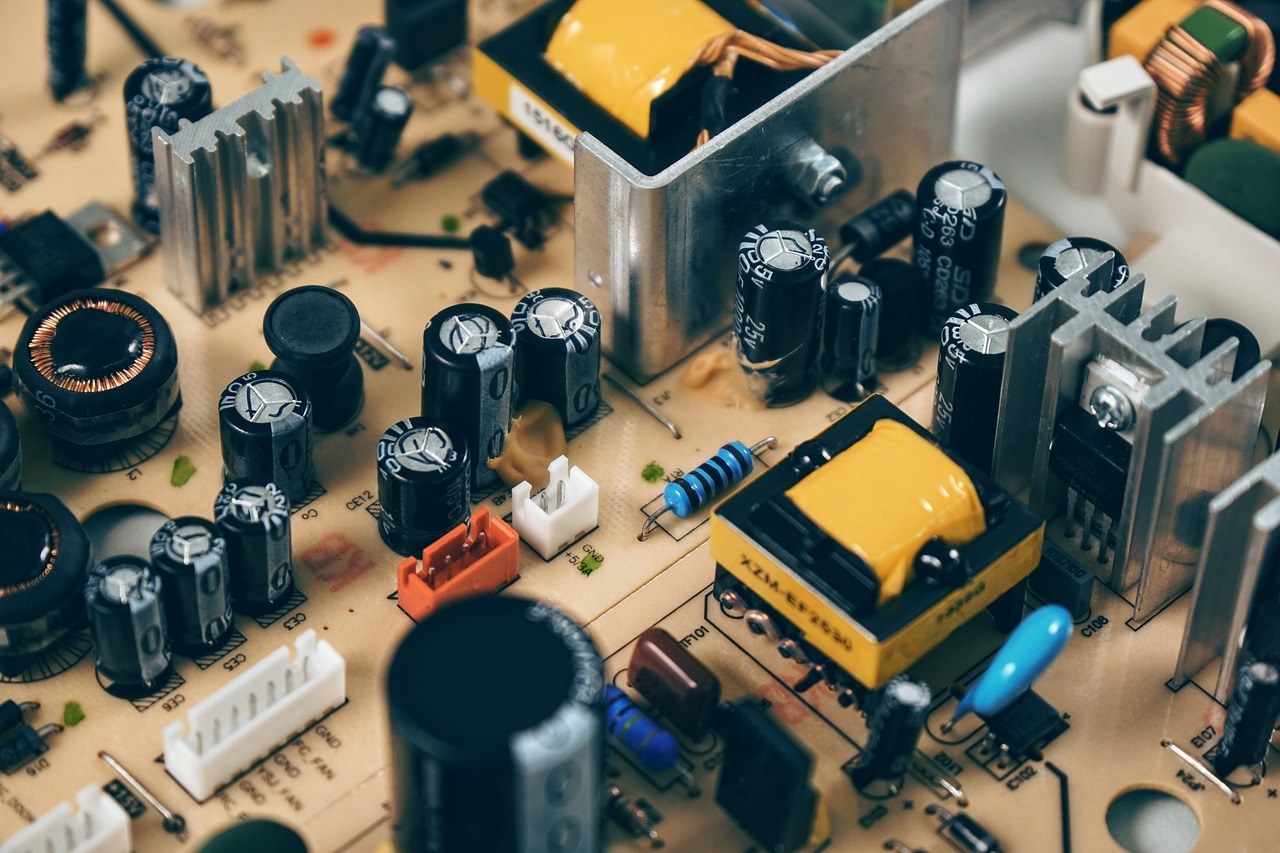
Many components are there to manage energy flow. A diode blocks reverse current, while a capacitor stores charge and filters ripple. An inductor smooths current in a DC-DC converter, and a fuse opens during an overcurrent event. In a 24 V industrial sensor, these parts may run quietly for years. In a low-cost adapter with weak parts, the same jobs can turn into heat, buzz, and returns. This is why small electrical ratings deserve a proper check before the BOM is closed.
They Carry Signals and Data Through Circuits
Signal parts deal with low currents, timing, logic, and communication. A crystal gives a microcontroller a stable clock, and a connector passes data to a display. An optocoupler keeps a noisy power side away from a safer control side. These choices may look minor, but they can change EMC behavior. A product can work well on the bench and still fail later in a test lab.
They Decide Product Life and User Trust
End users usually do not ask which capacitor brand is placed near the input rail. They only notice when a device runs hot, resets, flickers, or dies after one summer. Component life is closely tied to temperature in many designs. A common rule in electronics design is that electrolytic capacitor life drops fast as temperature rises. So a board that looks fine at 25°C may age poorly inside a sealed plastic box at 60°C.
What Are the Main Types of Electrical and Electronic Components?
Components can be sorted in different ways. In daily product work, the useful split is passive parts, active parts, and electromechanical or interconnect parts. This makes it easier to read a schematic, check a BOM, and speak with suppliers without getting stuck in every small subcategory.
Passive Components That Shape Current and Voltage
Passive parts do not add gain. Resistors limit current, divide voltage, and set bias points. Capacitors filter noise, store short bursts of energy, and form timing networks. Inductors store energy in magnetic fields and are common in switching power supplies. The names of the specs may sound simple, but they change real circuit behavior: resistance tolerance, capacitance derating, ripple current, saturation current, ESR, and temperature rating all need checking.
Active Components That Switch, Amplify, and Compute
Active parts include diodes, transistors, MOSFETs, IGBTs, ICs, voltage regulators, microcontrollers, sensors, memory, and communication chips. They need power to work, and they often decide how the product behaves. In a motor controller, a MOSFET is not only a switch. Its on-resistance, gate charge, package, and thermal path affect efficiency and heat. One small data sheet line can become an expensive problem if it is missed.
Electromechanical Parts That Join the Physical World
Connectors, relays, switches, terminals, fans, buzzers, and sockets connect electronics with real mechanical use. They deal with vibration, mating cycles, dust, moisture, and hand operation. A connector may look like a commodity item, but it can be the first field failure in a product that is plugged and unplugged every day. For export products, connector availability in different regions also matters more than many teams plan for.
How Should You Read Component Specifications Before Buying?
A data sheet is not exciting reading, but it is where many product risks are written. Treat ratings as operating limits, not sales claims. A part marked 50 V, 2 A, or 105°C may not be safe to run at that edge inside your enclosure, with your airflow, for the service life you promised.
Electrical Ratings Need Real Design Margin
Voltage, current, power, frequency, leakage, tolerance, and transient ratings should match the actual circuit. That includes startup, surge, fault, and worst-case input. For example, a 16 V capacitor on a 12 V rail may pass a quick test. In automotive and industrial rails, spikes are common, so a 25 V or 35 V part may be the safer choice depending on size and cost.
Thermal Limits Decide Long-Term Behavior
Heat is where a design on paper meets the real product. Check junction temperature, ambient temperature, thermal resistance, derating curves, and package power loss. A MOSFET with low resistance can still fail if the PCB copper area is too small. A regulator may meet the current rating on paper but enter thermal shutdown inside a compact plastic case. Lab tests should include hot conditions, not only a clean desk at room temperature.
Mechanical and Environmental Specs Prevent Surprises
Check package size, pad layout, creepage, clearance, pin pitch, vibration rating, moisture sensitivity level, and storage conditions. For outdoor products, humidity and corrosion can be as important as voltage. For small IoT devices, hand assembly, rework access, and connector orientation can save time on the production line. These details are not exciting, but they reduce scrap, rework, and complaints.
Which Standards and Compliance Issues Should You Check Early?
Compliance should not be left until the final prototype. If the product will be sold into the EU, North America, or other regulated markets, component choice can affect safety files, material declarations, EMC testing, and certification evidence. A cheaper part can become costly if it forces a redesign close to launch.
RoHS Material Rules Affect Export Products
The European Commission states that products with electrical and electronic parts, unless specifically excluded, must comply with RoHS restrictions on certain hazardous substances. The reason is health and environmental protection, especially waste handling. For buying and engineering teams, the work is simple but important. Ask suppliers for valid RoHS declarations, keep material records, and check exemptions before the BOM is frozen.
IPC Standards Guide Assembly Quality
IPC says its electronics manufacturing standards support quality, reliability, and consistency, with thousands of industry professionals involved in standards development. For PCB assemblies, IPC-A-610 is widely used for acceptability criteria. This matters when assembled boards are purchased across borders. A solder joint that looks “fine” to one factory may not meet the class needed for industrial or high-reliability products.
UL Flammability Ratings Help Screen Plastics
UL describes UL 94 classifications such as HB, V-2, V-1, V-0, 5VB, and 5VA for plastic materials used in parts such as enclosures, insulators, and structural pieces. This does not mean one rating proves the whole finished product is safe. It does give a useful first screen when choosing plastic housings, bobbins, spacers, and other parts near heat or mains voltage. In sourcing work, it is also easier to check this early than to change tooling later. See also: Gadgets.
How Can Poor Component Selection Cause Field Failures?
Most failures do not start with smoke and sparks. A device may pass functional testing, ship to customers, and then fail after temperature cycling, a power surge, or months of vibration. That is why component selection should include the less comfortable cases: maximum load, dirty power, old firmware, weak airflow, rough transport, and users doing things the manual told them not to do.
Overstress Turns Small Ratings Into Big Problems
Overstress can come from voltage spikes, inrush current, ESD, reverse polarity, or mechanical force. A TVS diode may be missing, or a connector pin may carry more current than its rating after two pins are removed to cut cost. A relay may switch a load type it was never designed to switch. These shortcuts can look smart during cost review, but they do not look smart when the first return batch arrives.
Counterfeit and Recycled Parts Create Hidden Risk
Counterfeit parts can be relabeled, recycled, badly stored, or mixed into gray-market supply. The risk gets higher when popular chips are short or lead times are long. IPC lists counterfeit electronic parts mitigation and supply chain traceability as formal training and standards topics, so this is not a paper problem. Buy from authorized channels when possible, and use incoming inspection for high-risk parts.
Firmware and Hardware Security Now Overlap
For connected products, a component is not always just hardware. Secure elements, flash memory, wireless modules, and microcontrollers may carry firmware and keys. NIST SP 800-193, published in May 2018, recommends mechanisms to protect platform firmware, detect unauthorized changes, and recover securely. For buyers, the practical check is clear: confirm update support, secure boot options, and lifecycle plans before choosing a connected module.
How Do You Choose Reliable Components for a New Product?
A sound component choice balances function, cost, availability, safety, and manufacturing ease. The cheapest line item is not always the lowest-cost decision. A part that saves $0.03 but causes hand rework, extra heat sinking, or a second compliance test can lose money quickly.
Match the Part to the Real Use Case
Start with the load, environment, lifetime target, and market. A consumer indoor gadget, a medical power module, and an outdoor solar controller should not follow the same selection logic. Check electrical stress, ambient temperature, duty cycle, enclosure size, and failure impact. If a failure could create heat, shock, or data loss, add more margin and better protection.
Compare Availability Alongside Price
Look past the unit price. Check manufacturer lifecycle status, second sources, package options, MOQ, lead time, and distributor stock history. For ICs, pin-compatible alternatives can keep a product moving when supply tightens. For passives, footprint choices such as 0603 versus 0402 can affect sourcing, assembly yield, and inspection ease. A slightly larger part may make production steadier, and steady production usually means fewer mistakes.
Test Samples Before Freezing the BOM
Sample testing should cover more than “does it turn on?” Run thermal checks, load steps, surge tests, vibration if needed, connector mating cycles, and aging trials for key parts. For power designs, measure efficiency and case temperature at low line, high line, light load, and full load. Keep photos, data sheets, certificates, and test notes in one file. It saves time later, especially when an engineer needs to review the same decision months after launch.
FAQ
Q1: What Is the Difference Between Electrical and Electronic Components? A: Electrical components mainly handle power, switching, protection, and energy transfer. Electronic components usually handle signals, logic, sensing, and control. In many modern products, both groups work together on the same PCB.
Q2: Which Component Specifications Should You Check First? A: Start with voltage, current, power, temperature range, package, tolerance, lifetime, safety approvals, and compliance declarations. For power parts, also check derating curves and thermal data.
Q3: Are Branded Components Always Better Than Generic Parts? A: Not always, but branded parts often give better traceability, data sheets, process control, and long-term availability. Generic parts can work in low-risk designs, but they need stronger incoming checks.
Q4: Why Do Components Fail Even When the Circuit Works at First? A: Early tests may miss heat, surge, humidity, vibration, aging, and user abuse. A design can pass at room temperature but fail after months in a sealed box or after repeated power spikes.
Q5: How Can You Reduce Component Sourcing Risk? A: Use authorized distributors when possible, keep approved alternatives, track lifecycle status, request compliance documents, and test samples from each supplier before mass production.