What Makes an Audio Capacitor Essential in Effects Pedal Circuit Design
An Extended Primer on Most Everything to Do with Effects Pedal Capacitors
Audio capacitors form the tonal DNA of every effects pedal. Their electrical behavior dictates how frequencies are shaped, how signals are coupled, and how harmonics evolve through analog stages. In practice, the type, value, and dielectric material of a capacitor can make a fuzz circuit gritty or a chorus lush. The following analysis explores these components in detail—from their physical roles to design implications—offering a technical roadmap for expert builders who want precise control over tone and reliability.
The Role of Audio Capacitors in Effects Pedal Circuit Design
Capacitors are not passive bystanders in audio electronics; they shape every nuance of tone and dynamics. In pedal circuits, their placement and characteristics define both the sound and feel of the effect.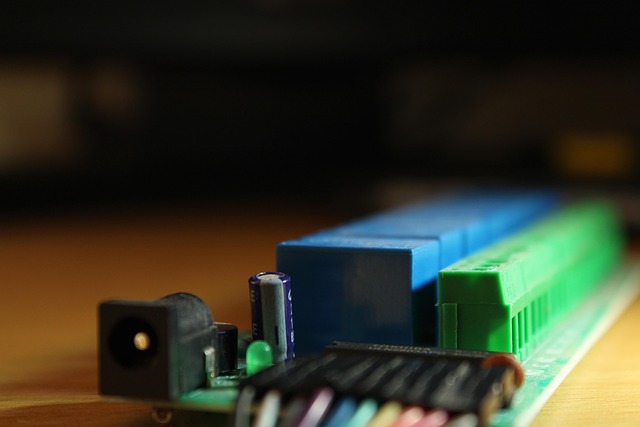
Function of Capacitors in Audio Circuits
Capacitors act as frequency-dependent elements that determine how signals pass or block certain frequency ranges. They store and release electrical charge in cycles, introducing time-based variations that affect harmonic content. Within an effects pedal, they set coupling boundaries between stages, filter unwanted frequencies, and establish timing constants for modulation or delay effects.
Why the Audio Capacitor Is Central to Pedal Performance
The dielectric inside an audio capacitor influences clarity and noise performance. A high-quality dielectric minimizes losses and prevents unwanted coloration. Variations in capacitance value shift cutoff frequencies, changing the tonal balance between bass and treble. Temperature stability also matters; a capacitor that drifts under heat may alter tone during performance or extended studio sessions.
Types of Audio Capacitors Used in Effects Pedals
Each capacitor type brings distinct sonic fingerprints and practical trade-offs. Choosing the right one depends on circuit position, voltage demands, and desired tonal character.
Film Capacitors and Their Sonic Characteristics
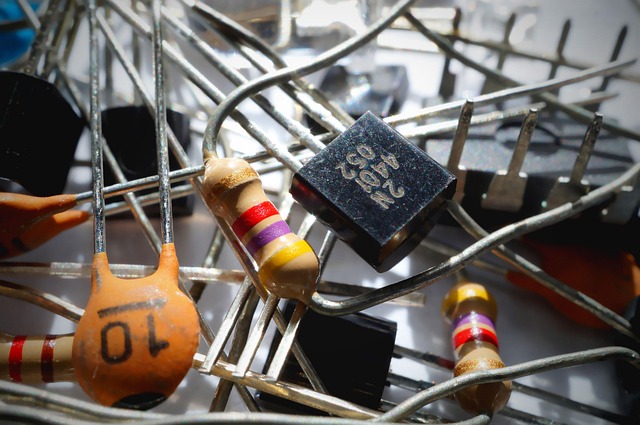
Film capacitors—especially polypropylene and polyester—are prized for their low distortion levels. They exhibit predictable frequency responses with minimal dielectric absorption, making them ideal for tone-shaping networks like guitar pedal filters or equalizers. Builders often favor them for coupling stages where transparency is essential.
Electrolytic Capacitors in Power Supply and Signal Path Applications
Electrolytic capacitors provide high capacitance values necessary for power filtering or decoupling tasks. Their polarized nature confines them mostly to DC paths or low-frequency coupling roles. Equivalent Series Resistance (ESR) plays a significant part here: lower ESR improves transient response while slightly higher ESR can introduce warmth often associated with vintage pedals.
Ceramic Capacitors in Compact Pedal Designs
Ceramic capacitors are ubiquitous due to their small size and affordability. They serve well for high-frequency decoupling but can become microphonic under mechanical stress—a concern in stompbox enclosures exposed to vibration. Class I ceramics (C0G/NP0) offer stable capacitance across temperature changes, providing better audio fidelity than cheaper Class II types.
The Influence of Capacitance on Frequency Response and Tone Shaping
Capacitance directly sets how an audio signal is filtered within a pedal circuit. Subtle value changes can transform tonal texture from full-bodied warmth to crisp brightness.
Coupling Capacitors and Low-Frequency Roll-Off Control
In coupling applications, capacitors determine the low-end cutoff point by interacting with input impedance. Smaller values attenuate bass frequencies, producing thinner tones reminiscent of early transistor fuzzes. Proper sizing allows full-bandwidth transparency without introducing unwanted phase shifts.
Filtering Networks: High-Pass, Low-Pass, and Band-Pass Configurations
Filters rely on capacitive-reactive behavior to sculpt tone curves within equalizer sections or tone stacks. Adjusting capacitance modifies slope steepness and resonance peaks. When combined with resistors or inductors, these networks define Q-factor precision—critical for parametric EQs or wah circuits where narrow frequency control is required.
Dielectric Materials and Their Impact on Audio Quality
Dielectric composition determines much more than just capacitance—it shapes how energy is stored, released, and even colored tonally within an audio path.
Comparing Dielectric Types for Tonal Transparency
Polypropylene dielectrics deliver near-perfect linearity with negligible absorption, yielding pristine clarity suited for audiophile-grade pedals. Polyester types exhibit mild coloration that complements vintage-inspired designs such as analog chorus units from the 1970s. Tantalum capacitors add harmonic richness yet tend to leak more current over time—a trade-off often exploited intentionally by boutique builders seeking character over precision.
Temperature Coefficients and Long-Term Stability Considerations
Temperature fluctuations alter dielectric constants slightly, shifting capacitance values in sensitive circuits like oscillators or envelope filters. Materials such as C0G ceramics maintain low thermal drift suitable for precision designs. Over years of use, aging effects can cause gradual changes; periodic measurement helps preserve consistent sonic identity across production runs.
Noise Management Through Capacitor Selection and Placement
High-gain pedals magnify every parasitic imperfection within their circuitry. Strategic selection and layout reduce hiss, hum, or oscillation artifacts caused by capacitor interactions.
Minimizing Parasitic Effects in High-Gain Circuits
Long leads act as inductors at ultrasonic frequencies, forming unintended resonant peaks that color tone or induce instability. Compact PCB layouts minimize loop area between terminals while shielding reduces electromagnetic interference from nearby power supplies or switching transients.
Leakage Current and Its Effect on Biasing Networks
Leakage current alters DC bias points within transistor stages, leading to distortion shifts or gating artifacts common in misbiased fuzz circuits. Using low-leakage film types stabilizes biasing long-term. Electrolytics degrade gradually through oxide breakdown; replacing aged parts restores intended gain structure after years of service.
Advanced Design Considerations for Expert-Level Pedal Builders
Professional builders treat capacitor matching as seriously as resistor tolerances because stereo imaging or modulation symmetry relies on it.
Matching Capacitance Tolerances for Stereo or Dual-Circuit Designs
In stereo chorus pedals or dual-path phasers, matched capacitances maintain identical cutoff frequencies across channels ensuring balanced imaging. Even a 5% mismatch can skew modulation depth perceptibly between left and right outputs.
Evaluating ESR, ESL, and Dissipation Factor Metrics
Beyond nominal value lies performance under load: ESR affects transient punch while Equivalent Series Inductance (ESL) limits high-frequency extension critical for digital-control hybrids. Dissipation factor quantifies total energy loss—lower numbers correlate with cleaner transient response especially noticeable during reverb decay tails.
Innovations in Modern Audio Capacitor Technology
Recent material science has expanded options available to pedal designers seeking compactness without sacrificing fidelity.
Emerging Materials for Enhanced Linear Response
New metallized film formulations achieve ultra-low ESR suitable for transparent signal paths once reserved for studio-grade gear. Hybrid electrolytics now combine traditional bulk capacitance with improved linearity ideal for compact analog-digital hybrid pedals where space constraints meet sonic expectations.
Integration of Surface-Mount Capacitors in Compact Pedal Architectures
Surface-mount devices (SMDs) enable denser layouts while maintaining electrical integrity when properly oriented to minimize mechanical stress-induced microphonics—a subtle but important factor when footswitch vibrations propagate through enclosure walls into sensitive analog front-ends.
Practical Guidelines for Selecting Audio Capacitors in Pedal Design
Choosing an audio capacitor involves balancing measurable specifications against subjective tonal goals—a decision blending engineering precision with artistic intent.
Balancing Electrical Specifications with Tonal Objectives
Designers weigh parameters like tolerance range, voltage rating, ESR profile against desired voicing whether transparent studio-grade compression or colored overdrive warmth is sought. Cost constraints often dictate compromises but experienced builders prioritize sonic consistency over marginal savings per unit.
Testing Methods to Validate Performance Under Real Signal Conditions
Frequency sweep analysis reveals phase shift patterns while harmonic distortion tests expose nonlinearity introduced by dielectric losses at varying voltages. Thermal cycling under load verifies stability ensuring that real-world operation mirrors bench measurements even after prolonged stage use under hot lighting conditions.
FAQ
Q1: What makes an audio capacitor different from general-purpose ones?
A: Audio capacitors feature tighter tolerances, lower ESR values, and stable dielectrics designed specifically to maintain tonal accuracy across temperature shifts typical in analog circuits.
Q2: Why do vintage pedals often sound warmer?
A: Many used electrolytic or polyester film capacitors whose natural leakage currents introduced subtle harmonic coloration perceived as warmth by players.
Q3: Can ceramic capacitors be used throughout an entire signal path?
A: Technically yes but only Class I types like C0G/NP0 are recommended since other classes exhibit microphonics that degrade fidelity under vibration or mechanical stress.
Q4: How often should electrolytic capacitors be replaced in pedals?
A: Typically every 10–15 years depending on usage environment; aging increases leakage which alters bias points affecting gain structure over time.
Q5: Does matching capacitor pairs really matter?
A: In mono pedals it’s less critical but stereo designs benefit greatly since matched values preserve channel balance ensuring uniform modulation depth across both outputs.