
Mobile unlocked reviews guide to buying a compatible phone
A useful mobile unlocked reviews guide should begin with a point many listings gloss over: an unlocked phone is not automatically the right phone for every carrier. “Unlocked” usually means the device is not restricted to one carrier’s SIM or eSIM profile. It still needs the right hardware bands, VoLTE support, 5G support, software approval, and clean IMEI status for the network you plan to use. For buyers in the United States, that means checking the exact model number and IMEI before purchase, not just the brand name or product family. This guide explains how to assess unlocked phones without relying on unsupported ranking claims or vague seller language.
What an unlocked phone really means
An unlocked phone can accept service from a different carrier, but that does not guarantee full network performance. The CTIA Consumer Code for Wireless Service explains that unlocking disables software that prevents activation on another network; it does not make a phone technologically compatible with every network. In practice, an unlocked phone may accept a SIM card but still have weak coverage, missing 5G, no Wi-Fi calling, or failed voice service.
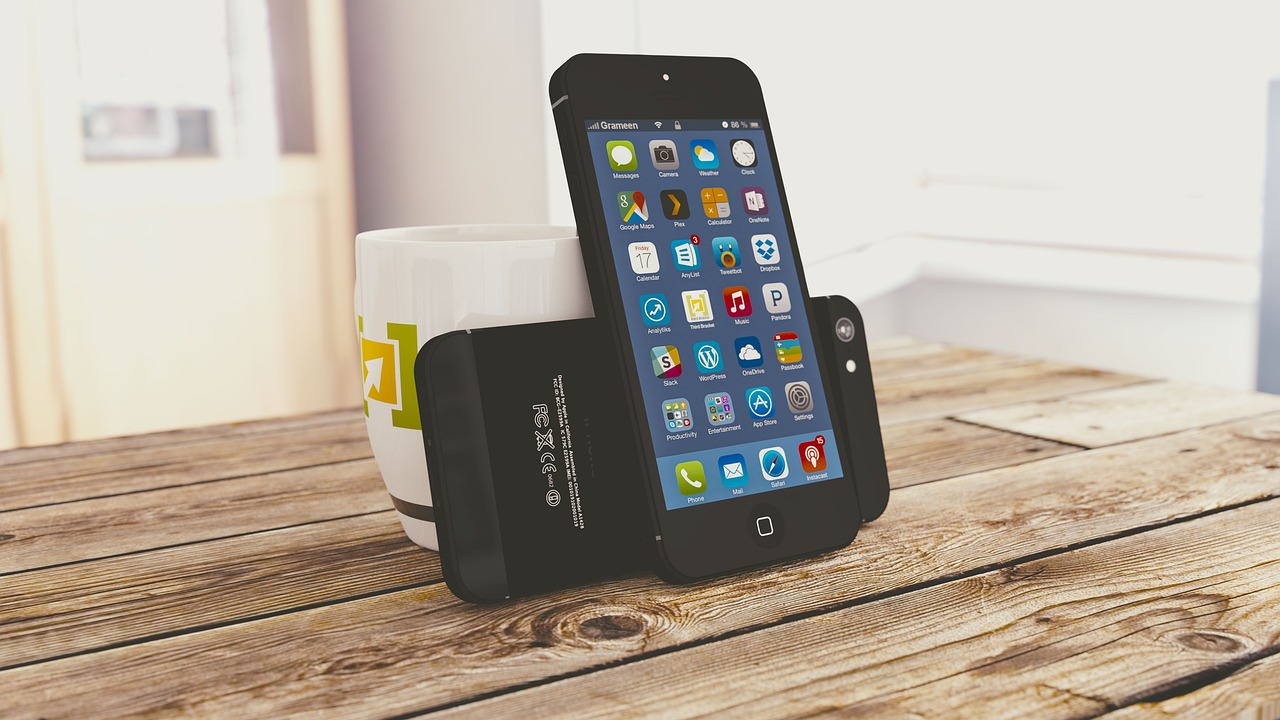
There are several types of “unlocked” phones. A factory-unlocked phone is sold without a carrier lock, often directly by the manufacturer or an authorized retailer. A carrier-unlocked phone was originally sold by a carrier and later unlocked after meeting that carrier’s policy. A region-unlocked or imported phone may be unlocked for SIM use but designed for another market, which can affect warranty coverage, emergency alerts, carrier features, or band support.
That is why a review should not treat “unlocked” as a single feature. The better questions are: unlocked for which carrier, on which model number, with which SIM or eSIM, and with which network features?
The review criteria that matter before price
Price matters, but compatibility should come first. A low-cost unlocked phone becomes expensive if it has to be returned, cannot activate, or loses features the buyer expected. Strong reviews usually evaluate these points before moving on to cameras, battery life, or screen quality:
- Exact model number: Phones with the same marketing name may have different regional or carrier variants.
- IMEI or EID check: U.S. carriers commonly ask buyers to use a device ID to confirm bring-your-own-device eligibility.
- VoLTE and voice support: Older unlocked phones can have LTE data but fail modern voice requirements.
- 4G and 5G band support: Missing low-band or mid-band support can reduce indoor, rural, or 5G coverage.
- eSIM and physical SIM options: Some recent devices depend heavily on eSIM, while some prepaid or regional providers may still prefer a physical SIM.
- Update policy: Security updates matter more on a refurbished or older unlocked phone than an extra camera mode.
- Clean status: The phone should not be reported lost, stolen, financed with an unpaid balance, or blocked by a previous carrier.
If a product page says only “unlocked GSM” or “works worldwide,” treat that as incomplete information. Modern U.S. carrier support is no longer just a GSM-versus-CDMA question. Major 3G networks have been retired, and voice service now depends on LTE or 5G-era compatibility.
Compatibility checks for U.S. buyers
For U.S. buyers, the safest process is to choose the carrier first and then check the phone. Verizon, AT&T, T-Mobile, and many mobile virtual network operators ask customers to confirm compatibility through a BYOD tool, usually with an IMEI. Verizon’s BYOD guidance, for example, states that a device must be unlocked and compatible with its network. T-Mobile’s BYOD process also asks users to confirm that the device is unlocked and uses an IMEI or EID check for activation readiness. AT&T similarly asks BYOD customers to use the device’s IMEI or ESN details.
Do not rely only on a seller’s compatibility chart if the phone is used, refurbished, imported, or carrier-branded. The same phone family can include U.S. unlocked, U.S. carrier, international, Japanese, Korean, Chinese, or Latin American versions. Some variants may be excellent devices but still lack the exact network support a U.S. carrier expects.
| Check | Why it matters | How to verify | Warning sign |
|---|---|---|---|
| IMEI status | Confirms whether the carrier may activate the device | Use the target carrier’s BYOD checker before purchase when possible | Seller refuses to provide IMEI on a used device |
| Model number | Identifies the regional or carrier variant | Compare the model number with manufacturer specifications | Listing uses only the phone’s marketing name |
| VoLTE support | Needed for reliable voice service on modern U.S. networks | Check carrier compatibility notes and user reports for that exact model | Phone is older, imported, or described only as “LTE data” |
| eSIM or SIM support | Affects activation, travel, and dual-line use | Confirm whether the carrier supports that device’s eSIM or physical SIM | Phone has no SIM tray and the carrier does not support its eSIM profile |
As an editorial rule, a review that cannot identify the model number should not make a strong carrier recommendation. It can describe the phone’s general strengths, but it should not promise compatibility.
Carrier unlocking policies are not the same everywhere
Carrier unlocking policy is separate from phone compatibility. The CTIA Consumer Code says participating carriers should publish clear unlocking policies, unlock eligible postpaid devices after contract or financing obligations are met, and unlock eligible prepaid devices no later than one year after initial activation, subject to reasonable requirements. The code also says eligible requests should generally receive an unlock, an OEM request, a reason for denial, or an explanation for delay within two business days.
The FCC proposed a broader 60-day unlocking rule in 2024, but as of September 29, 2026, publicly available federal regulatory agenda material still described the broader proceeding as pending rather than a finalized industry-wide rule. In January 2026, the FCC also granted Verizon-related unlocking relief that changed some expectations around automatic 60-day unlocking. The buyer takeaway is straightforward: do not assume an online post from 2022, 2024, or even 2025 still reflects the current policy for a specific carrier or prepaid brand.
Before buying a locked phone with the intention of unlocking it later, read the current carrier policy and keep the purchase receipt, activation date, account standing, and payment history. If the seller says a phone “will unlock soon,” that is less reliable than buying a phone that is already confirmed unlocked and compatible.
How eSIM changes unlocked phone reviews
eSIM makes unlocked phones more flexible, but it adds another compatibility layer. GSMA materials describe eSIM as a way to download a SIM profile securely into an embedded element rather than relying only on a removable card. For buyers, the benefit is easier plan switching, travel-plan setup, dual-line use, and fewer physical SIM logistics.
The limitation is that not every carrier supports every eSIM device in the same way. Some devices have both eSIM and physical SIM. Others may be eSIM-only in certain markets. Some carriers can activate a device through an app, while others may require a QR code, an EID, or help from a support representative. A review should therefore state whether it tested or verified eSIM activation for the relevant region. If it does not, the safer wording is “the phone supports eSIM hardware,” not “it will activate on every eSIM carrier.” See also: Gadgets.
This also matters for travelers. A factory-unlocked phone with dual SIM or eSIM can be useful for keeping a domestic number while using a travel data plan. Travelers still need to check roaming bands, local carrier support, and whether the phone is locked by the original seller.
Used and refurbished unlocked phones need extra checks
Used unlocked phones can be good value, but they carry risks that new factory-unlocked phones usually avoid. A refurbished device may have a replaced screen, third-party battery, missing water resistance, carrier firmware, or limited warranty coverage. None of those issues is automatically a deal-breaker, but a review should separate device condition from network status.
For used devices, ask for the IMEI, exact model number, battery health where available, return window, warranty terms, and proof that the device is not locked to an account or carrier. On iPhone, Apple support guidance says users can check whether “No SIM restrictions” appears in settings to confirm carrier-lock status. On Android, wording varies by brand and carrier, so an IMEI check and a test SIM are often more useful than a screenshot alone.
A trustworthy seller should be able to explain whether the phone is factory unlocked, carrier unlocked, refurbished by the manufacturer, refurbished by a retailer, or simply used. If that distinction is unclear, pay less, require a return option, or choose a better-documented listing.
A practical buying checklist
Use this checklist before relying on any unlocked phone review or seller description:
- Choose the carrier or MVNO you plan to use first.
- Find the exact phone model number, not just the product family name.
- Run the IMEI or EID through the carrier’s BYOD checker when the seller allows it.
- Confirm that the phone is carrier unlocked, not only “paid off” or “eligible.”
- Check VoLTE, 4G LTE, 5G, Wi-Fi calling, hotspot, and eSIM support for your carrier.
- Review warranty, return, battery, and refurbishment terms.
- Avoid listings that hide the IMEI, omit the model number, or promise universal compatibility without evidence.
For more electronics buying guides and category updates, visit our Reviews section.
Frequently asked questions
Is an unlocked phone better than a carrier phone?
It can be better if you value carrier flexibility, travel eSIM use, and easier switching. A carrier phone may still be a better deal if the subsidy is large, the plan fits your needs, and you understand the unlock policy. The best choice depends on total cost, not just the device price.
Will any unlocked phone work with Verizon, AT&T, or T-Mobile?
No. The phone must be unlocked and compatible with the target network. Always check the exact model and IMEI because regional variants and older devices can fail activation or lose key features.
Is factory unlocked the same as carrier unlocked?
No. Factory unlocked means the phone was sold without a carrier lock. Carrier unlocked means a carrier-locked phone was later unlocked after meeting eligibility rules. Both can work well, but factory-unlocked models are usually easier to evaluate before purchase.
Should I buy an imported unlocked phone?
Only if you can confirm U.S. carrier compatibility, warranty support, update availability, and return rights. Imported phones can offer good hardware, but some lack the bands or software support expected by U.S. carriers.
What is the biggest mistake in reading unlocked phone reviews?
The biggest mistake is assuming that a positive review of the phone automatically confirms carrier compatibility. Performance, camera quality, and battery life matter only after the phone can activate and work properly on your chosen network.