ADT smart home explained for connected security in 2026
ADT smart home in 2026 is best understood as a monitored security ecosystem, not just a set of connected gadgets. The current platform centers on the ADT+ app and ADT+ Base, with Google Nest cameras, doorbells and thermostats, Yale smart locks, Z-Wave-compatible devices, professional monitoring, and access-control features such as Trusted Neighbor. This mix can suit households that want security, video, automation, and emergency response managed together. It is less suitable for users who want a fully open smart home hub where every device works equally across every platform. The practical question is whether monitored protection and integrated access matter more to you than maximum device freedom.
What ADT smart home means now
The phrase ADT smart home has changed meaning over the past few years. It no longer refers only to an alarm system with a few connected lights or a thermostat. ADT’s current smart home strategy is built around a more unified security experience, with the ADT+ app serving as the main control point for alarm status, cameras, compatible smart devices, routines, and certain safety features.

ADT and Google announced an integrated DIY smart home security system in 2023, combining ADT security and life-safety devices with Google Nest products and the ADT+ app. ADT then expanded the platform with services such as Trusted Neighbor, which launched in 2024, and continued promoting the ADT+ Security System in 2026 as an all-in-one experience for security, cameras, thermostats, locks, and automation.
For readers following broader connected-device trends, the important shift is that ADT is not positioning itself as just another general-purpose smart home brand. Its strongest role is where smart home convenience overlaps with security events: arming, disarming, monitoring, video verification, emergency response, and controlled access. More Smart Home coverage should evaluate ADT in that context rather than comparing it only with low-cost standalone hubs.
The main parts of an ADT smart home system
An ADT smart home setup can vary by installation type, monitoring plan, device generation, and whether the customer chooses professional installation or self setup. In most cases, the system depends on several layers working together.
| Layer | What it does | What to verify |
|---|---|---|
| ADT+ app | Controls the security system, camera views, automation, alerts, and account features in one place. | Confirm that your specific equipment generation is supported. |
| ADT+ Base | Acts as the system hub for sensors, security devices, automation, and cloud connectivity. | Check whether the version supports the features you want, including Z-Wave devices. |
| Security and life-safety sensors | Includes door and window sensors, motion sensors, smoke detection, carbon monoxide detection, flood alerts, and related devices. | Confirm which devices are monitored and which only send app alerts. |
| Google Nest devices | Adds compatible cameras, doorbells, thermostats, video alerts, and smart home visibility. | Requires supported devices, a Google account, working internet, and Wi-Fi for many features. |
| Yale smart locks | Supports smart access and certain Trusted Neighbor features. | Check lock model compatibility and access rules before installation. |
| Professional monitoring | Connects alarm events with ADT monitoring agents and potential emergency escalation. | Plan level matters; some video and access features require higher-tier plans. |
This layered structure reduces app switching for many core security tasks. It also creates dependencies. If a feature requires an ADT Base, a specific monitoring plan, a compatible camera, a smart lock, and a cloud subscription, it should not be treated as a generic feature available to every ADT customer.
How Google Nest integration changes the value
Google Nest integration is one of the main reasons ADT smart home deserves attention. ADT’s 2025 annual filing describes Google as a strategic partner, with joint funding arrangements for marketing, devices, services, employee training, customer acquisition, and product technology. The filing also describes ADT’s broader use of Google Cloud services through a commitment running through 2030. This does not mean every Google device automatically works with every ADT feature, but it does show that the relationship is central to ADT’s smart home direction.
For homeowners, the practical benefits are more concrete. Compatible Nest cameras and doorbells can support video visibility in the ADT+ experience. Nest thermostats can be part of comfort and automation routines. Google support materials also describe ways to link ADT and Google services so users can control compatible ADT devices with voice commands, including arming, disarming, lights, and thermostat settings.
There are important limits. Google and ADT support pages note that many camera and remote-control features depend on working internet, Wi-Fi, a Google account, and a linked Google Home setup. Google also changed its consumer subscription naming in October 2025, replacing Nest Aware second-generation plans with Google Home Premium. ADT materials in 2026 still use Nest Aware language in some plan descriptions, so customers should check whether their subscription is managed by ADT or directly by Google before assuming the same video-history or advanced camera features apply.
Professional monitoring is the dividing line
The main difference between an ADT smart home and a basic do-it-yourself automation setup is professional monitoring. A self-managed smart home can send notifications, turn lights on, lock doors, or show video. A monitored ADT system can involve trained monitoring agents when an alarm event occurs, depending on the customer’s plan and the type of event.
ADT’s 2026 monitoring materials separate security monitoring, smart home automation, live video features, and advanced access services. They also describe ADT’s U.S.-based company-operated monitoring centers and features such as Alarm Messenger, which helps verify alarm events by text. Earlier ADT launch materials for the integrated DIY system said video verification can help police respond faster than unverified alarms when customers have the required camera and monitoring plan.
This is where buyers need to be precise. A camera notification is not the same as monitored video verification. A smart lock is not the same as an access service connected to alarm status. A motion sensor can trigger local or app-based activity, but professional response depends on service enrollment, device status, and the type of alarm. For households comparing ADT with cheaper smart home kits, the question is not only what devices are included. It is who responds when something happens.
Trusted Neighbor shows ADT’s most distinctive use case
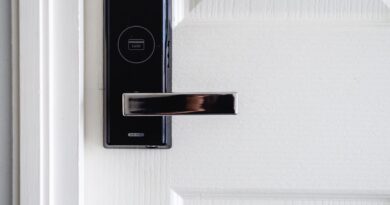
Trusted Neighbor is one of the clearest examples of how ADT combines smart home hardware with monitored security logic. ADT describes the service as a way to grant secure, temporary access to trusted people through the ADT+ app. In supported setups, the feature can work with Google Nest familiar face detection, Yale smart locks, assigned lock codes or biometric authentication on supported devices, and homeowner-approved permissions.
The use cases are practical. A neighbor might be allowed in to pick up a package. A friend might be granted access during a vacation. A dog walker could enter only during a scheduled window. If a water leak alert appears while the homeowner is away, access could be granted to someone who can check the problem before damage gets worse.
The limits are just as important as the convenience. ADT states that Trusted Neighbor features require specific equipment and plan conditions, including ADT Complete with Nest Aware, an ADT Base, compatible camera and lock devices, and Google familiar face detection for certain functions. ADT also states that familiar face detection should not be used as definitive identification and that some features are not available on Nest cameras used in Illinois. That makes Trusted Neighbor powerful, but not universal.
Where ADT fits with Matter and open smart home standards
ADT’s approach sits alongside, rather than fully inside, the broader smart home interoperability movement. The Connectivity Standards Alliance released Matter 1.5 in November 2025 with support for cameras, closures, soil sensors, and additional energy-management capabilities. In June 2026, Matter 1.6 added further improvements around setup, multi-ecosystem use, device status communication, and security visibility. See also: Gadgets.
Those updates matter because smart home buyers increasingly expect devices to work across ecosystems. Monitored security systems, however, are different from ordinary smart plugs or light bulbs. Alarm states, emergency dispatch, camera verification, user identity, access credentials, and lock control carry higher safety and liability concerns. As a result, ADT smart home should not be judged only by whether every device appears in every third-party app.
ADT also continues to rely on Z-Wave-compatible devices in parts of its platform. That can be useful for sensors, switches, and automation devices, but compatibility still depends on ADT’s supported-device list and the specific system generation. If you are building a mixed Apple Home, Google Home, Alexa, Home Assistant, Matter, and ADT environment, treat ADT as the security layer first and the general automation layer second.
Privacy and account questions buyers should ask
Security-focused smart homes collect sensitive data: door activity, camera clips, user permissions, alarm events, location-linked account details, and access logs. NIST Special Publication 1343, based on a survey of 401 U.S. smart home users, found that people view risk differently depending on device category and that misunderstanding responsibility can leave devices and data more vulnerable. That finding applies directly to monitored smart homes, where responsibility is shared among the homeowner, device maker, platform provider, internet service, and monitoring company.
Before choosing or upgrading an ADT smart home setup, ask these questions:
- Which company manages my video subscription and account data, ADT or Google?
- Which camera clips can be shared with monitoring agents during an alarm event?
- Can I change or revoke access permissions quickly in the app?
- What happens to camera history if I change subscription tiers?
- Which features stop working during an internet outage?
- Does the system have cellular backup or battery backup, and for how long?
- What happens to devices if I cancel monitoring?
- Are biometric, familiar-face, or auto-unlock features available in my state?
These questions are not reasons to avoid ADT. They are the normal due diligence required for any connected security platform.
A practical buying checklist
ADT smart home is most compelling for users who want a professionally supported security layer with smart home convenience attached. It may be less compelling for hobbyists who want full local control, broad Matter experimentation, or very low monthly costs.
Use this checklist before committing:
- Define the main goal. If your priority is emergency response, start with monitoring. If your priority is lights and scenes, compare general smart home platforms first.
- Choose installation style carefully. Professional installation may be better for larger homes, life-safety devices, and users who want setup support. Self setup may suit apartments or smaller systems.
- List every device you expect to use. Do not assume an older camera, thermostat, lock, or ADT panel supports ADT+ features.
- Check plan requirements. Video, smart automation, Trusted Neighbor, and monitoring features can depend on plan tier.
- Confirm Google account details. Nest Aware, Google Home Premium, and ADT-managed subscriptions can affect video history and feature access.
- Plan for outages. Ask how the system behaves during power, Wi-Fi, and broadband interruptions.
- Review cancellation terms. Some professionally installed packages and promotions may involve contract commitments or early termination terms.
- Protect access rules. Use strong account security, review trusted users regularly, and avoid giving broad access when timed or event-based access would work.
The bottom line: ADT smart home is strongest when security, monitoring, cameras, locks, and controlled access need to work as one system. It is not the cheapest way to automate a home, and it is not the most open platform for enthusiasts. For households that want connected security with a professional response path, ADT’s current ADT+ and Google Nest direction is one of the more significant smart home security models to watch in 2026.
Frequently asked questions
Is ADT smart home the same as ADT+?
Not exactly. ADT+ is the current app and platform experience that powers many newer ADT smart home features. ADT smart home is the broader category, including security devices, monitoring, cameras, locks, thermostats, automation, and compatible connected devices.
Does ADT smart home work with Google Home?
Yes. Compatible ADT and Google Nest devices can work together through supported setup flows. Users may be able to control certain ADT devices with Google voice commands, but availability depends on account linking, device compatibility, app versions, and service plan.
Do I need professional monitoring for ADT smart home?
You do not need professional monitoring for every connected-device function, but many of ADT’s most security-focused benefits depend on monitoring. Video verification, emergency response, and some advanced access features are plan-dependent.
Is ADT smart home suitable for renters?
It can be, especially with self-setup equipment and wireless devices. Renters should still check lease restrictions, installation requirements, cancellation terms, and whether devices can be removed without damage when moving.
What should existing ADT Pulse or ADT Control users check?
Existing users should verify whether their current panel, sensors, cameras, locks, and subscriptions can move to ADT+ without losing features. Older ADT systems may not behave the same way as newer ADT+ equipment, so compatibility should be confirmed before upgrading.