Will Global Semiconductor News Reveal What Drives the $1.5 Trillion Surge
Global Semiconductor Market Surges Beyond $1.5 Trillion in 2026
The global semiconductor market is set to surpass $1.5 trillion by 2026, marking an unprecedented milestone in the technology sector. This expansion is propelled by a convergence of advanced manufacturing, AI-driven design, and geopolitical realignments shaping supply chains. As demand for chips powering electric vehicles, cloud computing, and edge devices accelerates, the industry’s value chain is undergoing structural transformation. The surge reflects not just economic momentum but also strategic national investments aimed at securing technological sovereignty.
The Expanding Global Semiconductor Landscape
The semiconductor landscape has evolved from cyclical growth to structural expansion driven by digital transformation across industries. The market’s trajectory toward $1.5 trillion underscores both the technological depth and the geopolitical weight of chip manufacturing.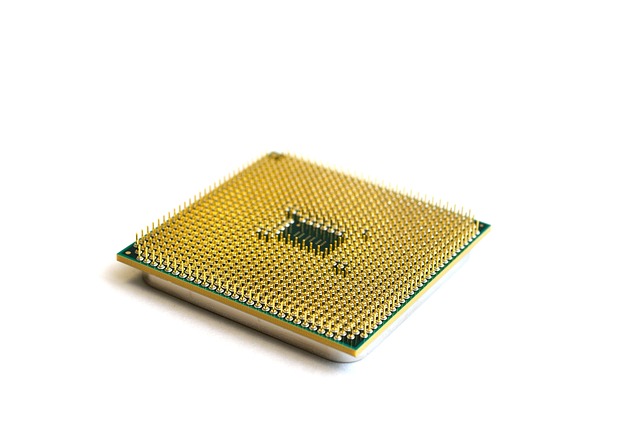
Overview of the Semiconductor Market’s Growth Trajectory
The semiconductor industry has grown from a $400 billion market a decade ago to a projected $1.5 trillion by 2026. This surge stems from three intertwined forces: economic stimulus targeting high-tech manufacturing, rapid adoption of AI and automation, and strategic reconfiguration of supply chains post-pandemic. The interplay between supply chain resilience and market expansion is now central to corporate strategy, as companies seek redundancy across geographies rather than cost-minimization alone.
Regional Market Dynamics and Competitive Shifts
North America continues to dominate chip design through its fabless giants, while East Asia leads fabrication capacity with Taiwan and South Korea at the core. Europe, meanwhile, is rebuilding its semiconductor ecosystem through policy-driven incentives such as the EU Chips Act. Governments are investing heavily in domestic capacity—TSMC’s U.S. fabs in Arizona, Samsung’s new plant in Texas, and Intel’s expansions in Germany illustrate this shift. Emerging players like India and Vietnam are reshaping global production networks through government-backed infrastructure programs aimed at attracting foundry investment.
Technological Catalysts Behind the $1.5 Trillion Surge
Technology remains the engine driving valuation growth. Advances in process nodes, materials science, and design automation have allowed semiconductors to penetrate every layer of modern infrastructure—from cars to quantum systems.
Advances in Chip Design and Manufacturing Processes
The transition to 3nm and 2nm nodes represents not only performance efficiency but also power savings crucial for mobile computing and data centers. EUV lithography enables finer geometries that reduce transistor leakage while maintaining yield stability. Heterogeneous integration—combining logic, memory, and analog components on a single package—has lowered costs per function without compromising performance. Design ecosystems have become more complex as AI-assisted tools automate verification and layout optimization across multi-die architectures.
Growth of Specialized Semiconductors Across Industries
As general-purpose chips reach physical limits, specialization defines new growth vectors.
Automotive Electronics and Power Semiconductors
Electric vehicles now require power-efficient chips capable of handling high voltages with minimal loss. Silicon carbide (SiC) MOSFETs dominate inverter applications for EV drivetrains due to their thermal efficiency. Gallium nitride (GaN) devices are emerging in fast-charging systems because they operate at higher frequencies with smaller footprints—key for compact vehicle electronics.
AI, Cloud Computing, and Data Center Demand
AI workloads have transformed chip architecture priorities toward parallelism and bandwidth rather than clock speed alone. GPUs remain essential for training large models, but specialized accelerators—TPUs or custom ASICs—are rapidly gaining ground in hyperscale data centers. Semiconductor innovation here focuses on balancing energy efficiency with computational density as cloud providers race to reduce operational costs per inference task.
Economic Forces Influencing Market Valuation
Behind technological progress lies massive capital deployment shaping both competition and national strategy.
Capital Expenditure Trends Among Leading Foundries
TSMC leads global capital expenditure with annual investments exceeding $30 billion focused on advanced nodes below 5nm. Samsung follows closely with diversified capacity across memory and logic segments. Intel’s IDM 2.0 strategy combines internal production with external foundry services supported by U.S. government subsidies under the CHIPS Act. These investments aim for long-term ROI despite cyclical downturns typical of semiconductor pricing cycles.
Supply Chain Realignment and Risk Management Strategies
Post-pandemic disruptions exposed vulnerabilities tied to regional concentration in East Asia. Firms now diversify suppliers across multiple continents while adopting digital twins for predictive logistics modeling. Predictive analytics helps anticipate material shortages months ahead based on shipment telemetry data from ports and suppliers. Strategic stockpiling policies for rare gases like neon or palladium have become standard practice among major fabs seeking uninterrupted production continuity.
Policy, Trade, and Geopolitical Considerations
Semiconductors are no longer mere industrial goods—they’re instruments of statecraft influencing alliances and trade flows globally.
Global Policy Frameworks Affecting Semiconductor Trade Flows
Export controls imposed by the U.S. on advanced lithography equipment have reshaped China’s access to leading-edge nodes, pushing domestic R&D acceleration under state programs like “Made in China 2025.” The EU focuses on open strategic autonomy through cross-border research funding while Japan expands subsidies for local fabs producing mature-node chips critical for automotive supply chains. These frameworks reflect a broader pursuit of technology sovereignty tied directly to national security agendas.
The Role of Public–Private Partnerships in Industry Expansion
Public–private partnerships now underpin most semiconductor initiatives worldwide—from R&D consortia like IMEC in Belgium to workforce training programs co-funded by governments and corporations in South Korea or Singapore. Such collaborations accelerate innovation clusters where academia contributes materials science breakthroughs while industry scales them into manufacturable processes.
Future Outlook: Structural Shifts in the Semiconductor Ecosystem
Beyond 2026, structural shifts will redefine how semiconductors interact with emerging technologies such as quantum computing and edge intelligence.
The Convergence of Emerging Technologies with Semiconductor Innovation
Quantum computing research increasingly depends on hybrid architectures that integrate classical control chips with qubit arrays operating at cryogenic temperatures—a frontier blending physics with nanoelectronics design principles.
Quantum Computing Integration Pathways
Early-stage prototypes use cryo-CMOS controllers enabling stable qubit manipulation within dilution refrigerators. These hybrid systems represent the first tangible intersection between quantum physics and commercial semiconductor engineering.
Edge Computing and IoT Expansion
Miniaturization trends continue pushing processing closer to data sources—from industrial sensors to smart appliances—reducing latency while easing network congestion. Edge AI chips built on energy-efficient architectures enable localized decision-making critical for autonomous drones or medical wearables operating off-grid environments.
Long-Term Sustainability Challenges
Environmental sustainability remains an unresolved tension within semiconductor scaling ambitions.
Environmental Impact of Semiconductor Fabrication
Advanced lithography requires immense water volumes for wafer cleaning alongside high electricity consumption per toolset operation—raising concerns about carbon intensity even among eco-conscious fabs adopting renewable energy contracts.
Circular Economy Approaches
Recycling initiatives targeting wafer reclaiming or rare metal recovery are expanding within major fabs aiming to cut waste footprints by reprocessing defective wafers into test substrates rather than discarding them outright—a small yet growing contribution toward circular manufacturing models.
Insights from Global Semiconductor News Trends
Market sentiment reflected through global semiconductor news reveals investor confidence oscillating around innovation milestones rather than quarterly profits alone.
Tracking Market Sentiment Through Industry Reporting
Industry reporting highlights how announcements about new node transitions or fab openings influence short-term equity valuations across suppliers upstream in photolithography or chemical sectors—an indicator that media narratives now shape capital allocation expectations beyond traditional financial metrics.
Anticipated Developments Beyond 2026
Analysts forecast potential saturation around mature consumer electronics segments but see continued upside from automotive electrification, industrial automation, and defense electronics demand post-2026. Capital inflows are expected to concentrate around compound semiconductors (SiC/GaN) fabrication ecosystems supporting these verticals as next-decade growth anchors.
FAQ
Q1: What drives the semiconductor market beyond $1.5 trillion?
A: Growth stems from AI expansion, EV adoption, government-backed manufacturing incentives, and sustained investment in advanced process technologies below 3nm nodes.
Q2: Which regions lead current semiconductor production?
A: East Asia dominates fabrication capacity through Taiwan and South Korea; North America leads chip design; Europe invests heavily under its Chips Act initiative.
Q3: How do AI workloads impact chip architecture?
A: They prioritize parallel processing efficiency over clock speed optimization, spurring development of GPUs, TPUs, and domain-specific accelerators optimized for machine learning tasks.
Q4: What sustainability issues face semiconductor fabs?
A: High water usage, energy-intensive lithography processes, and limited recycling infrastructure pose ongoing environmental challenges despite renewable energy adoption efforts.
Q5: Where will future investment focus after 2026?
A: Capital will likely flow into compound semiconductors supporting electric mobility, defense electronics resilience programs, and edge computing hardware ecosystems expanding IoT capabilities worldwide.