
Are Printed Circuit Boards from China a Hidden Risk Beneath AI Chips
Hidden Beneath AI Chips, Chinese-Made Circuit Boards Raise National Security Concerns in U.S.
Printed circuit boards (PCBs) form the silent infrastructure of every artificial intelligence (AI) system, yet their origin now lies at the center of a growing geopolitical debate. The reliance of U.S. and allied industries on Chinese PCB manufacturing has created strategic vulnerabilities that extend far beyond economics. These boards are not just passive connectors; they determine how data flows, how chips communicate, and how secure entire systems remain. As AI hardware becomes vital to defense, energy, and communications, the security risks embedded within global PCB supply chains have become impossible to ignore. The conclusion is clear: national security begins at the board level.
The Strategic Importance of Printed Circuit Boards in AI Hardware
The evolution of AI hardware has elevated PCBs from background components to critical enablers of performance and trustworthiness. Their design precision directly affects computational reliability and system integrity.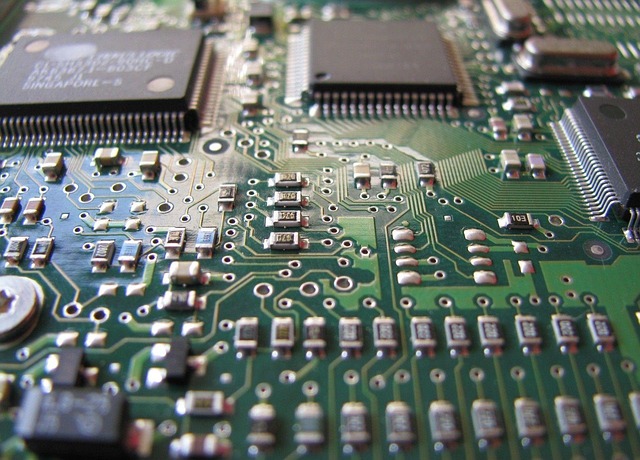
The Role of PCBs in AI Chip Functionality
PCBs act as the foundational layer connecting AI chips with sensors, memory modules, and power systems. In high-performance computing clusters or edge inference devices, even nanosecond delays caused by poor trace routing can degrade throughput. High-speed signal integrity becomes essential for maintaining synchronization between GPUs and accelerators during massive parallel processing tasks. Thermal management is equally vital since overheating can distort voltage levels and trigger logic errors in neural network computations. For instance, multilayer boards with embedded copper planes dissipate heat more efficiently than traditional single-layer designs, sustaining chip performance under continuous load.
The Supply Chain Complexity of PCB Manufacturing
From substrate sourcing to chemical etching and final assembly, PCB production involves a chain of specialized steps across multiple facilities. Each stage introduces potential quality variations that can propagate unnoticed into finished products. The complexity deepens when suppliers operate across borders—materials may come from Japan, be etched in China, assembled in Malaysia, then integrated into servers in Texas. Such fragmentation makes traceability difficult and creates blind spots where defects or malicious alterations could occur without detection.
The Rise of Chinese Dominance in PCB Manufacturing
China’s rise as the global center for PCB fabrication has reshaped industrial dependencies worldwide. Its dominance reflects both scale efficiency and deliberate state-backed industrial policy.
Market Share and Industrial Capabilities
China accounts for more than half of global PCB production capacity according to industry estimates by IPC and Prismark Partners. Over two decades of investment have built a vertically integrated ecosystem spanning raw materials to advanced high-density interconnect (HDI) boards used in aerospace-grade electronics. Government incentives under programs like “Made in China 2025” accelerated local innovation in fine-line lithography and microvia drilling technologies, narrowing the gap with Japanese and Taiwanese producers. Domestic consolidation also allowed Chinese firms to offer competitive pricing unmatched elsewhere.
Dependence of Western Semiconductor Ecosystems on Chinese PCBs
Most U.S., European, and even South Korean semiconductor companies source multilayer or flexible boards from Chinese manufacturers due to cost advantages and rapid turnaround times. While some defense contractors maintain trusted domestic suppliers for classified systems, commercial AI hardware—data center accelerators or autonomous vehicle controllers—often relies on imported boards. Procurement teams prioritize price-performance ratios over origin risk because alternatives lack comparable capacity or economies of scale outside China.
Potential Security Vulnerabilities Embedded in PCB Supply Chains
As fabrication migrates offshore, concerns about hidden vulnerabilities embedded within PCBs have intensified among cybersecurity professionals and intelligence agencies.
Hardware-Level Risks Associated with Foreign Manufacturing
Hardware-level tampering represents one of the most insidious threats because it operates below software visibility. Microscopic modifications—such as adding extra conductive traces or substituting passive components—can create covert data exfiltration channels or enable remote control triggers. Detecting such anomalies requires advanced imaging tools like scanning acoustic microscopy or X-ray tomography that few buyers routinely employ due to cost constraints.
Data Integrity and Tampering Concerns in AI Systems
In AI workloads, compromised PCBs could alter data pathways between processors and memory units, leading to silent corruption during model training or inference phases. A manipulated board might slightly distort sensor inputs feeding an autonomous navigation algorithm—imperceptible during testing but catastrophic in deployment. Verification frameworks lag behind these risks because inspection traditionally focuses on electrical continuity rather than cryptographic validation of board layouts or embedded firmware.
National Security Implications for the United States and Its Allies
The intersection between supply chain exposure and defense readiness has pushed PCB sourcing into national policy discussions across Washington, Brussels, and Tokyo.
Strategic Risks in Defense and Critical Infrastructure Applications
Modern military platforms—from radar arrays to unmanned aerial vehicles—depend heavily on AI-enabled processing modules built atop complex printed circuit boards. If those boards originate from untrusted sources, adversaries could exploit latent vulnerabilities during conflict scenarios to disrupt operations or leak classified telemetry data. Similar exposures exist within civilian infrastructure: smart grids rely on AI-based monitoring nodes that may contain imported PCBs whose provenance cannot be fully verified.
Policy Responses and Export Control Considerations
U.S. policymakers are reassessing dependencies across semiconductor-related supply chains through initiatives like the CHIPS Act’s “secure hardware” provisions. Export controls now restrict technology transfers involving advanced substrates or etching chemicals used in high-end board production when national security is implicated. Yet policymakers face a delicate balance: tightening restrictions too aggressively risks raising costs for domestic manufacturers still reliant on imported intermediate goods.
Technological Pathways Toward Secure PCB Production Ecosystems
Mitigating these vulnerabilities requires both rebuilding trusted manufacturing capacity at home and embedding verifiable transparency mechanisms throughout production networks.
Developing Trusted Domestic Fabrication Capabilities
Reestablishing domestic PCB fabrication demands coordinated investment among government agencies, research institutions, and private industry consortia. Subsidies can offset capital expenditures for cleanroom facilities while joint R&D programs develop next-generation materials like low-loss laminates suited for 5G-AI convergence applications. Beyond physical infrastructure, secure design-to-production verification frameworks must certify each step—from CAD layout approval to final inspection—to prevent unauthorized alterations before shipment.
Integrating Advanced Authentication and Inspection Technologies
Emerging technologies offer new avenues for verifying board authenticity without destructive testing. X-ray tomography combined with machine learning algorithms can map internal layer geometries against reference blueprints to detect deviations at micrometer resolution. Blockchain-based tracking systems record immutable transaction histories for each component batch, enabling auditors to trace provenance instantly if irregularities arise later in service life.
The Future Landscape of Global PCB Supply Chain Security Governance
The next decade will test whether nations can safeguard technological sovereignty without fragmenting global electronics trade—a challenge requiring cooperation rather than isolationism.
International Cooperation on Standards and Transparency Protocols
Harmonized international standards under organizations such as IEC or ISO could mandate traceability documentation across all stages of PCB manufacturing globally. Shared databases listing certified facilities would allow cross-border buyers to verify compliance before procurement contracts are finalized. Information exchange among allied governments could speed early detection when compromised components surface within shared defense networks.
The Intersection of Economic Competitiveness and Cybersecurity Strategy
Economic competitiveness increasingly intertwines with cybersecurity strategy as countries weigh industrial policy against resilience imperatives. Nations that treat secure hardware ecosystems as public infrastructure rather than private enterprise assets will likely achieve greater long-term stability. Strategic foresight—not reactive regulation—will determine how future AI systems manage trust from silicon wafer to printed circuit board assembly line.
FAQ
Q1: Why are printed circuit boards so critical in AI hardware?
A: They provide structural support while routing high-speed signals between chips; their layout directly influences processing efficiency and reliability under heavy computational loads.
Q2: How dependent is the U.S. semiconductor sector on Chinese-made PCBs?
A: Most commercial-grade multilayer boards used by American firms still come from Chinese factories due to unmatched capacity and lower costs compared with domestic alternatives.
Q3: What specific security risks do foreign-manufactured PCBs pose?
A: Risks include hidden circuitry capable of intercepting data or creating backdoors that compromise device integrity at the hardware level.
Q4: What measures can strengthen supply chain transparency?
A: Implementing blockchain-based tracking systems, standardized certification protocols under IEC/ISO frameworks, and non-destructive inspection tools enhances accountability throughout production cycles.
Q5: Could domestic manufacturing alone eliminate these risks?
A: Not entirely; even local plants depend on imported materials or equipment. True resilience combines trusted local capacity with verifiable international cooperation on quality assurance standards.