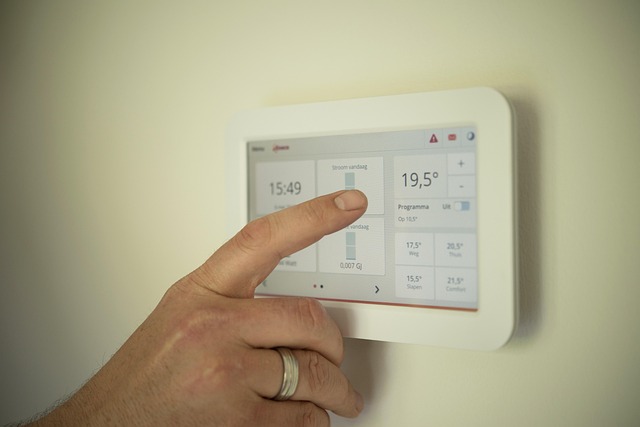
How Smart House System Transforms Residential Living Through AI Innovation
How AI in Smart Homes Is Changing Residential Living
Artificial intelligence has turned the smart house system from a novelty into an essential part of modern living. The technology now predicts behavior, manages energy, and adapts to human presence with remarkable precision. What began as simple automation for lights and thermostats has evolved into a network of intelligent devices capable of learning routines, analyzing patterns, and making real-time decisions. This shift is reshaping how people interact with their homes—making them more efficient, secure, and personal than ever before.
The Evolution of Smart House Systems
The development of smart homes reflects a steady transition from mechanical convenience to intelligent living environments that think ahead rather than merely respond.
From Automation to Intelligent Living
Early home automation was limited to basic lighting control and temperature regulation through timers or manual programming. These systems were reactive, performing tasks only when prompted. The introduction of artificial intelligence changed this dynamic by enabling predictive behavior. Machine learning models allow smart homes to adapt dynamically to user patterns—adjusting heating schedules based on occupancy trends or dimming lights automatically as daylight changes. Over time, this adaptive capability has made the modern smart house system a self-learning ecosystem.
Key Technological Milestones in Smart Home Development
The rise of the Internet of Things (IoT) marked a turning point in connected living. Small sensors and wireless modules allowed everyday appliances to communicate across networks, forming the foundation for today’s interconnected homes. Cloud computing further expanded possibilities by processing large volumes of data from these devices in real time. Edge computing later improved responsiveness by bringing computation closer to the source—critical for safety or comfort functions that require split-second decisions. Meanwhile, advances in AI-driven analytics have enabled systems to personalize experiences at scale, moving beyond one-size-fits-all automation toward individualized comfort and efficiency.
Core Components of an AI-Powered Smart House System
Modern smart homes rely on an intricate architecture where data collection, algorithmic reasoning, and seamless integration work together continuously.
Sensor Networks and Data Acquisition
A network of environmental sensors measures temperature, humidity, air quality, and occupancy levels throughout the home. Motion detectors track movement between rooms while sound sensors monitor acoustic cues like footsteps or door openings. Biometric sensors can even identify individuals through gait or facial recognition, enabling context-aware automation such as adjusting lighting intensity for different users. Continuous data streams from these sources form the basis for adaptive intelligence that evolves over time.
AI Algorithms for Decision-Making and Prediction
The decision-making core lies in predictive algorithms trained on behavioral patterns. These systems learn when occupants wake up, leave for work, or return home—and anticipate needs accordingly. Reinforcement learning helps balance comfort with energy savings by experimenting with various heating or cooling strategies until optimal outcomes are found. Natural language processing enables intuitive voice-based interactions through assistants like Alexa or Google Home, allowing users to issue complex commands conversationally instead of navigating menus.
Integration Frameworks and Interoperability Standards
Compatibility remains crucial as households adopt devices from multiple manufacturers. Protocols such as Zigbee, Z-Wave, and Matter establish communication standards that ensure interoperability among lights, locks, sensors, and appliances. Application Programming Interfaces (APIs) facilitate smooth data exchange between heterogeneous systems—from HVAC controllers to entertainment hubs—creating unified management platforms accessible via smartphone or voice control. Standardization also supports scalability and long-term sustainability across evolving hardware ecosystems.
Transformative Impacts on Residential Living
AI-driven smart house systems are not just about convenience; they are redefining sustainability, safety, and personal well-being inside residential spaces.
Energy Efficiency and Sustainable Resource Management
AI models predict household energy demand using historical consumption data combined with external factors like weather forecasts or utility pricing signals. Automated controls then adjust lighting brightness or HVAC operation accordingly to reduce waste without sacrificing comfort. Many advanced setups integrate renewable sources such as rooftop solar panels or home batteries that store excess power for later use—aligning domestic energy management with broader sustainability goals promoted by organizations like the International Energy Agency (IEA).
Enhanced Security and Privacy Management
Intelligent surveillance now uses computer vision algorithms capable of distinguishing between normal activity and potential threats such as unauthorized entry attempts or unusual motion patterns around property boundaries. Behavioral analytics further enhance security by flagging deviations from established routines—for instance, detecting if a door opens at an unexpected hour. To address privacy concerns associated with cloud storage, decentralized processing architectures perform sensitive computations locally on edge devices rather than transmitting raw video feeds externally.
Personalized Living Experiences Through Context Awareness
Smart homes increasingly tailor their environments based on real-time context awareness. Lighting color temperature shifts naturally throughout the day to support circadian rhythms; ambient soundscapes adjust automatically during relaxation periods; climate settings fine-tune themselves according to occupant preferences detected through wearable data or past interactions. Some experimental systems even incorporate emotional recognition technologies that analyze tone of voice or facial expression to influence ambient conditions—creating spaces that feel emotionally responsive rather than merely functional.
The Role of Connectivity and Infrastructure in Smart Homes
Behind every intelligent function lies robust connectivity infrastructure capable of supporting massive data flows with minimal delay.
The Importance of High-Speed Networks and Edge Computing
Low-latency communication is essential for real-time decision-making processes such as intrusion detection or fire response systems where milliseconds matter. Edge computing reduces reliance on distant cloud servers by executing computations near the source device—improving both speed and reliability during temporary network disruptions. This distributed architecture also minimizes bandwidth consumption while maintaining consistent performance across all connected components within a smart house system.
Cloud-Based Ecosystems for Data Management and Analytics
Cloud platforms remain indispensable for large-scale analysis across multiple devices or properties. They aggregate sensor data into centralized repositories where AI models continuously refine predictions based on millions of behavioral samples collected globally. Hybrid architectures combine local control with cloud-level optimization: critical operations run locally for speed while non-urgent analytics occur remotely to enhance learning efficiency over time.
Challenges in Implementing AI-Based Smart House Systems
Despite rapid progress, widespread adoption still faces technical hurdles and ethical dilemmas that demand careful attention from developers and regulators alike.
Technical Limitations and System Complexity
Integrating diverse hardware ecosystems often proves difficult due to incompatible protocols or firmware inconsistencies across brands. Maintaining synchronization among hundreds of connected devices requires sophisticated middleware capable of handling concurrent communication threads without latency buildup. Furthermore, continuous software updates are necessary to preserve algorithmic accuracy as user behavior evolves—a maintenance burden many homeowners underestimate initially.
Ethical Considerations and Data Governance Issues
Transparency remains central to user trust when dealing with personal data collected inside private spaces. Clear disclosure policies must specify how information is stored, processed, and shared among third-party services. Bias embedded within AI decision-making can inadvertently lead to unfair automation outcomes—for example favoring certain user profiles over others during resource allocation tasks like heating priority scheduling. Regulatory frameworks under institutions such as ISO/IEC 27001 continue evolving alongside these challenges to safeguard digital ethics within domestic environments.
Future Directions in Intelligent Residential Environments
As computation becomes more embedded in daily life, future homes will act less like passive shelters and more like collaborative partners sharing cognitive tasks with their occupants.
Emerging Trends in Human-AI Collaboration at Home
Cognitive assistants are evolving into proactive household managers capable of coordinating cleaning robots, grocery inventories, or appliance diagnostics without explicit commands. Multi-agent architectures distribute responsibilities among specialized subsystems—one managing climate control while another oversees entertainment scheduling—communicating autonomously through internal negotiation protocols inspired by swarm intelligence research under IEEE standards committees.
The Vision of Fully Autonomous Residential Ecosystems
The next frontier envisions self-managing residences performing predictive maintenance before faults occur while optimizing water usage or waste recycling autonomously. Integration with broader smart city infrastructure will enable collective intelligence sharing where neighborhood grids exchange surplus energy dynamically based on demand curves monitored citywide by IoT nodes compliant with IEC interoperability standards. Over time these ecosystems will co-evolve alongside human habits—refining design mechanisms through continuous feedback loops between behavior patterns and system intelligence itself.
FAQ
Q1: What distinguishes an AI-powered smart house system from traditional automation?
A: Traditional automation reacts to preset triggers; AI-powered systems predict needs using learned behavioral patterns for proactive responses.
Q2: How does edge computing improve smart home performance?
A: It processes data locally near devices instead of relying solely on cloud servers, reducing latency and improving reliability during outages.
Q3: Are privacy concerns justified in connected homes?
A: Yes; although encryption helps protect transmissions, local processing architectures are increasingly preferred to limit exposure risks associated with centralized storage.
Q4: Which communication standards dominate current smart home ecosystems?
A: Zigbee, Z-Wave, Bluetooth Low Energy (BLE), Wi-Fi 6E, and Matter are widely adopted due to their interoperability focus across multi-brand environments.
Q5: Will future smart houses operate entirely autonomously?
A: Full autonomy is technically possible but socially complex; experts expect semi-autonomous collaboration where human oversight remains integral despite growing machine capability.