How Does a CBB61 Capacitor Influence Ceiling Fan Efficiency and Lifespan
Researchers Examine Failure Patterns in CBB61 Capacitors Used in Ceiling Fans
The CBB61 capacitor plays a critical role in ceiling fan performance, directly influencing motor torque, energy efficiency, and operational stability. Recent technical studies show that most fan malfunctions trace back to capacitor degradation rather than motor failure. The metallized polypropylene film structure of the CBB61 offers strong dielectric properties, but its reliability depends on precise capacitance values and resistance to thermal and electrical stress. When properly selected and maintained, this component extends fan life and minimizes power loss.
Functional Role of the CBB61 Capacitor in Ceiling Fan Operation
In ceiling fans, the CBB61 capacitor is not just a passive component; it dictates how efficiently the motor starts and runs. Its construction and electrical behavior determine how effectively current phases are managed within the fan’s induction motor circuit.
Electrical Characteristics and Construction of the CBB61 Capacitor
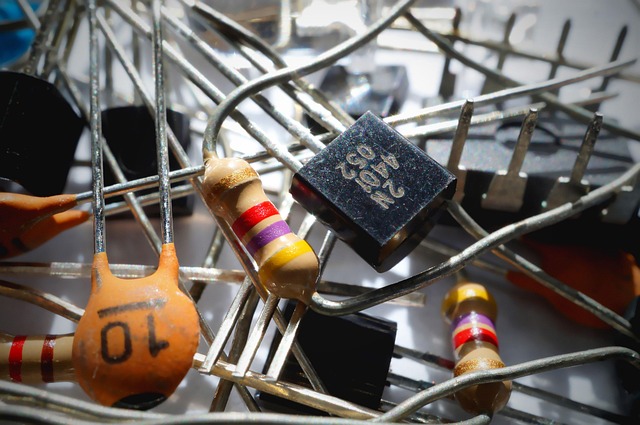
The CBB61 capacitor is a metallized polypropylene film capacitor designed for AC motor applications. This type of capacitor uses a self-healing dielectric that recovers from minor breakdowns without catastrophic failure. Its dielectric properties provide high insulation resistance and low dielectric loss, which are essential for maintaining stable performance over long operating hours. Typical voltage ratings range between 250V to 450V AC, while capacitance values often fall between 1 μF and 10 μF depending on the fan model. The compact rectangular casing allows easy integration within ceiling fan housings where space is limited.
Contribution to Motor Starting and Running Performance
In single-phase induction motors used in fans, the capacitor creates a phase shift between winding currents, generating starting torque necessary for initial rotation. Once running, it stabilizes current flow across windings, ensuring smoother rotation with minimal vibration or noise. Proper capacitance also maintains consistent speed control across fan settings, preventing erratic speed changes when switching between modes.
Influence of CBB61 Capacitor Parameters on Efficiency
Efficiency in ceiling fans depends heavily on how accurately the capacitor’s parameters match design specifications. Small deviations can cause disproportionate losses in power factor or heat buildup within the motor windings.
Relationship Between Capacitance Value and Power Factor
The relationship between capacitance value and power factor is direct: deviations from rated capacitance alter the phase angle between voltage and current. When capacitance drops below specification (undercapacitance), starting torque decreases and reactive power increases, lowering efficiency. Conversely, excessive capacitance (overcapacitance) may create overcurrent conditions that stress motor insulation. Optimal capacitance improves power factor by aligning current more closely with voltage, reducing reactive losses throughout operation.
Impact on Motor Thermal Performance and Energy Consumption
Correct capacitor sizing minimizes current imbalance across motor windings. When balance is maintained, copper losses remain low because current distortion is reduced. This improved energy transfer efficiency results in lower operating temperatures for both stator windings and bearings. In industrial testing environments, even a 5% deviation from nominal capacitance has been observed to increase winding temperature by up to 8°C during continuous operation—an important consideration for long-term durability.
Degradation Mechanisms Affecting CBB61 Capacitor Reliability
CBB61 capacitors face multiple stress factors during service life: heat from enclosed housings, voltage fluctuations from unstable mains supply, and humidity exposure in tropical climates. These conditions accelerate material degradation processes that eventually alter electrical characteristics.
Thermal Stress and Dielectric Aging Processes
Continuous exposure to elevated ambient temperatures accelerates dielectric breakdown within polypropylene films. Over time, repetitive charge-discharge cycles cause molecular degradation that weakens film integrity. As metallization layers lose adhesion or continuity, equivalent series resistance (ESR) rises gradually. This rise leads to localized heating during operation—a self-reinforcing failure mechanism common in aging capacitors.
Effects of Humidity, Voltage Surges, and Manufacturing Variability
Humidity ingress compromises insulation resistance over time by allowing moisture absorption into film layers or terminal seals. Overvoltage conditions lead to localized heating events known as self-healing discharges; although beneficial initially, frequent occurrences erode electrode areas permanently. Manufacturing variability such as uneven film thickness or inconsistent metallization density further influences long-term stability among production batches.
Diagnostic Indicators of Capacitor Performance Decline
Detecting early signs of deterioration helps prevent costly motor replacements or unsafe overheating events. Both electrical testing methods and operational symptoms serve as diagnostic clues for maintenance technicians.
Electrical Testing Methods for Condition Assessment
Capacitance measurement using an LCR meter identifies deviations beyond tolerance limits (typically ±5%). ESR testing reveals internal resistive losses caused by corrosion or metallization damage. Dissipation factor (tan δ) analysis provides additional insight into dielectric health—higher values indicate increased energy loss per cycle due to aging materials.
Observable Symptoms in Fan Operation Linked to Capacitor Failure
Slow startup or total failure to start often indicates insufficient phase shift torque generation caused by reduced capacitance. Audible humming or irregular speed fluctuations suggest imbalance between main and auxiliary winding currents due to degraded capacitance balance. Excessive heat buildup within the motor housing points toward increased current draw resulting from deteriorated dielectric performance.
Strategies for Enhancing Ceiling Fan Efficiency Through Capacitor Optimization
Optimizing ceiling fan efficiency involves more than replacing failed capacitors; it requires selecting high-quality components with predictable aging behavior and applying proactive maintenance strategies based on environmental conditions.
Selection Criteria for High-Reliability CBB61 Units
High-reliability units should feature extended temperature range ratings (up to 85°C) and stable polypropylene dielectrics resistant to moisture absorption. Preference should be given to self-healing designs with flame-retardant enclosures made from UL94-V0 compliant materials. Compliance with IEC 60252-1 or UL 810 standards confirms consistent performance metrics under endurance testing conditions such as 1000-hour load cycles at rated voltage.
Maintenance Practices and Predictive Replacement Intervals
Periodic inspection using handheld testers prevents unexpected failures during peak usage seasons. Monitoring environmental factors like humidity levels helps determine replacement intervals—typically every five years under normal indoor use but sooner in coastal regions with high salt content air. Employing condition-based maintenance supported by recorded test data extends overall fan service life while maintaining energy efficiency close to design levels.
FAQ
Q1: What causes most failures in CBB61 capacitors?
A: Most failures arise from thermal stress combined with humidity ingress that degrades polypropylene films over time.
Q2: How can one identify a faulty ceiling fan capacitor?
A: Common indicators include slow startup, humming noise during operation, or inconsistent speed control even when voltage supply is stable.
Q3: Does higher capacitance always improve performance?
A: No, excessive capacitance increases current draw beyond design limits, leading to overheating rather than improved torque.
Q4: Are all CBB61 capacitors interchangeable among different fans?
A: Not necessarily; each fan model requires specific capacitance values matched to its winding configuration for proper phase shift generation.
Q5: What maintenance schedule suits tropical environments?
A: In humid climates, testing every two years is recommended due to faster dielectric aging caused by moisture exposure inside housings.