IC components explained for design, sourcing, and PCB assembly
What IC components mean in practice
IC components are packaged integrated circuits that put multiple electronic functions on a semiconductor die and connect that die to a printed circuit board through leads, pads, balls, or other package terminals. In day-to-day design and sourcing, the term covers microcontrollers, processors, memories, power management ICs, analog amplifiers, interface chips, RF devices, drivers, sensor ICs, and application-specific chips. An IC should not be selected by function alone. Package, temperature range, lifecycle status, moisture sensitivity, supply chain availability, test coverage, firmware support, and layout dependencies can matter as much as the electrical block diagram.
That is why IC selection works best as a cross-functional decision. A device that looks correct in a parametric search can still cause a board spin if its footprint, thermal path, reflow requirement, or replacement risk is missed. For more component-level reading, see the Components section.
Main categories of IC components
IC components are often grouped by their role in the circuit, although the boundaries are not always clean. A microcontroller may include memory, analog-to-digital conversion, communication interfaces, timers, and power-management features in one package. A system-on-chip may combine processor cores, accelerators, high-speed I/O, security functions, and memory controllers. The more integration a device provides, the more attention the design team must give to software support, errata, thermal limits, and long-term sourcing.
| IC category | Typical examples | Key selection factors |
|---|---|---|
| Digital logic and processors | Logic gates, FPGAs, microcontrollers, application processors | Core performance, I/O voltage, timing, firmware tools, package pitch |
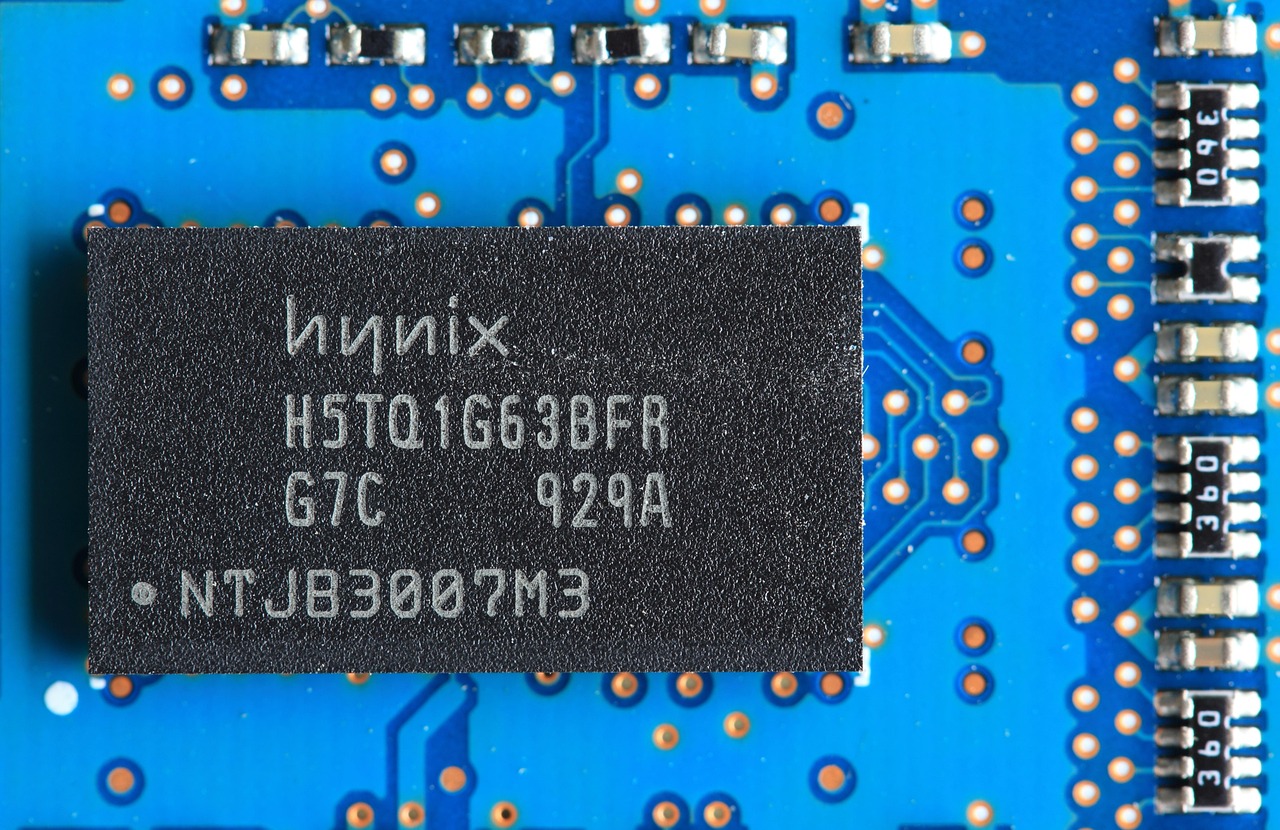
| Memory | DRAM, SRAM, NOR flash, NAND flash, EEPROM | Density, interface, endurance, retention, speed grade, supply continuity |
| Analog and mixed-signal | Op amps, ADCs, DACs, comparators, sensor front ends | Noise, offset, bandwidth, sampling rate, reference accuracy, layout sensitivity |
| Power management | LDOs, buck regulators, battery chargers, power switches, gate drivers | Efficiency, thermal resistance, protection features, compensation, inductor or MOSFET requirements |
| Interface and connectivity | USB, Ethernet PHYs, CAN, LIN, RS-485, Wi-Fi, Bluetooth, RF transceivers | Protocol compliance, ESD rating, certification impact, antenna or magnetics design |
Market context helps explain why availability can change quickly. In February 2026, the Semiconductor Industry Association reported that global semiconductor sales reached $791.7 billion in 2025, up 25.6% from 2024, and said 2026 sales were projected to approach roughly $1 trillion. Those aggregate figures do not mean every IC category is equally available. Memory, AI accelerators, analog parts, power devices, and mature-node controllers can move through different supply cycles.
Package and assembly choices that affect reliability
The package turns a fragile semiconductor die into a component that can be handled, soldered, cooled, tested, and inspected. Package choice affects board area, routing density, thermal performance, inspection method, repairability, and assembly yield. A low-cost IC in the wrong package can raise the total board cost if it forces extra PCB layers, tighter assembly tolerances, or more complex inspection.
Lead spacing and inspection
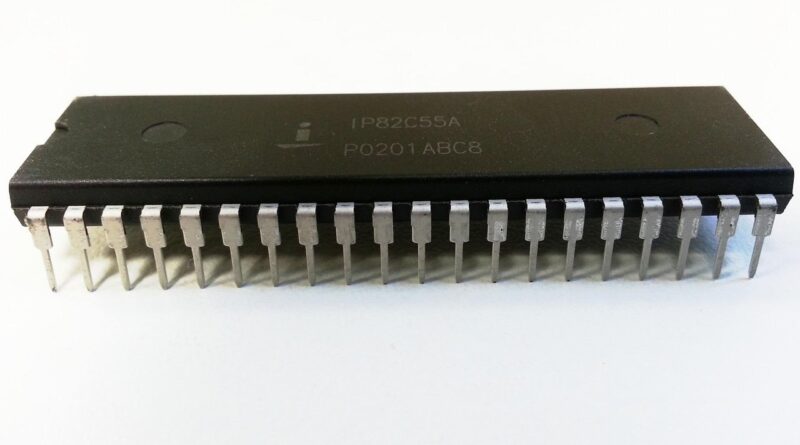
Packages such as DIP are easy to prototype and inspect, but they take more board space and are uncommon in dense modern products. SOIC, TSSOP, and similar gull-wing packages save area while still allowing visible solder joint inspection. QFN and DFN packages provide compact size and good thermal performance, but most solder joints are hidden under the package edge or exposed pad. BGA packages support high pin counts and dense routing, but inspection typically relies on X-ray or process control rather than visual checks.
Thermal path and board layout
Power ICs, processors, RF amplifiers, LED drivers, and motor drivers often need a defined thermal path into the PCB. Exposed pads, thermal vias, copper area, airflow, and board stack-up can determine whether the device stays within its rated junction temperature. Datasheet thermal values are useful starting points, but they are usually based on standard test conditions. Real boards still need thermal review under worst-case voltage, current, ambient temperature, and enclosure conditions.
Moisture sensitivity and reflow handling
Many surface-mount IC components are moisture sensitive. If moisture absorbed by a plastic package expands rapidly during solder reflow, it can damage internal interfaces or create package defects. IPC/JEDEC J-STD-033D is widely used for handling, packing, shipping, and using moisture/reflow-sensitive surface-mount devices. Related standards such as J-STD-020 and JEP113 define classification and labeling practices. In production, this means the purchasing team, warehouse, and assembly line must track dry packs, humidity indicator cards, floor life, baking rules, and exposure records.
Datasheet and sourcing checks before you buy
A datasheet is more than a list of electrical limits. It is a technical control document that defines the conditions under which the IC can be expected to operate. A safe review starts with absolute maximum ratings and recommended operating conditions, then moves through electrical characteristics, timing, application circuits, layout guidance, package drawings, ordering information, and revision history.
- Confirm the full manufacturer part number. Suffixes can identify package, lead finish, temperature grade, memory size, packing method, or revision.
- Check recommended operating conditions, not only absolute maximum ratings. Absolute maximum values are stress limits, not normal design targets.
- Review temperature grade. Commercial, industrial, automotive, and extended-temperature versions may differ in test coverage and availability.
- Compare package drawings with the PCB footprint. Do not assume two packages are identical because they share a broad name such as QFN or SOIC.
- Look for errata and application notes. Complex ICs often have documented operating limitations, startup sequences, register behavior, or layout requirements.
- Check lifecycle status. Active, not recommended for new designs, last-time-buy, and obsolete statuses have different sourcing implications.
- Request compliance documents when needed. Depending on the market, this may include RoHS, REACH, conflict minerals, automotive documentation, or safety-related files.
Sourcing checks should also cover traceability. Authorized distributors and manufacturer-direct channels reduce counterfeit risk, but they do not remove the need to verify labels, lot codes, packaging condition, moisture labels, and certificates when the application is sensitive. Broker purchases may be necessary during shortages, but they require stronger incoming inspection and clear risk acceptance.
Substitution risks and a practical selection workflow
Replacing one IC component with another is rarely just a matter of matching the headline function. Pin compatibility, register compatibility, timing, power sequencing, package height, exposed pad size, boot mode, firmware libraries, analog stability, and EMC behavior can all affect the result. Even passive support components may need revision when a regulator, oscillator, amplifier, or interface IC changes.
When a substitute may be reasonable
A substitute is more likely to be acceptable when the circuit is simple, margins are generous, the package and pinout are verified, and the datasheets show matching operating limits under the same test conditions. Examples may include a basic logic gate, a standard interface transceiver, or a regulator with the same topology and confirmed stability with the existing output capacitor. Even then, the design team should run bench tests and update the approved vendor list rather than allowing an undocumented purchasing change. See also: Gadgets.
When a redesign may be safer
A redesign is usually safer when the IC affects safety, power conversion, firmware behavior, RF performance, high-speed timing, or regulatory compliance. Microcontrollers, wireless chips, battery chargers, isolated drivers, Ethernet PHYs, memory devices, and high-current regulators often have hidden dependencies. A pin-compatible alternative can still require new firmware, new layout rules, new qualification, or renewed compliance testing.
A practical workflow keeps these risks visible:
- Define the electrical function, interface, environment, and lifetime requirement.
- Select at least two candidate IC components where feasible, preferably from manufacturers with clear documentation and stable distribution.
- Review package, footprint, thermal requirements, MSL level, and assembly capability before schematic release.
- Check availability, lifecycle status, minimum order quantity, lead time, and authorized channels before layout is frozen.
- Build and test prototypes under realistic voltage, temperature, load, and signal conditions.
- Document approved alternates with exact part numbers, test evidence, and any firmware or BOM restrictions.
What buyers and engineers should align on
IC component decisions often fail when engineering and purchasing optimize for different outcomes. Engineering may focus on the most capable device, while purchasing may focus on price or immediate stock. A better approach is to agree on constraints before the bill of materials is locked.
| Topic | Engineering question | Purchasing question |
|---|---|---|
| Lifecycle | Is the part suitable for a new design? | Is there a reliable supply path for the product lifetime? |
| Package | Can the PCB route and cool it? | Can the assembler handle, place, inspect, and rework it? |
| Documentation | Are datasheets, errata, and application notes complete? | Are certificates, labels, and traceability records available? |
| Alternates | Has the alternate been tested in the circuit? | Is the alternate approved by exact manufacturer part number? |
| Risk | What happens if the IC changes or disappears? | What inventory, last-time-buy, or redesign plan is needed? |
This alignment is especially important for long-life industrial, medical, automotive, aerospace, energy, and infrastructure equipment. In those markets, the lowest unit price may matter less than continuity, documentation, qualification effort, and the cost of a future redesign.
Frequently asked questions
Are IC components the same as semiconductors?
Not exactly. IC components are semiconductor devices, but the semiconductor category is broader. It also includes discrete devices such as diodes, transistors, MOSFETs, thyristors, and some optoelectronic devices. An IC integrates multiple circuit elements or functions into one die or package.
What is the difference between an IC and a chip?
In everyday use, chip and IC are often used interchangeably. Technically, a chip may refer to the semiconductor die, while the IC component used on a circuit board is usually the die plus its package and external terminals.
Why do two ICs with the same function have different prices?
Price can reflect process technology, package complexity, temperature grade, test coverage, performance margins, brand, distribution channel, demand, lifecycle status, and available inventory. A lower-cost device may still be appropriate, but only after electrical, mechanical, quality, and sourcing checks are complete.
Can a board use multiple IC package types?
Yes. Most modern boards combine several package types. A product might use a BGA processor, QFN power-management ICs, SOIC interface devices, and small sensor packages on the same PCB. The assembly process must support the full package mix.
What is the most important first check when selecting IC components?
Start with the exact use case: function, voltage, current, timing, temperature, environment, package constraints, and expected product lifetime. Once those requirements are clear, compare datasheets and sourcing status together rather than treating design and purchasing as separate decisions.