Sensor components explained for reliable electronic system design
What sensor components actually include
Sensor components are the parts of an electronic system that detect a physical or chemical condition and convert it into usable electrical information. In production designs, the sensor is seldom only the element exposed to temperature, pressure, motion, light, gas, humidity, current, or force. A complete sensing function may also include the package, excitation circuit, analog front end, analog-to-digital conversion, interface, power management, protection, and calibration data. For buyers and engineers comparing electronic components, the practical question is not just whether a part can measure a variable. It is whether the full sensor chain can measure it accurately, repeatably, safely, and economically over the product lifetime.
The phrase sensor components can therefore refer to discrete sensing elements, integrated sensor ICs, MEMS devices, transducers, modules, connectors, protective housings, or the support circuits around them. Seeing those layers separately helps avoid a common selection error: choosing a part by headline accuracy or output type while overlooking drift, noise, mounting stress, environmental exposure, or calibration requirements.
The main layers of a sensor component system
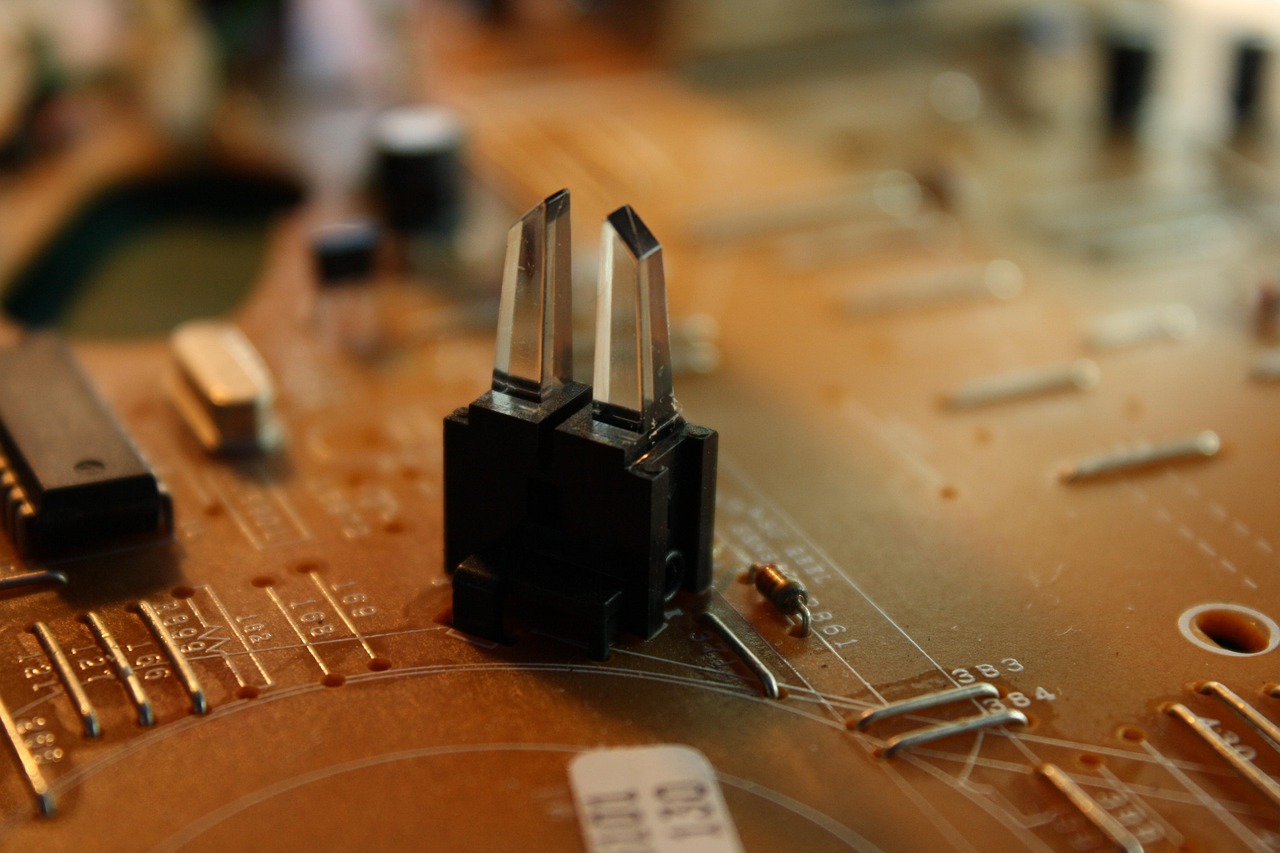
A sensor function can be divided into several layers. Some products integrate many of these functions into a single package. Industrial and automotive designs may keep them separate to improve serviceability, isolation, thermal performance, or regulatory compliance.
| Layer | Role in the sensor system | Key selection questions |
|---|---|---|
| Sensing element | Responds to the measured variable, such as heat, strain, acceleration, pressure, light, or gas concentration. | What range, sensitivity, stability, and response time are required? |
| Mechanical package | Protects the element and controls exposure to the measured environment. | Will the part face vibration, moisture, chemicals, dust, pressure, or thermal cycling? |
| Excitation or bias | Provides current, voltage, light, or another stimulus needed by the sensing element. | Does excitation create self-heating, noise, or power budget problems? |
| Signal conditioning | Amplifies, filters, linearizes, or compensates the sensor output. | Is the raw output too small, nonlinear, or noisy for the controller? |
| Conversion and interface | Converts analog signals to digital data or sends a conditioned analog signal to the system. | Is the required output voltage, current loop, frequency, I2C, SPI, UART, CAN, or wireless interface available? |
| Calibration data | Links electrical output to the real-world measured value. | Is calibration done at the component, module, board, or finished-system level? |
This layered view matters because failure modes appear in different parts of the chain. A stable sensing element can still deliver poor system performance if the amplifier has excessive offset, the ADC lacks usable resolution, the package traps heat, or the cable run picks up electromagnetic interference.
Common types of sensor components and their outputs
Sensor components are often grouped by the variable they measure, but output type is equally important in circuit and system design. Many sensing elements produce low-level analog signals. Others integrate signal conditioning and deliver digital data directly to a microcontroller.
Temperature sensors
Temperature sensing can use thermistors, resistance temperature detectors, thermocouples, semiconductor temperature ICs, or infrared sensors. Platinum resistance temperature sensors are widely standardized; IEC 60751 defines requirements and resistance-versus-temperature relationships for industrial platinum resistance thermometers and platinum temperature sensors. In practice, temperature sensor selection usually depends on operating range, interchangeability, response time, long-term drift, lead-wire effects, and installation method.
Pressure, force, and strain sensors
Pressure and force measurements often use piezoresistive, capacitive, or strain-gauge principles. A load cell, for example, normally needs stable excitation, low-noise amplification, temperature compensation, and careful mechanical mounting. The sensing element may be accurate in a laboratory, but system accuracy can change if the load path is misaligned or if the installation introduces mechanical stress.
Motion and position sensors
Motion and position sensing includes accelerometers, gyroscopes, magnetometers, Hall-effect sensors, optical encoders, inductive sensors, and capacitive sensors. MEMS technology has made accelerometers, gyroscopes, pressure sensors, and environmental sensors small enough for consumer electronics, industrial monitoring, and automotive systems. Important specifications include axis count, range, bandwidth, noise density, shock survivability, offset stability, and interface format.
Environmental and chemical sensors
Humidity, gas, particulate, and air-quality sensors are increasingly used in smart buildings, appliances, industrial safety systems, and wearables. These components often need more caution than simple electrical sensors because selectivity, aging, contamination, airflow, and warm-up time can affect readings. A gas sensor reading should not be treated as a universal truth unless the datasheet clearly defines the target gas, calibration condition, cross-sensitivity, and environmental limits.
The signal chain is where sensor performance becomes system performance
A sensor datasheet may specify sensitivity, offset, linearity, or resolution, but the final measurement depends on the complete signal chain. For analog sensors, that chain commonly includes excitation, filtering, amplification, analog-to-digital conversion, firmware compensation, and communication. Manufacturer application notes from analog semiconductor suppliers often describe this as an analog front end, ADC, and processor path.
Low-level outputs need particular attention. A bridge sensor, thermocouple, or shunt-based current sensor can produce small voltages that are easily affected by offset, thermal drift, contact resistance, and electromagnetic noise. Instrumentation amplifiers are commonly used when a small differential signal must be amplified before conversion. Delta-sigma ADCs are often chosen for precision and noise performance, while SAR ADCs may be selected when speed and latency are more important.
Digital sensors simplify integration, but they do not remove the need for engineering review. I2C, SPI, one-wire, CAN, or wireless interfaces can reduce analog layout risk. Engineers still need to evaluate sampling rate, latency, bus loading, address conflicts, power modes, internal filtering, output data rate, and the meaning of factory calibration. If a digital sensor hides the raw measurement path, the datasheet must be clear enough to explain accuracy limits, compensation behavior, and failure detection.
Selection criteria that matter more than headline accuracy
Accuracy is important, but it is often misunderstood. A part advertised with fine resolution is not automatically accurate. Resolution describes the smallest output step or detectable change, while accuracy describes closeness to the true value under defined conditions. In production equipment, repeatability, hysteresis, nonlinearity, offset drift, and temperature coefficient may matter more than nominal resolution.
- Measurement range: Choose a range that covers normal operation, startup transients, overload conditions, and fault conditions without sacrificing needed sensitivity.
- Bandwidth and response time: A vibration sensor, motor-current sensor, and room-temperature sensor have very different speed requirements.
- Environmental rating: Moisture, condensation, corrosive gas, dust, UV exposure, oil, and cleaning chemicals can change package requirements.
- Power consumption: Battery equipment may require duty cycling, low standby current, or event-triggered sensing.
- Mechanical integration: Mounting torque, adhesive selection, PCB stress, and enclosure airflow can all shift readings.
- Calibration and traceability: For regulated or quality-critical measurements, calibration should include uncertainty. NIST guidance on metrological traceability emphasizes that a measurement result is not just a number; uncertainty and an unbroken comparison chain are part of the result.
- Lifecycle and sourcing: Check package availability, second-source options, revision control, and whether the component is suitable for the expected production lifetime.
In safety-related or compliance-driven equipment, standards can become part of the component decision. For example, electrical test and measurement products may need components and insulation systems compatible with the relevant IEC, UL, or regional safety requirements. Medical, automotive, aerospace, and industrial control applications may add their own qualification expectations. See also: Gadgets.
Design trends shaping sensor components
Several long-running trends are changing how sensor components are selected. The first is integration. More devices combine the sensing element, analog front end, ADC, digital compensation, memory, and interface in one package. This can reduce board area and analog design burden, but it can also make the designer more dependent on the vendor’s compensation model and long-term supply.
The second trend is sensor fusion. Motion sensing in phones, wearables, drones, robots, and vehicles often combines accelerometer, gyroscope, magnetometer, pressure, optical, or location data. Fusion can improve usability, but it requires attention to timing, calibration, coordinate alignment, and error propagation. The best individual sensor is not always the best system choice if its latency, noise, or update rate does not fit the fusion algorithm.
The third trend is edge and IoT integration. ISO/IEC 30141:2024 provides a reference architecture for Internet of Things systems, reflecting the need for common vocabulary and reusable design patterns across connected devices. In sensor design, that means the component decision may affect not only measurement quality but also security, provisioning, remote diagnostics, firmware updates, and data governance.
The fourth trend is harsher deployment. Sensors are being placed closer to motors, batteries, pumps, compressors, outdoor infrastructure, and factory equipment. This increases demand for robust packaging, sealed connectors, vibration tolerance, wider temperature operation, and predictable drift. A low-cost sensor may be acceptable for a controlled indoor device but unsuitable near high EMI, condensation, or mechanical shock.
A practical checklist for comparing sensor components
Before approving a sensor component, engineers and sourcing teams should compare the complete measurement requirement with the datasheet and the application environment. The following checklist can reduce late-stage redesigns.
- Define the measured variable, required range, overload range, and acceptable measurement uncertainty.
- Separate resolution, repeatability, accuracy, and long-term drift in the requirement document.
- Confirm whether the output type is compatible with the controller, cable length, noise environment, and isolation needs.
- Review operating temperature, storage temperature, humidity limits, ingress protection, chemical exposure, and vibration conditions.
- Check whether calibration is factory-set, field-adjustable, system-level, or required at scheduled intervals.
- Evaluate startup time, response time, filtering delay, and sampling rate under the intended power mode.
- Consider mechanical tolerances, mounting method, enclosure effects, airflow, and thermal coupling.
- Review qualification evidence, relevant standards, product change notice policy, and expected availability.
For many designs, the best choice is not the most precise component on paper. It is the component whose real-world behavior is well understood in the target environment and whose limitations can be managed through circuit design, firmware, calibration, and maintenance.
Frequently asked questions
What are sensor components in electronics?
Sensor components are the devices and supporting parts that detect a physical or chemical condition and convert it into electrical information. They can include the sensing element, package, excitation circuit, signal conditioning, ADC, interface, firmware compensation, and calibration data.
What is the difference between a sensor and a transducer?
A transducer converts one form of energy into another. A sensor is a type of transducer used to detect a variable and provide information about it. In everyday electronics writing, the two terms sometimes overlap, but transducer is the broader technical term.
Are digital sensors always better than analog sensors?
No. Digital sensors can simplify layout and reduce analog design complexity, but analog sensors may offer better control over bandwidth, filtering, calibration, or special signal-chain requirements. The right choice depends on noise environment, speed, accuracy, cost, firmware control, and system architecture.
Why does calibration matter for sensor components?
Calibration links the sensor output to a known reference and helps quantify measurement uncertainty. Without calibration data, a system may produce repeatable numbers that still do not match the true physical value closely enough for the application.
How should a buyer compare sensor component suppliers?
Compare more than price and nominal accuracy. Review datasheet completeness, application support, qualification information, packaging options, change notification policy, lifecycle status, supply continuity, and whether the component’s limits are clearly specified for the intended environment.