What Are Circuit Components and How Do You Choose the Right Ones
Choosing circuit components is more than filling a bill of materials. It affects whether the board powers up cleanly, stays within temperature, passes inspection, and can be repaired after transport, storage, or a hot season inside an enclosure. Resistors, capacitors, inductors, semiconductors, connectors, fuses, and sensors may be small parts, but each one has a job that can change the result of the whole product.
For trade buyers and electronics teams, the target is quite direct: choose parts that fit the circuit, the assembly line, and the place where the product will be used. The Semiconductor Industry Association, using WSTS data in its 2025 Factbook, reported worldwide semiconductor sales of $630.5 billion in 2024. That figure is useful background. Components are not side items; they belong to a large supply chain where quality, availability, and paperwork can affect delivery.
What Are the Main Types of Circuit Components?
A circuit is easier to understand when parts are grouped by function. You do not have to start by memorizing every package code. First look at what the part does to voltage, current, signal, heat, or the physical connection. This way of reading a schematic also helps when you talk with suppliers or check a substitute part.
Passive Parts Set Stable Electrical Conditions
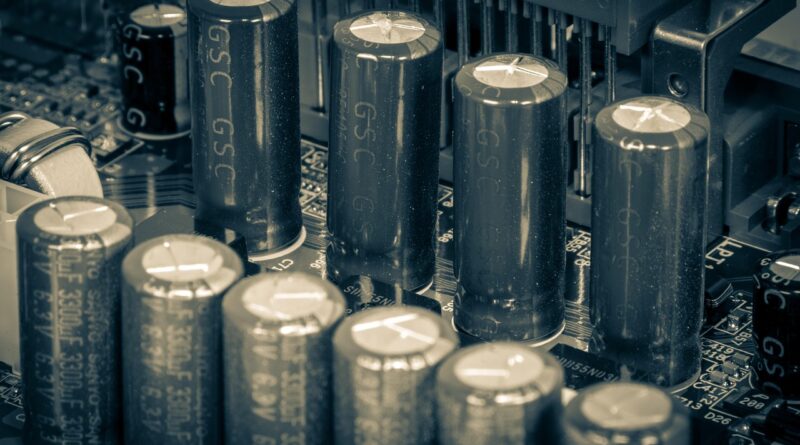
Passive parts do not provide gain. They set, shape, and store electrical energy in the circuit. Resistors limit current, divide voltage, set bias, and help sensors give readable signals. Capacitors store charge, smooth supply rails, reduce noise, and create timing behavior. Inductors store energy in a magnetic field, so they are often found in power converters and EMI filters.
These parts may look low-cost, but a poor choice can still damage yield. A 1% resistor may be needed in a measurement divider, while a 5% part may be enough for an LED current limit. A ceramic capacitor marked 10 μF may not behave like 10 μF under DC voltage. That small point can become a real problem during testing.
Active Parts Control Gain and Logic
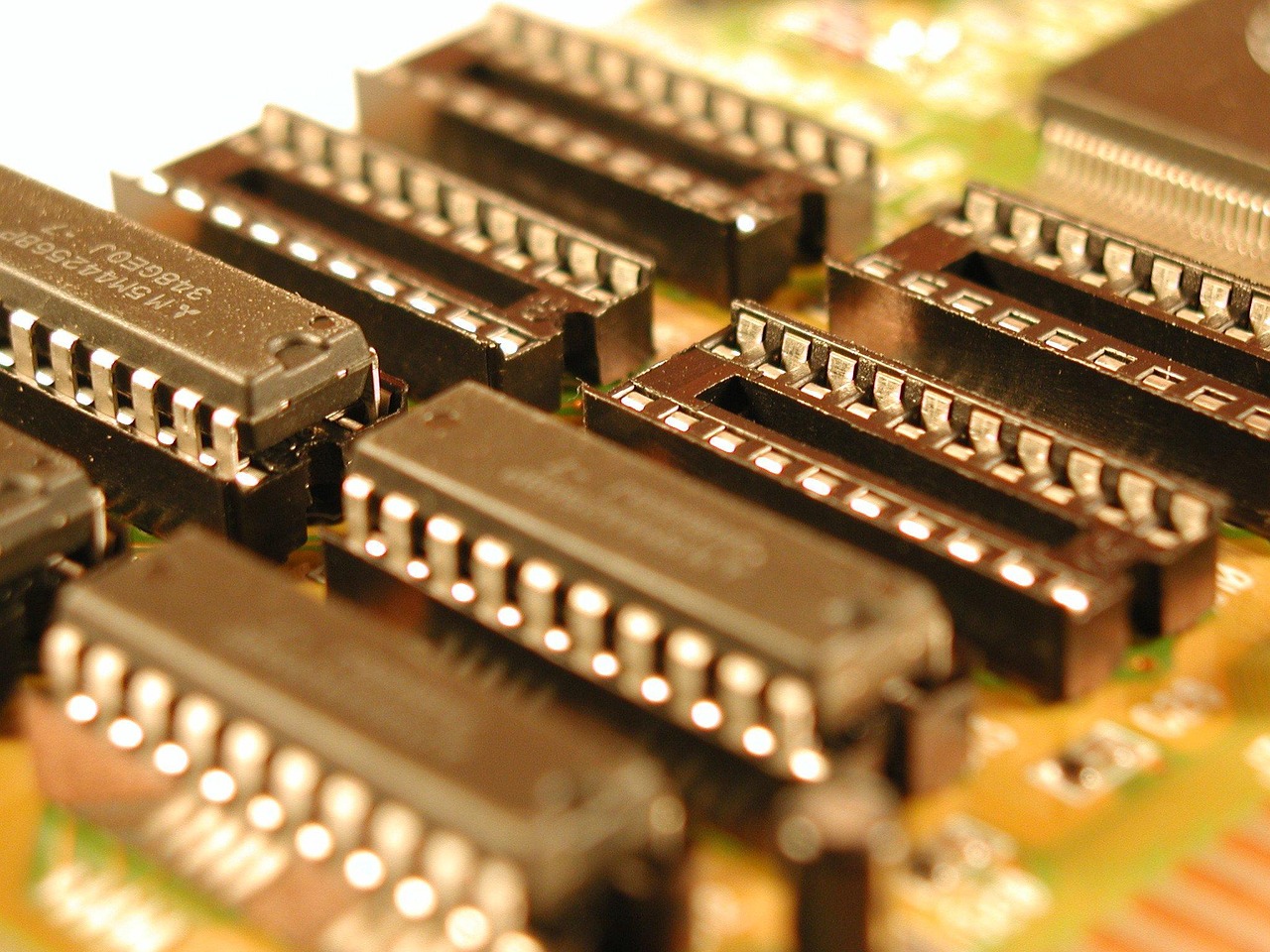
Active components use a supply or a signal to control current flow. Diodes mainly conduct in one direction. Transistors switch motors, LEDs, relays, and power rails. Integrated circuits may include amplifiers, voltage regulators, memory, logic, wireless functions, or a full microcontroller in one package.
When you choose active parts, do not stop at the basic function on the first page of the datasheet. Check voltage range, input thresholds, thermal resistance, quiescent current, protection pins, package type, and firmware support when a controller is involved. A part that runs well on a demo board may fail inside a noisy factory panel if these details are ignored.
Electromechanical Parts Connect the Board to Real Life
Connectors, switches, relays, terminals, sockets, and cable assemblies connect the circuit to the outside world. They deal with hands, vibration, oxidation, pulling force, and assembly errors. A connector with the wrong plating or a weak latch can become the first failure point, even when the rest of the design is sound.
For exported products, connector choice also affects service work. A common pitch and clear marking help technicians replace cables faster. In a compact control box, one keyed connector can save a lot of field time because it prevents a cable from being plugged in backward.
How Do Basic Ratings Help You Pick the Right Part?
Ratings show where a component can work without being pushed too hard. They also give buyers, engineers, and factories the same language. The National Institute of Standards and Technology states that the ohm is the SI unit of electric resistance, equal to volts per ampere. This simple relationship is behind resistor selection, current limits, and many test readings.
Electrical Value and Tolerance
Value is the number the part is meant to provide: 10 kΩ, 100 nF, 4.7 μH, 3.3 V, or 5 A. Tolerance tells you how far the real part may be from that number. A 10 kΩ resistor with 1% tolerance should stay closer to its nominal value than a 5% version.
Use tight tolerance only where it affects performance. Measurement dividers, oscillator networks, analog gain stages, and current sense circuits often need closer values. Pull-up resistors, indicator LEDs, and simple bias paths can usually accept wider tolerance. This is a normal place to save cost without weakening the whole design.
Voltage, Current, and Power Limits
Every part has limits. A resistor has a power rating, a capacitor has a voltage rating, and a diode has forward current and reverse voltage limits. A connector also has a current rating per contact. These numbers need to cover normal use and reasonable fault cases.
Take a simple example. If a 1 kΩ resistor is placed across 12 V, the current is 12 mA and the power is about 0.144 W. A 0.25 W resistor may work on paper, but the situation changes if it sits near a hot regulator inside a sealed enclosure. In real design work, you would add margin, check temperature rise, and avoid running the part at its limit every day.
Temperature Range and Derating
Temperature changes how components behave. Electrolytic capacitors age faster under heat. MOSFETs carry less current as junction temperature rises. Resistors drift, and plastic connectors can soften or lose holding force. Derating means choosing and using a part below its absolute limit so it can last in the actual product.
A consumer desk device and an outdoor charger should not be treated the same way. If the product will ship to hot regions, use sealed plastic housings, or sit in sunlight, choose temperature ratings early. Changing a capacitor series after tooling and approvals are finished is not a meeting anyone enjoys.
Why Do Passive Components Cause So Many Design Surprises?
Passive parts are familiar, so some teams treat them as easy swaps. That is where mistakes happen. Shape, dielectric, tolerance, ESR, saturation current, and package size can change circuit behavior, even when the printed value looks right.
Resistors Set Bias and Protect Inputs
Resistors are used almost everywhere because they are stable and low cost. They set transistor base current, define microcontroller pin states, balance LEDs, discharge capacitors, and form voltage dividers. In signal circuits, noise and temperature coefficient may matter. In power circuits, wattage and flame behavior usually matter more.
IEC 60063:2015 defines preferred number series for resistors and capacitors, such as E12, E24, E96, and E192. E24 means 24 preferred values per decade. This is why 4.7 kΩ, 5.6 kΩ, and 6.8 kΩ are easy to source, while a value like 6.37 kΩ may need a precision series or a special order.
Capacitors Store Charge but Change in Real Use
Capacitors are not all the same type of charge storage. Ceramic, electrolytic, film, and tantalum capacitors behave differently in a circuit. Ceramic MLCCs are good for decoupling, but their capacitance can drop under DC bias, especially in small high-value packages. Electrolytics provide bulk energy, but they age and have polarity. Film capacitors work well for pulse and AC use, though they need more board space.
For a 3.3 V microcontroller rail, it is common to place a 100 nF ceramic near each power pin, with a larger bulk capacitor near the regulator or connector. The right mix depends on current steps, layout, regulator stability, and noise limits. Copying capacitor values from another board without checking the datasheet is a shortcut that often causes trouble.
Inductors Manage Energy and Noise
Inductors show up in buck converters, boost converters, LC filters, RF networks, and common-mode chokes. The printed inductance value is only the first check. Saturation current, DC resistance, core loss, shielding, and temperature rise also need attention.
If an inductor saturates, it no longer works like the value you selected. Current ripple goes up, and the converter may run hot or noisy. For products that need to pass EMC tests, shielded inductors and short current loops are often more useful than adding ferrite beads after the board is already failing.
How Do Semiconductors Change a Simple Circuit into a Product?
Semiconductors let a circuit react, decide, convert, communicate, and protect itself. They can also create sourcing risk because exact replacements are not always easy. A resistor can often be second-sourced with little trouble. A microcontroller with code, pinout, peripherals, and package limits is a much tighter decision.
Diodes Steer Current and Clamp Spikes
Diodes are used for rectification, reverse polarity protection, flyback paths, voltage clamps, and signal steering. A Schottky diode has low forward voltage and fast switching, but it may leak more current. A TVS diode is built to absorb surge energy for a short time. A Zener diode can work as a simple voltage reference or clamp.
Match the diode to the event it has to handle. A flyback diode across a relay coil is not doing the same job as a TVS diode on a USB port. The package also has to handle heat during a pulse or during steady current. See also: Gadgets.
Transistors Switch Loads and Shape Signals
BJTs and MOSFETs turn small control signals into practical current control. A MOSFET can switch LED strips, solenoids, motors, heaters, and DC power rails. For low-voltage battery products, gate threshold alone is not enough. Check the on-resistance at the actual gate voltage available in your circuit.
Thermal details are important here. A MOSFET that looks safe in a large DPAK package may overheat in a small SOT-23 package at the same current. Copper area on the PCB becomes part of the heat path, so component choice and layout have to be checked together.
Integrated Circuits Pack Many Functions into One Device
ICs save board space and make production more repeatable. Regulators, op-amps, ADCs, motor drivers, wireless chips, and microcontrollers turn many separate functions into a compact product. The tradeoff is dependency. If one IC becomes unavailable, the whole board may need a redesign.
Before you lock an IC into a design, check its lifecycle status, package availability, minimum order quantity, and programming needs. For export projects, ask for a stable supply plan and approved alternates where possible. A tidy schematic is not enough if production cannot buy the part six months later.
What Should You Check Before Buying Components in Bulk?
Bulk buying can save money, but only when the checks are done first. A low unit price may hide missing certificates, weak packaging, old date codes, or parts that do not match your assembly process. You need a clear path from datasheet to purchase order to incoming inspection.
Datasheets Beat Guesswork
The datasheet is the main reference for how the part should behave. Check absolute maximum ratings, recommended operating conditions, test conditions, package drawings, land pattern guidance, and moisture handling. If a supplier cannot provide a current datasheet, treat it as a warning sign.
Also compare the test conditions, not only the headline numbers. A capacitor value measured at one frequency and voltage may not match your circuit. A regulator current rating may depend on airflow and copper area. Numbers without conditions are easy to read the wrong way.
Package and Assembly Rules Matter
Surface-mount parts have to survive storage, placement, reflow, and cleaning. IPC/JEDEC J-STD-020 classifies moisture and reflow sensitivity for non-hermetic surface-mount devices. For example, MSL 3 parts commonly have 168 hours of floor life at conditions up to 30°C and 60% relative humidity before reflow risk must be managed.
This matters on a production floor. If a reel is opened, left out too long, and then sent through reflow, moisture inside a package can expand. The damage may be hidden at first, so the board can pass one test and fail later.
Availability and Second Sources Reduce Risk
Check whether the part has multiple suppliers, common values, and standard packages. A 0603 resistor in an E24 value is usually easier to replace than a niche package with a private marking. For ICs, second sourcing is harder, but alternates can still be planned at the module, board, or firmware level.
Ask suppliers about lead time, lifecycle status, country of origin, compliance documents, and packaging format. Tape-and-reel, cut tape, tray, and tube packaging affect machine loading and labor. It sounds like a small detail until a line stops because the parts arrived in the wrong format.
How Can You Design Circuits That Last Longer?
Long service life usually comes from many small decisions. Protect inputs, leave thermal margin, keep current loops short, choose parts that can be serviced, and do not push ratings too close to the edge. This costs less than handling field failures after shipment.
Protection Parts Take the First Hit
Fuses, PTC resettable protectors, TVS diodes, MOVs, NTC thermistors, and series resistors are not decorative parts. They let a cheaper or replaceable component take the abuse before the controller, sensor, or power stage fails. Use them at connectors, power inputs, relay coils, long cables, and user-facing ports.
Protection parts also need proper ratings. A fuse must match fault current and breaking capacity. A TVS diode must match working voltage and surge energy. A very small part that cannot absorb the real event only creates a false sense of safety.
Layout Keeps Fast Currents Under Control
Component choice and PCB layout have to work together. Decoupling capacitors should sit close to IC power pins. Buck converter input capacitors should stay close to the switching devices. High-current paths need short, wide copper, and sensitive analog traces should stay away from noisy switching nodes.
Many EMI problems are really loop-area problems. After the board is built, fixing them may mean copper tape, extra ferrites, or a new layout. It is better to place the right components in the right locations from the first revision.
Repair and Recycling Start With Component Choices
Durable design also looks at what happens near the end of the product life. The Global E-waste Monitor 2024 reported that 62 billion kg of e-waste was generated in 2022, and only 22.3% was documented as formally collected and recycled. That data points to a practical issue: repairable, clearly marked, and common components can support better maintenance and recovery.
You can help by using readable reference designators, avoiding unnecessary glue, choosing standard packages when possible, and keeping high-failure parts accessible. A board that can be repaired is better for buyers and service teams. It is also better for material recovery, even if it is not the most exciting part of the design review.
FAQ
Q1: What Are the Most Common Circuit Components? A: The most common circuit components are resistors, capacitors, inductors, diodes, transistors, integrated circuits, connectors, switches, and protection devices.
Q2: How Do You Choose the Right Resistor Value? A: Start with the circuit function, calculate current and power, then choose a standard value and tolerance. Check wattage, temperature coefficient, package size, and voltage rating if the circuit is not low power.
Q3: Why Does a Capacitor Value Change in a Real Circuit? A: Capacitor behavior depends on dielectric type, voltage, temperature, frequency, aging, and package size. Ceramic MLCCs, especially high-value small packages, can lose effective capacitance under DC bias.
Q4: Are Cheap Circuit Components Always Risky? A: Not always. Standard resistors and capacitors can be low cost and reliable when they come from traceable suppliers. Risk increases when parts have no datasheets, markings, test data, or proper packaging.
Q5: What Should You Check Before Replacing a Component? A: Match value, tolerance, voltage, current, power, package, pinout, temperature range, and safety or compliance ratings. For ICs, also check firmware support, timing, and lifecycle status.