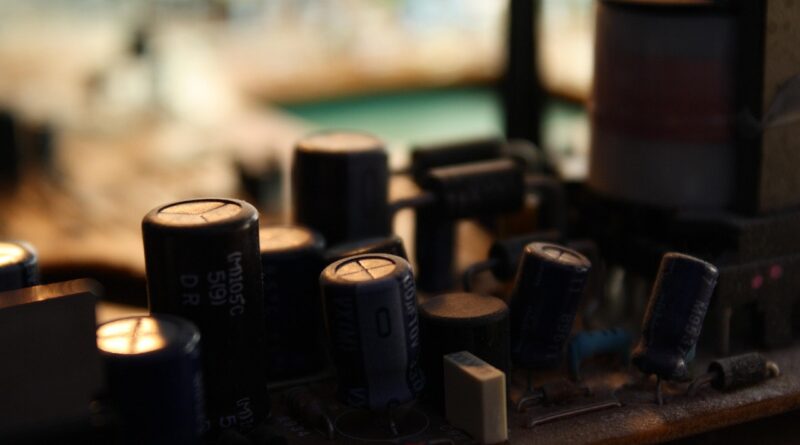
Capacitor news in 2026 shows AI servers reshaping MLCC supply
What changed in capacitor news this year
Capacitor news in 2026 is being shaped less by broad consumer electronics demand and more by a narrower, higher-value shift in AI servers, data centers, xEVs and high-reliability power electronics. As of September 21, 2026, the clearest supply pressure is in high-capacitance, high-voltage and small-form-factor multilayer ceramic capacitors, usually called MLCCs. Standard commodity parts are not under the same level of stress.
For engineers and buyers, the practical issue is now specification-specific risk. A design that depends on one premium MLCC value, package and supplier may face longer lead times even while other capacitor categories remain available. This update focuses on verified industry developments, supplier announcements and regulatory signals that matter to electronics teams. For more electronics industry updates, visit our News section.
Why AI servers are tightening high-end MLCC supply
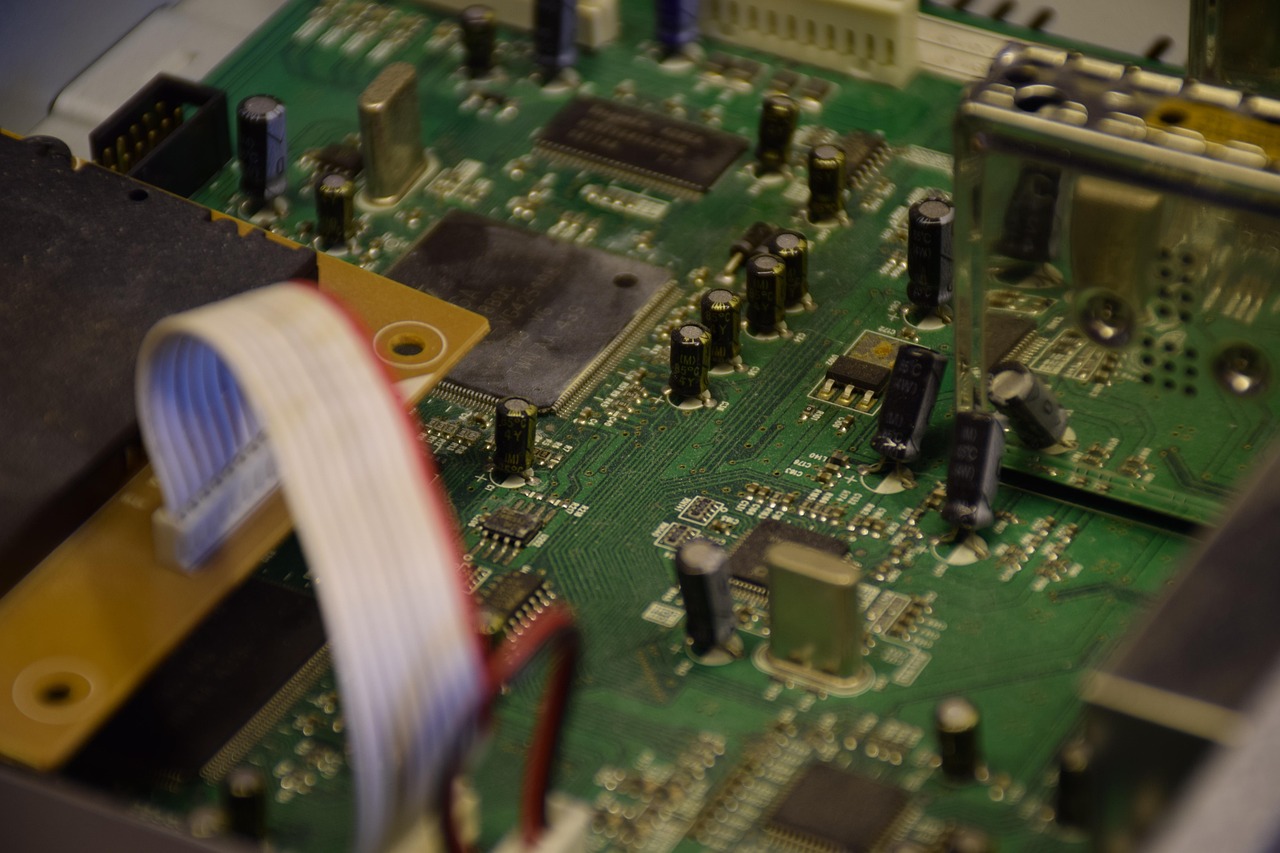
The center of the 2026 capacitor story is the AI server board. Advanced accelerators and custom ASIC platforms need dense, stable power delivery close to processors, memory, networking devices and power-management circuits. That pushes demand toward compact MLCCs with high capacitance, low impedance and temperature performance suitable for demanding server environments.
Market research firm TrendForce reported on June 17, 2026, that cloud service providers developing in-house AI accelerators were concentrating demand on a limited set of premium MLCC specifications. The same report warned that structural shortages could emerge in the second half of 2026 because capacity expansion was lagging the growth of advanced AI platform requirements.
This is not a broad shortage of every ceramic capacitor. The pressure is most visible where small case size, high capacitance, high temperature tolerance and validated reliability overlap.
Board-level design changes are increasing capacitor counts
One reason MLCC demand is rising is that AI accelerator boards are still changing through the design and qualification process. During final qualification, power architecture, decoupling networks and bill-of-material choices can change. TrendForce cited examples where MLCC content per board increased sharply on next-generation accelerator platforms.
Those details should be treated as market-research reporting rather than direct statements from the chip designers. Even so, they point to an important design reality: when power integrity requirements rise, the number and specification density of capacitors can rise with them.
In earlier cycles, capacitor demand was often tied to smartphone unit growth, PC refreshes or automotive electronics expansion. In 2026, the stress point is different. AI servers may ship in lower finished-system volumes than consumer electronics, but each system can carry a much richer set of high-performance passives. That makes the supply problem more concentrated and harder to solve quickly.
Lead times now depend heavily on specification
Lead-time reports in August 2026 showed a widening gap between standard MLCCs and high-end products. TrendForce, citing Korean industry sources and distributor data, said standard-case MLCCs remained comparatively stable at roughly 14 to 18 weeks, while high-capacitance and high-voltage products were around 15 to 20 weeks. Some high-capacitance MLCCs were reported at about 40 weeks, or nearly 10 months.
Because lead-time data can vary by distributor, region, manufacturer and exact part number, buyers should verify availability at the part-number level instead of relying on one market average.
Supplier moves show where the value is shifting
Recent supplier announcements show capacitor makers prioritizing high-value AI, server and automotive applications. Samsung Electro-Mechanics said on July 30, 2026, that its second-quarter sales reached KRW 3,457.2 billion and operating profit reached KRW 440.4 billion, with improved performance helped by MLCC sales for AI servers, networks and automotive applications. The company also said it had signed long-term MLCC supply agreements with more than 10 global customers.
On September 1, 2026, Samsung Electro-Mechanics announced a KRW 1.0722 trillion AI server MLCC supply contract with a major global company, with supply scheduled from January 1 to December 31, 2027. The size and timing of that contract matter because they show demand visibility beyond the current year. Long-term agreements can help secure supply for major customers, but they can also reduce open-market flexibility for buyers that wait until production ramps are already underway.
TDK is moving in the same direction. On September 7, 2026, TDK announced low-resistance soft-termination X7R MLCCs with 10 μF capacitance, a 100 V rating and a 3225 package format for applications including AI servers, humanoid robots, xEVs and industrial equipment. TDK said mass production began in September 2026 and described the parts as useful for 48 V power-line smoothing and decoupling. The announcement reflects a wider trend: suppliers are designing capacitors around higher-voltage, higher-reliability power architectures, not only consumer miniaturization.
A timeline of recent capacitor market signals
| Date | Development | Why it matters |
|---|---|---|
| End of 2025 | TrendForce reported that Murata began mass production of advanced high-capacitance MLCC products. | Shows that leading suppliers were already preparing for AI-related demand before 2026 pressure became more visible. |
| March 2026 | TrendForce reported that Samsung Electro-Mechanics followed with volume production of advanced MLCC specifications. | Indicates that supply is expanding, but not necessarily fast enough for all premium part numbers. |
| June 17, 2026 | TrendForce warned that structural shortages of high-end specialty MLCCs may emerge in the second half of 2026. | Marks a shift from routine market tightness to specification-driven supply risk. |
| July 30, 2026 | Samsung Electro-Mechanics reported strong Q2 2026 results and MLCC long-term agreements with more than 10 global customers. | Confirms supplier confidence in AI server and automotive demand. |
| August 18, 2026 | Industry reporting pointed to longer lead times for high-capacitance and high-voltage MLCCs than for standard parts. | Shows that procurement risk is concentrated in premium specifications. |
| September 7, 2026 | TDK announced 10 μF, 100 V X7R MLCCs in a 3225 package for AI servers, xEVs and industrial equipment. | Highlights technical demand for higher-voltage MLCCs in 48 V systems. |
Not every capacitor category is under the same pressure
The word capacitor covers many technologies, including ceramic, aluminum electrolytic, polymer aluminum, tantalum, film, supercapacitors and silicon capacitors. The 2026 shortage discussion is most intense around high-end MLCCs, but designers should not assume that every capacitor technology is interchangeable.
MLCCs are widely used for decoupling, filtering and local energy storage because they are compact, low-ESR and suitable for dense board layouts. However, capacitance derating under DC bias, acoustic noise, cracking risk, voltage rating and temperature class all have to be considered. This is why soft termination, higher voltage ratings and automotive qualification appear repeatedly in new product announcements.
Aluminum electrolytic and polymer capacitors still matter in bulk power stages, input filtering and applications where capacitance per dollar is important. Tantalum and polymer tantalum parts remain useful in compact power circuits, but they are sensitive to raw material, qualification and sourcing considerations. Film capacitors remain critical in high-voltage DC-link, industrial drives, renewable energy and EV inverter applications. Silicon capacitors are gaining attention near advanced packages and high-performance semiconductor systems, but they are not a direct replacement for every board-level MLCC. See also: Gadgets.
The key point is that 2026 is not a universal capacitor crisis. It is a premium-specification allocation problem with spillover risks. Teams using standard values with multiple approved sources may see manageable conditions. Teams relying on advanced, small, high-capacitance MLCCs for AI, networking or automotive platforms may face tighter allocation.
Regulation and materials are becoming design risks
Capacitor planning is also affected by regulation, especially the European discussion around PFAS. The European Chemicals Agency said on March 26, 2026, that its Risk Assessment Committee had adopted a final opinion and its Socio-Economic Analysis Committee had agreed on a draft opinion supporting an EU-wide PFAS restriction with targeted derogations. ECHA’s public materials identify electronics and semiconductors as sectors where PFAS uses are being assessed, and its PFAS use mapping includes capacitors within electronic components.
For capacitor users, the near-term conclusion is not that a sudden blanket ban has already removed parts from the market. The more accurate conclusion is that material declarations, qualification lead times and approved alternatives will become more important. Industry association ZVEI argued in 2026 that passive electronic components can involve long qualification cycles, including reliability testing and customer approvals, before material changes can enter series production.
That industry position should be read as advocacy from manufacturers, but it highlights a practical constraint: capacitor substitutions often require electrical, thermal, mechanical and reliability validation, not just a purchasing decision.
Raw material exposure is another reason to review capacitor choices. Tantalum, nickel, palladium, aluminum foil, ceramic powders and specialty polymers have different supply chains. AI infrastructure, xEVs, industrial automation and energy systems can all compete for overlapping materials and production capacity. Even when a capacitor family is technically available, pricing and lead time can change if a specific material or process step becomes constrained.
What engineers and buyers should do now
Design and procurement teams should respond to the 2026 capacitor news with targeted risk control rather than panic buying. The goal is to identify which parts are genuinely hard to replace and which can be qualified across several suppliers.
- Map capacitor risk by exact specification. Track capacitance, voltage, dielectric, case size, tolerance, temperature rating, qualification grade and manufacturer series. A generic “10 μF MLCC” label is not enough.
- Identify single-source premium MLCCs early. Parts used close to AI accelerators, FPGAs, high-speed networking ASICs and 48 V power rails deserve special review.
- Check electrical substitutes before purchasing substitutes. A different dielectric, voltage rating or package can change DC bias behavior, impedance, reliability and board stress performance.
- Use long-term agreements carefully. LTAs can protect supply for known production volumes, but they should be aligned with realistic demand and engineering change plans.
- Review polymer, film and electrolytic alternatives where appropriate. Some circuits can use a mixed capacitor network rather than forcing every function into high-end MLCCs.
- Keep compliance documentation current. PFAS, RoHS, REACH, automotive qualification and customer-specific material reporting should be checked before production changes are needed.
For product managers, the better question is not “Are capacitors short?” but “Which capacitor specifications in our design are exposed to AI server, xEV or regulatory competition?” That framing separates actionable risk from market noise.
Frequently asked questions
Is there a capacitor shortage in 2026?
There is evidence of tight supply in selected high-end MLCC specifications, especially high-capacitance, high-voltage and compact parts used in AI servers and advanced power systems. The available evidence does not support saying that every capacitor category is in shortage.
Why are AI servers using so many MLCCs?
AI servers require dense power delivery and stable decoupling near processors, memory and networking devices. As accelerator boards become more power-hungry and compact, designers often need more high-performance capacitors close to the load.
Are aluminum electrolytic or tantalum capacitors being replaced by MLCCs?
In some high-density circuits, MLCCs can replace or reduce the need for other capacitor types. However, aluminum electrolytic, polymer, tantalum and film capacitors still have important roles. Replacement depends on voltage, capacitance, ripple current, reliability, size and cost requirements.
How should buyers interpret long lead-time reports?
Lead-time reports should be treated as indicators, not universal rules. Actual availability depends on part number, distributor, supplier allocation, region and customer priority. Buyers should verify lead times directly for approved part numbers.
Does PFAS regulation immediately affect capacitor availability?
Not immediately in a simple, uniform way. The EU PFAS restriction process is still moving through formal steps, with targeted derogations under discussion. The practical impact for capacitor users is greater attention to material declarations, qualification cycles and alternative materials planning.