
Smart consumer electronics in 2026 and the trends reshaping everyday devices
Smart devices are becoming more practical, but also more demanding
As of November 2026, smart consumer electronics are no longer defined simply by whether a product connects to an app. The more important shift is toward devices that understand context, work across ecosystems, receive security updates, manage energy and remain useful for longer.
Market signals also show why buyers need to be selective. The Consumer Technology Association’s July 2026 industry forecast projected U.S. consumer technology retail revenue at $578 billion in 2026, up 4% year over year. Circana’s January 2026 forecast for tracked U.S. consumer technology sales expected only 0.2% growth to $112 billion. These forecasts use different scopes, so they should not be read as direct equivalents. Together, however, they point to a market where premium features, software value and services matter more than simply selling more hardware. (app-cta-umbraco-eastus-prod-gnbahsamfmamgfha.eastus-01.azurewebsites.net)
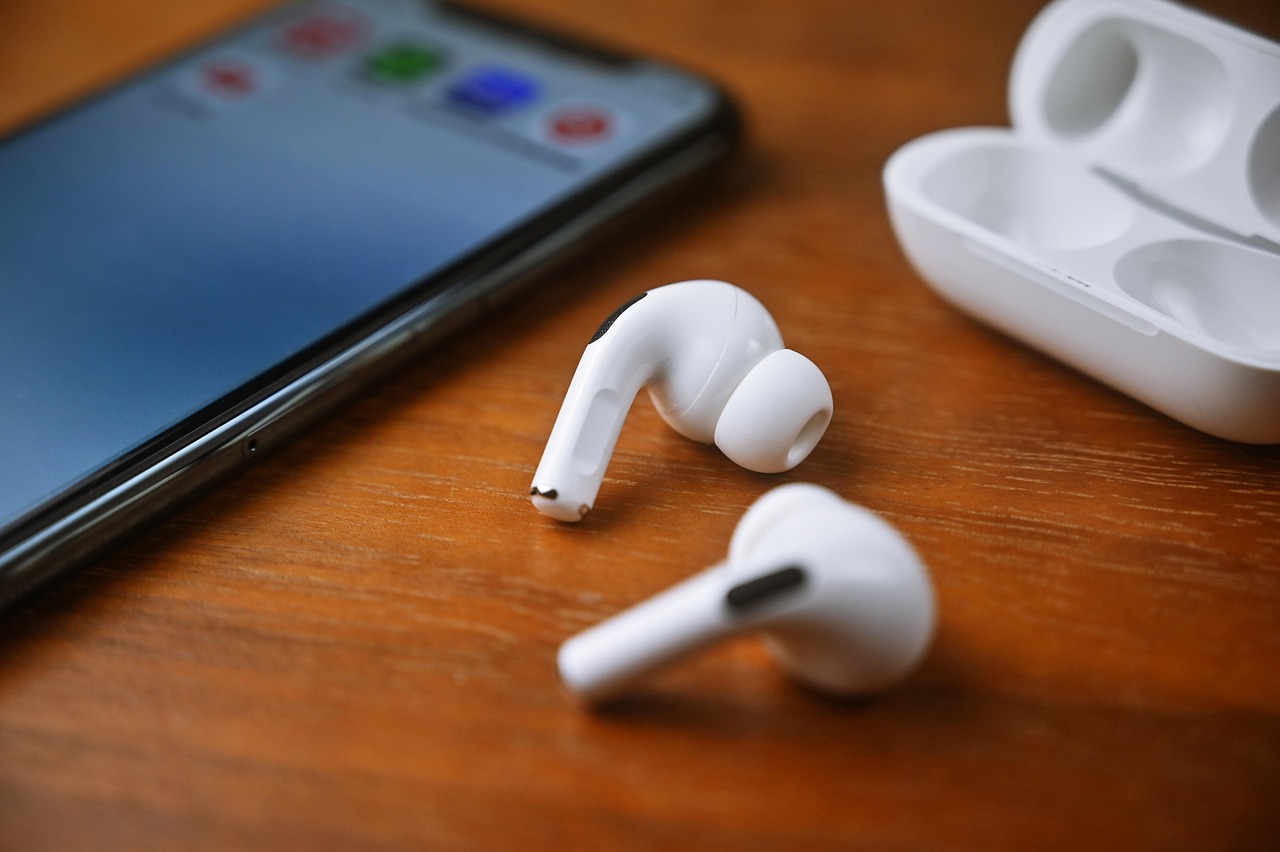
For readers following connected devices, home technology and everyday electronics, the key question is not whether a product is smart. It is whether that intelligence solves a real problem without creating new costs, privacy risks or compatibility headaches. You can follow more device coverage in the Gadgets section.
What makes smart consumer electronics different now
Earlier generations of connected gadgets often added remote control to familiar products: a speaker with Wi-Fi, a thermostat with an app or a camera that streamed to a phone. Those functions still matter, but the category has become more layered. Smart consumer electronics now combine hardware, sensors, connectivity, cloud services, on-device processing, account systems and software updates.
A modern smart device may include several layers:
- Sensors and context: cameras, microphones, motion sensors, temperature readings, health sensors, occupancy data or energy measurements.
- Connectivity: Wi-Fi, Bluetooth, Thread, cellular, Ethernet or a mix of protocols depending on the device type.
- Automation: scheduled actions, scene control, routines, alerts and conditional behavior.
- Intelligence: AI-assisted audio, image recognition, noise reduction, adaptive temperature control, activity detection or personalized recommendations.
- Lifecycle support: firmware updates, security patches, cloud service continuity, app support and repair options.
This is why a smart device is no longer just a piece of hardware. It is a small software platform inside a household, worn on the body, placed in a car or connected to entertainment equipment. That can create more value when the system is well designed, but it also raises expectations for reliability, support and data handling.
Current market signals show growth, but not everywhere
The consumer electronics market in 2026 is not moving in one direction. Broad industry revenue can grow while mature categories such as PCs, TVs, tablets or accessories remain replacement-driven. The practical takeaway is that smart features need to justify higher prices, especially when households are cautious about discretionary purchases.
| Signal | What the public data says | Why it matters |
|---|---|---|
| U.S. consumer tech revenue | CTA’s July 2026 forecast projected $578 billion in U.S. consumer technology retail revenue for 2026, up 4% year over year. (app-cta-umbraco-eastus-prod-gnbahsamfmamgfha.eastus-01.azurewebsites.net) | Growth exists, but it covers a broad mix of devices, services and technology categories. |
| Tracked U.S. technology sales | Circana forecast U.S. consumer technology sales revenue of $112 billion in 2026, up only 0.2%. (circana.com) | Many hardware categories are mature, so value has to come from better use cases rather than novelty alone. |
| Smart glasses and wearables | IDC’s 2026 wearable tracker described smart glasses as a fast-growing form factor, with forecast shipments of 13.6 million units in 2026 and 41.4% year-over-year growth. (idc.com) | Emerging categories can grow quickly while still remaining smaller than smartphones, TVs or standard wearables. |
| Smart home interoperability | The Connectivity Standards Alliance released Matter 1.6 in June 2026, after Matter 1.5 added camera-related capabilities in November 2025. (csa-iot.org) | Compatibility is improving, but product support still depends on device type, controller and ecosystem implementation. |
| IoT security labeling | The FCC established a voluntary cybersecurity labeling program for wireless consumer IoT products, known as the U.S. Cyber Trust Mark. (govinfo.gov) | Security claims are becoming more visible at the point of purchase. |
AI features are shifting from spectacle to context
AI is one of the most visible changes in smart consumer electronics, but not every AI feature is equally useful. The strongest uses tend to be narrow, contextual and easy to verify: headphones that improve voice pickup in noisy environments, cameras that distinguish people from passing vehicles, TVs that optimize picture settings, wearables that summarize health trends or smart glasses that support hands-free capture and audio assistance.
The value of AI depends on where the processing happens and what data is involved. On-device processing can reduce latency and may limit how much raw data must leave the device. Cloud processing can support larger models and more complex services, but it also increases the importance of account security, data policies and service continuity. Buyers should not assume that a product is private simply because it advertises AI. They should check what data is collected, whether voice or image data is stored, how long data is retained and whether key features still work if a subscription is canceled.
There is also a pricing issue. Deloitte’s 2026 hardware and consumer technology outlook highlighted the role of AI-optimized processors, edge-computing devices and high-performance chips in shaping hardware markets. That does not mean every household needs an AI gadget immediately. It means component choices and AI positioning are increasingly influencing product design, supply chains and premium pricing. (deloitte.com)
Interoperability is improving, but buyers still need to check the details
Smart home fragmentation has long been one of the biggest barriers to adoption. A household might have one app for lights, another for cameras, another for a thermostat and several voice assistants competing for control. Matter was created to reduce that problem by providing a common application layer for smart home devices.
The standard has matured since its first release. Matter 1.5 introduced support for cameras, closures, soil sensors and expanded energy management capabilities, while Matter 1.6 focused on setup, multi-ecosystem experiences and more context-driven control. These improvements point toward a future where more devices can be added and controlled across major ecosystems with less friction. (csa-iot.org)
However, Matter is not a magic switch that makes every feature work everywhere. A device may support basic on, off or sensor functions through Matter while reserving advanced settings for the manufacturer’s app. Some devices require a Matter controller, and Thread-based devices may need a Thread border router. Cameras, energy devices and complex appliances can also depend on ecosystem support that arrives later than the standard itself.
What to check before buying a Matter device
- Confirm that the specific device type is supported by the ecosystem you use.
- Check whether the product uses Wi-Fi, Ethernet or Thread, and whether you already have the required controller.
- Look for a clear firmware update policy, not just a compatibility logo.
- Review which features work through Matter and which require the brand’s own app.
- Consider local control if you want the device to keep functioning during internet outages.
Security labels and update policies are becoming buying criteria
Smart consumer electronics can collect sensitive information about homes, schedules, voices, images, children, health and location. That makes security a product feature, not a technical footnote. The FCC’s U.S. Cyber Trust Mark program is voluntary, but it reflects a broader push to make consumer IoT cybersecurity easier to evaluate. The FCC’s final rule was published in the Federal Register in July 2024, and 2026 notices showed continued administrative activity around the program. (govinfo.gov)
NIST’s consumer IoT cybersecurity baseline work also shows what buyers and manufacturers should care about: device identification, secure configuration, data protection, interface access control, software updates, cybersecurity state awareness and documentation. These topics sound technical, but they translate into everyday questions. Can the device receive updates? Can default passwords be changed? Does the company explain how long it will support the product? Can the user delete data?
For households, the basic advice remains consistent: use unique passwords, enable multifactor authentication where available, keep firmware updated, review privacy settings and retire devices that no longer receive security updates. The Federal Trade Commission and NIST both emphasize these practical steps for internet-connected devices. (consumer.ftc.gov)
Energy management is becoming a real smart home use case
Energy control is one of the clearest areas where smart electronics can move beyond convenience. A connected light bulb by itself may not transform a household’s energy use. A coordinated system, however, can manage temperature, lighting, plug loads and schedules together. See also: Components.
ENERGY STAR’s Smart Home Energy Management Systems program recognizes packages that help households simplify, reduce and manage energy consumption. A qualifying package requires, at minimum, an ENERGY STAR certified smart thermostat, lighting and monitor or control of plug loads, while other devices such as appliances, EV chargers and smart security can be added. (energystar.gov)
Connected functionality can also include energy-use reporting, alerts for wasteful conditions and participation in demand response programs with consumer permission and override control. This matters because the smartest energy feature is not always the flashiest one. A thermostat that adapts to occupancy, a plug that identifies standby loads or an appliance that shifts operation away from peak demand can be more valuable than a screen-heavy gadget that adds complexity. (energystar.gov)
Durability, repair and recycling are part of the smartness test
A connected product that becomes unsupported after a short period is not very smart for the buyer or the environment. Software support, battery replacement, parts availability and recycling options should be part of the purchase decision, especially for devices that depend on cloud services.
The Global E-waste Monitor 2024, produced by ITU and UNITAR, estimated that the world generated 62 million tonnes of e-waste in 2022 and projected that annual e-waste could reach 82 million tonnes by 2030. The same reporting shows why longer useful life and formal recycling matter. (itu.int)
U.S. electronics waste data should be read carefully because the Environmental Protection Agency’s detailed selected consumer electronics figures are older. EPA estimated that 2.7 million tons of selected consumer electronics entered the municipal solid waste stream in 2018, with a recycling rate of 38.5%. That is not a 2026 figure, but it remains a useful reminder that replacement cycles have material consequences. (epa.gov)
Questions that reveal whether a gadget is built to last
- Does the manufacturer state a minimum security update period?
- Can the battery be replaced by the user or a service center?
- Can the product perform core functions without the cloud?
- Are spare parts, repair documentation or service channels available?
- Does the retailer or manufacturer offer a trade-in or certified recycling path?
How to evaluate smart consumer electronics before upgrading
The best purchase framework is practical rather than trend-driven. Before upgrading, buyers should identify the job the device needs to perform. A smart lock may solve access management for a rental property or family home, but it also adds account security and battery maintenance. A connected camera may improve awareness, but it also raises privacy questions. A smart speaker may simplify routines, but it can become frustrating if it locks the household into a single ecosystem.
Use this checklist before buying:
- Problem fit: What task does the smart function improve compared with a standard device?
- Compatibility: Does it work with the phone, voice assistant, hub or home platform already in use?
- Local operation: Which functions keep working if the internet or vendor cloud is unavailable?
- Security: Are automatic updates, multifactor authentication and clear privacy settings available?
- Data control: Can the user delete recordings, disable microphones or limit data sharing?
- Total cost: Are essential features locked behind subscriptions or paid cloud storage?
- Energy impact: Does the product reduce energy use, merely report it, or add standby consumption?
- Lifecycle: Is there a visible support, repair and recycling path?
For manufacturers and retailers, the same checklist points to better communication. Shoppers need plain-language claims: which ecosystems are supported, which functions require subscriptions, how long updates will last and what data the device collects. Vague labels such as smart, AI-powered or compatible are less useful than specific commitments.
Frequently asked questions
Are smart consumer electronics always better than regular electronics?
No. A smart device is better only when connectivity, automation or software improves the main job of the product. If the connected feature adds cost, requires a subscription, reduces reliability or creates privacy concerns without solving a real problem, a simpler device may be the better choice.
Does Matter mean any smart home device will work perfectly with every platform?
No. Matter improves interoperability, but support depends on the device type, the version implemented, the controller and the ecosystem. Some advanced features may still require the manufacturer’s app, especially for cameras, appliances and energy products.
What should buyers look for in device security?
Look for automatic software updates, a stated support period, strong account protection, multifactor authentication, clear privacy settings and the ability to delete personal data. Security labels can help, but they do not remove the need for good account and network practices.
Are AI-powered gadgets worth buying in 2026?
They can be worth buying when the AI feature is specific, useful and transparent. Examples include better noise handling in earbuds, more accurate alerts from cameras, adaptive energy control or hands-free assistance in wearables. Avoid paying extra for vague AI claims that do not explain what the device actually does.
How can smart electronics reduce energy use?
The most useful energy features coordinate behavior across devices: thermostats, lighting, plug loads, appliances and schedules. Products that report energy use, automate occupancy-based actions or support demand response with user permission are more meaningful than devices that only add a connected app.