How Did the Honeywell Smart Thermostat Redefine My Door Answering Experience
Testing the Honeywell Home X8S Changed How I Answer the Door
The Honeywell Home X8S redefines how environmental control interacts with home entry systems. Its integration of temperature regulation, motion sensing, and AI-driven automation creates a seamless experience that merges comfort with security. The thermostat no longer just manages heating or cooling—it becomes an active interface for door answering, visitor recognition, and environmental adjustment. This shift marks a new era in smart home design where climate control and access management operate as one cohesive ecosystem.
Integration Between Climate Control and Smart Home Systems
The convergence of climate management with connected devices has reshaped how smart homes operate. Honeywell’s evolution illustrates this transformation clearly, showing how thermostats have become central hubs in intelligent domestic networks.
The Evolution of Honeywell’s Smart Ecosystem
Honeywell’s journey from analog thermostats to the Honeywell smart thermostat series represents decades of innovation. Early models focused on programmable scheduling; modern systems now use AI to interpret occupancy patterns and energy demand. These devices analyze temperature preferences alongside behavioral data, enabling predictive comfort adjustments without manual input. Interoperability plays a vital role here—connecting HVAC systems with lighting, sensors, and security platforms through standardized protocols like Zigbee and Wi-Fi ensures consistent communication across devices.
The Role of Interoperability in Connecting Temperature Control With Home Automation
Interoperability enables each device within Honeywell’s network to contribute data that enhances overall system intelligence. For instance, when a motion sensor detects activity near an entrance, it can signal the thermostat to adjust airflow toward occupied zones. This coordination reduces energy waste while maintaining comfort. By supporting open APIs, Honeywell allows third-party integrations that extend beyond its proprietary ecosystem, encouraging collaboration between different smart home brands.
How the Honeywell Ecosystem Supports Multi-Device Synchronization
Synchronization across multiple devices ensures that environmental conditions remain consistent throughout a property. A change made on one thermostat propagates instantly to others linked within the same network zone. This synchronization also extends to mobile applications and voice assistants, maintaining uniform settings whether users interact via smartphone or wall-mounted interface.
Linking Environmental Control With Access Management
The integration between climate systems and access management marks a significant step toward unified situational awareness within residential environments.
Exploring How the Honeywell Smart Thermostat Interacts With Door Sensors and Cameras
Modern Honeywell smart thermostat models integrate directly with door sensors and cameras through cloud-based APIs. When a door opens or motion is detected at an entry point, the thermostat can display live video feeds or status updates on its touchscreen interface. This immediate feedback loop allows residents to verify visitors without leaving their current environment.
Data Flow Between HVAC Systems, Smart Locks, and Video Doorbells
Data exchange occurs through encrypted wireless protocols that connect HVAC controllers with smart locks and video doorbells. When someone rings the bell, the system can momentarily adjust ventilation near the entrance or activate lighting scenes for better visibility. The data flow remains bidirectional—entry events inform environmental responses while system diagnostics update the central hub for continuous optimization.
The Significance of Unified Control in Enhancing Situational Awareness
Unified control consolidates all relevant information—temperature status, door activity, camera feeds—into one accessible dashboard. This approach minimizes cognitive load for users managing multiple systems independently. More importantly, it enhances safety by providing real-time contextual awareness during unexpected events such as late-night visitors or package deliveries.
Redefining the Door Answering Experience Through Smart Thermostat Integration
As connected ecosystems mature, thermostats evolve from passive regulators into interactive nodes capable of managing entry communication intelligently.
Intelligent Notifications and Contextual Awareness
When motion or doorbell triggers occur, the Honeywell smart thermostat sends adaptive notifications that include visual identifiers like visitor thumbnails or timestamps. Its AI algorithms cross-reference these alerts with occupancy schedules to determine whether someone is expected. If visitors arrive during hot weather, the system might pre-cool nearby zones before doors open to maintain indoor balance.
Adaptive User Interfaces Displaying Entry Activity on Thermostat Screens
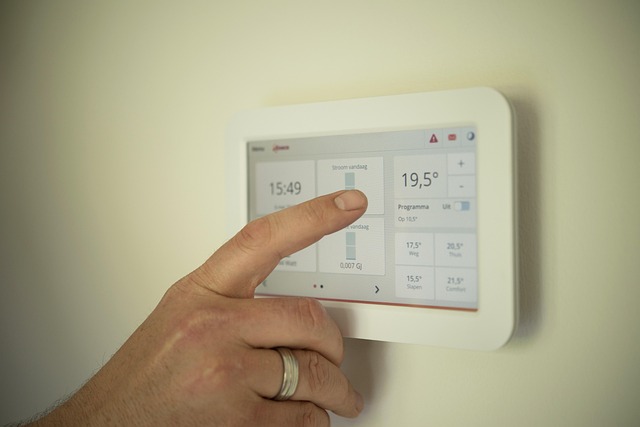
Thermostat screens now serve as compact dashboards displaying live entry activity alongside temperature metrics. Users can view who is at the door directly from their HVAC control panel without switching apps or devices—a small but meaningful improvement in convenience.
Leveraging Environmental Data to Adjust Comfort Levels When Visitors Arrive
Environmental sensors detect humidity changes or drafts caused by opened doors and automatically recalibrate airflow accordingly. This dynamic response maintains stable indoor conditions even during frequent entries or exits.
Voice and App-Based Interactions for Seamless Responses
Voice control and mobile connectivity extend user interaction beyond physical interfaces, creating flexible ways to manage both climate and access simultaneously.
Integration With Voice Assistants for Hands-Free Door Answering
Compatibility with major voice assistants allows residents to answer doors verbally while adjusting room temperatures in parallel. Commands such as “show front door” or “set living room to 22 degrees” execute instantly through secure cloud channels.
Mobile App Coordination Allowing Remote Communication With Visitors
Through Honeywell’s mobile app ecosystem, users can communicate with visitors remotely using integrated audio-video streams while monitoring indoor climate data on the same screen. This dual functionality turns smartphones into portable command centers for home management.
Security Protocols Ensuring Encrypted Data Transmission During Interactions
All communications between devices employ AES-grade encryption standards similar to those recommended by IEEE 802.15 security frameworks. Encrypted tunnels prevent unauthorized interception of audiovisual feeds or temperature commands during remote interactions.
Technical Architecture Behind the Honeywell Smart Thermostat’s Connectivity
Behind every intuitive user experience lies a robust technical foundation designed for reliability under varying network conditions.
Communication Protocols and Network Layers
The Honeywell smart thermostat relies primarily on Wi-Fi for high-bandwidth tasks like video streaming but also supports Zigbee or Z-Wave for low-power sensor connectivity. Latency optimization ensures real-time responsiveness when door alerts trigger visual updates on thermostat displays. Regular firmware updates maintain compatibility with evolving network standards defined by organizations such as IEEE 802.11ax.
Latency Considerations When Managing Real-Time Door Alerts Through a Thermostat Interface
Low latency is critical when integrating live camera feeds into thermostats; even minor delays reduce perceived responsiveness during visitor interactions. Honeywell employs edge processing techniques where preliminary event filtering occurs locally before cloud synchronization completes background tasks.
The Importance of Firmware Updates for Maintaining Network Reliability
Firmware updates not only patch vulnerabilities but also refine device interoperability across new routers or IoT hubs introduced over time. Scheduled automatic updates guarantee consistent performance without requiring manual intervention from end users.
Machine Learning and Predictive Behavior Modeling
Machine learning transforms thermostats into adaptive systems capable of anticipating human behavior patterns rather than merely reacting to them.
AI Algorithms Analyzing User Routines to Anticipate Visitor Patterns
By analyzing historical entry logs from connected locks or cameras, AI models predict common visitation times—such as delivery hours—and adjust system readiness accordingly.
Predictive Temperature Adjustments Based on Expected Arrivals or Departures
If a household typically experiences morning departures around 8 AM, predictive algorithms may lower heating output shortly after occupants leave while preheating again before return times detected via geolocation triggers.
Continuous Learning Improving Both Energy Efficiency and Response Timing
Each iteration refines predictive accuracy by comparing expected versus actual outcomes, creating incremental efficiency gains over weeks of operation without explicit user programming.
Enhancing User Experience Through Design and Interface Innovation
Beyond technical sophistication lies design simplicity—the factor determining whether advanced features feel intuitive rather than overwhelming.
Adaptive Display Interfaces and User Feedback Loops
Customizable dashboard layouts allow users to prioritize relevant metrics such as indoor air quality near entrances or recent visitor logs beside temperature graphs. Feedback loops record manual overrides so future automations align more closely with user preferences over time.
Visual Indicators Linking Temperature Control With Entry Monitoring Events
Visual cues—like subtle color shifts when doors open—link physical actions with digital responses intuitively without intrusive notifications disrupting daily routines.
Feedback Mechanisms That Refine Automation Rules Over Time
Each manual correction teaches the system which automated behaviors align best with occupant intent; these insights gradually shape smarter default rules across all connected zones.
Accessibility and Multi-Zone Coordination Features
Large households benefit most from multi-zone coordination where each area responds individually yet harmonizes under one unified logic layer managed through centralized control interfaces accessible via multiple platforms including tablets or voice assistants alike.
Managing Different Zones or Rooms Based on Occupancy Detection at Entry Points
Occupancy sensors positioned near entrances trigger targeted adjustments only in active areas instead of applying blanket settings housewide thereby conserving energy without compromising comfort.
Accessibility Enhancements for Users Interacting via Multiple Devices or Platforms
Cross-platform compatibility ensures seamless transitions between wall-mounted panels smartphones wearables ensuring no single point dependency even if one interface temporarily fails.
Synchronization Between Mobile Wall-Mounted and Voice-Controlled Interfaces
Real-time synchronization keeps every interface updated so any change made verbally reflects instantly across app dashboards maintaining operational consistency throughout entire ecosystem.
Security Privacy and Data Governance in Connected Environments
Security remains foundational when linking personal space technologies especially those handling audiovisual surveillance combined with environmental analytics.
Encryption Standards and Secure Authentication Protocols
Multi-factor authentication restricts unauthorized remote access while role-based permissions define who may view modify entry notifications ensuring compliance with ISO/IEC 27001 cybersecurity guidelines.
Role-Based Permissions Governing Who Can View or Manage Entry Notifications
Administrative roles differentiate between viewing-only accounts versus full-control operators reducing accidental misconfigurations among household members.
End-to-End Encryption Safeguarding Audiovisual Data Linked to Door Answering Functions
End-to-end encryption prevents interception ensuring recorded visuals audio streams remain confidential even during cloud storage transfers adhering closely industry-standard AES-256 implementations recognized globally.
Ethical Considerations in Data Collection and Automation Decisions
Transparency governs trust; therefore responsible automation demands clarity regarding what behavioral data gets stored why it exists how long retention persists balancing convenience against privacy preservation expectations under frameworks like GDPR within European markets.
Future Implications of Integrated Smart Thermostat Technologies
As ecosystems mature future iterations promise broader interoperability predictive maintenance autonomy redefining what “home management” entails technologically socially environmentally alike.
Expanding Interoperability Across Third‑Party Platforms
Open API frameworks invite developers build custom workflows connecting unrelated brands creating richer user experiences spanning lighting entertainment security seamlessly coordinated through central hub functions originally rooted inside thermostatic operations themselves.
Predictive Maintenance and Proactive System Optimization
Diagnostic analytics monitor component health predicting failures before they disrupt service shifting maintenance model from reactive repair toward proactive prevention reducing downtime extending hardware longevity across entire network infrastructure.
FAQ
Q1: What makes the Honeywell Home X8S different from earlier thermostats?
A: It integrates environmental control with entry monitoring features like live video feeds directly on its display panel while using AI-driven automation for predictive comfort adjustments.
Q2: Can the Honeywell smart thermostat connect with non-Honeywell devices?
A: Yes it supports open API connections allowing interoperability across compatible Zigbee Z-Wave Wi-Fi enabled devices regardless of brand origin provided they follow standard communication protocols.
Q3: How does it maintain data security during remote interactions?
A: All transmissions use AES-grade encryption combined with multi-factor authentication aligned with ISO/IEC cybersecurity standards ensuring safe communication even over public networks.
Q4: Does machine learning improve energy efficiency?
A: Continuous pattern analysis helps anticipate usage reducing unnecessary heating cooling cycles thereby cutting overall energy consumption gradually improving operational efficiency week by week.
Q5: What future developments are expected in integrated thermostat technology?
A: Broader cross-platform collaboration autonomous maintenance capabilities deeper personalization based on contextual sensing likely dominate next-generation advancements within connected home ecosystems worldwide.