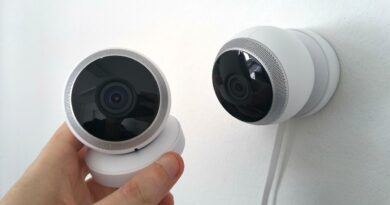
Smart home Wi-Fi in 2026 means planning for capacity, Matter, and security
Why smart home Wi-Fi matters now
Smart home Wi-Fi is no longer just a question of whether a bulb, plug, camera, or thermostat can get online. In 2026, a reliable connected-home setup depends on four practical decisions: enough capacity for many low-data devices, consistent coverage across 2.4 GHz, 5 GHz, and, where available, 6 GHz, a router or access point platform that can work alongside Matter and Thread, and security practices that treat every connected device as software on the network. Wi-Fi 7 can help in busy homes, but most smart home devices still benefit more from stable signal, firmware support, and sensible network design than from maximum headline speed. For broader connected-home coverage, see the Smart Home section.
The main shift is that Wi-Fi has become the home backbone, not the only wireless answer. Cameras, displays, appliances, speakers, and energy devices often stay on Wi-Fi because they need IP connectivity and higher throughput. Low-power sensors, buttons, locks, and some lighting products may work better on Thread, Zigbee, Z-Wave, or another low-power mesh technology, with a router or hub bridging them into the wider network.

What has changed since Wi-Fi 6 became mainstream
For several years, smart home buying advice was fairly simple: choose a solid dual-band or tri-band Wi-Fi 6 mesh system, keep 2.4 GHz available for older devices, and avoid filling the house with weak extenders. That guidance still applies, but three developments have changed the planning context.
First, Wi-Fi 7 is no longer only a draft-era marketing term. The Wi-Fi Alliance introduced the Wi-Fi CERTIFIED 7 program on January 8, 2024, with features including 320 MHz channels in countries where 6 GHz spectrum is available, Multi-Link Operation, and 4K QAM. These features are most useful for high-performance clients, wireless backhaul, gaming, AR/VR, and multi-gigabit broadband. They matter much less to a small smart plug sending a few status updates each hour.
Second, Matter has pushed the industry toward IP-based interoperability. The Connectivity Standards Alliance describes Matter as an application-layer standard that can run over Wi-Fi, Ethernet, and Thread. As a result, a Matter light bulb may not use Wi-Fi at all if it is a Thread device, while a Matter camera or appliance may depend heavily on Wi-Fi quality.
Third, regulators and standards bodies have made security more visible. The FCC established the U.S. Cyber Trust Mark framework in March 2024 for qualifying wireless consumer IoT products, and NIST IR 8425 provides a consumer IoT cybersecurity profile covering areas such as product identification, configuration, data protection, interface access control, software updates, and cybersecurity state awareness.
| Technology | What it changes for smart homes | Practical takeaway |
|---|---|---|
| Wi-Fi 6 and Wi-Fi 6E | Better efficiency than older Wi-Fi, with Wi-Fi 6E adding 6 GHz support where allowed | Still a strong choice for many homes, especially if internet speed and device count are moderate |
| Wi-Fi 7 | More capacity, lower latency features, 320 MHz channels, and Multi-Link Operation | Useful for new premium routers, mesh backhaul, and high-bandwidth clients, but not required for every smart device |
| Matter over Wi-Fi | Standardized smart home communication over an IP network | Improves cross-ecosystem potential, but product support still depends on each brand and platform |
| Thread with Matter | Low-power mesh networking for small devices | Often better for battery sensors and controls than putting every device directly on Wi-Fi |
Matter is changing the role of routers and access points
One of the more important smart home Wi-Fi trends is that the router is becoming part of the smart home platform. Matter 1.4, released by the Connectivity Standards Alliance on November 7, 2024, introduced certifiable Home Routers and Access Points. The concept combines Wi-Fi access point capability with Thread Border Router functionality, allowing the home network to support Matter devices that use either Wi-Fi or Thread.
Matter 1.4.2, released on August 11, 2025, moved further into the practical network layer. It introduced Wi-Fi-only commissioning using Wi-Fi Unsynchronized Service Discovery, allowing some devices to join Matter ecosystems over Wi-Fi without a Bluetooth Low Energy radio. The same release also added network-efficiency work, including quieter reporting to reduce unnecessary traffic from devices that would otherwise send frequent updates.
For Matter-certified network infrastructure managers, Matter 1.4.2 also set updated requirements. The CSA stated that Thread Border Routers included in such infrastructure must support at least 150 devices and be certified for Thread 1.4, while Wi-Fi access points must support 100 simultaneous associations plus Extended Sleep and Proxy ARP/NDP. This does not mean every consumer router on a store shelf can handle a very large smart home. It does show where certified smart home infrastructure is heading.
Later releases explain why this matters. Matter 1.5, announced on November 20, 2025, added support for cameras, closures, soil sensors, and enhanced energy features, while Matter 1.6, announced on June 17, 2026, focused on setup, multi-ecosystem management, and context-aware controls such as thermostat suggestions. More device categories mean more network behaviors, more software updates, and more reasons to treat the router as smart home infrastructure rather than a generic internet box.
How to design Wi-Fi around real device behavior
A smart home network should start with device behavior, not only a router spec sheet. A door sensor, video doorbell, robot vacuum, smart speaker, garage controller, and security camera all use the network differently. Grouping devices by how they behave helps avoid both underbuying and overbuying.
Cameras and video doorbells need upstream reliability
Video devices are usually the heaviest smart home Wi-Fi clients because they send data out of the home as well as receive commands. A camera near the garage, porch, or backyard often has to work through walls, brick, metal doors, or long distance from the access point. For these devices, signal strength and upload stability matter more than the router’s advertised maximum speed. Where possible, place a mesh node or wired access point closer to camera zones, and avoid leaving outdoor cameras on the weakest edge of the network.
Small sensors should not all be forced onto Wi-Fi
Battery-powered sensors and buttons usually send tiny messages and spend much of their life asleep. Wi-Fi can work, but it is not always the most efficient choice. Thread, Zigbee, or Z-Wave may offer better battery life and mesh behavior for low-data devices. A mixed design is often more reliable: use Wi-Fi for cameras, appliances, displays, and voice assistants, then use a low-power mesh for small sensors and controls.
Appliances and energy devices need long support windows
Large smart appliances, heat pumps, water heaters, EV chargers, and energy devices may stay in a home much longer than phones or routers. Matter’s energy-management expansion shows that these categories are becoming part of the connected home, but buyers should still check update policies, local control options, and ecosystem compatibility before relying on automation for essential routines. See also: Gadgets.
Security is becoming a buying criterion, not an afterthought
A smart home Wi-Fi network is only as trustworthy as its weakest device and its update path. This is why the U.S. Cyber Trust Mark matters even before it becomes common on store shelves. The FCC’s March 2024 order established a voluntary cybersecurity labeling program for wireless consumer IoT products, using an FCC IoT label with the U.S. Cyber Trust Mark and a QR code that points consumers to registry information about the product. In April 2026, the FCC selected ioXt Alliance as lead administrator, and in August 2026 it conditionally approved additional cybersecurity label administrators.
For consumers, the key point is that a label does not replace good setup habits. Its value is that security claims become easier to compare. NIST’s consumer IoT work emphasizes outcomes across the whole product, including companion apps, back-end services, update mechanisms, and data handling, not just the radio inside the device.
On the home network itself, use WPA3-Personal where all devices support it, or a secure transition mode if older devices require it. Change default administrator passwords, enable automatic firmware updates where trustworthy, retire unsupported devices, and separate higher-risk devices when the router allows guest networks, IoT networks, or VLANs. Network separation will not fix a poorly supported camera, but it can reduce the damage if one device is compromised.
A practical planning checklist for smart home Wi-Fi
The best setup is usually straightforward: strong coverage, good backhaul, documented devices, and products that continue receiving updates. Before buying another router or smart device, work through this checklist.
- Map the home by use case. Mark camera locations, home office areas, streaming rooms, garages, patios, and utility spaces.
- Keep 2.4 GHz healthy. Many smart home devices still rely on 2.4 GHz because of range and chip cost, so do not hide or disable it without checking device requirements.
- Use wired backhaul when possible. Ethernet between mesh nodes is often more valuable than upgrading every endpoint to a newer Wi-Fi generation.
- Do not judge by device count alone. A network with 80 sensors is different from one with 10 cameras. Bandwidth, latency, sleep behavior, and placement all matter.
- Check Matter support carefully. Matter compatibility may apply to certain functions only, and full feature parity across apps is not guaranteed.
- Prefer products with clear support policies. Look for stated update periods, security documentation, and a realistic way to reset, transfer, or remove devices.
- Plan for growth. If you expect cameras, EV charging, solar, or energy automation, choose infrastructure with enough headroom and management features.
Wi-Fi 7 is a reasonable upgrade when buying a premium router today, especially for homes with multi-gigabit internet, heavy wireless backhaul, or many high-performance clients. It is less urgent if the main problem is a single weak corner, an old camera with poor firmware, or a crowded 2.4 GHz band. In those cases, placement, wired backhaul, channel planning, and device replacement may help more than a faster headline standard.
Frequently asked questions
Do I need Wi-Fi 7 for a smart home?
No, not for most basic smart home devices. Wi-Fi 7 can improve capacity, latency, and mesh backhaul in demanding homes, but a well-designed Wi-Fi 6 or Wi-Fi 6E network can still support many connected devices. Upgrade for coverage, management features, security support, and backhaul quality before upgrading only for speed.
Why do so many smart devices still require 2.4 GHz?
Many smart home products use 2.4 GHz because it travels farther than higher bands and is widely supported by low-cost chipsets. The tradeoff is that 2.4 GHz is more crowded and has less bandwidth. Keep the band available, but place access points well and avoid relying on one distant router for the whole home.
Is Matter the same as Wi-Fi?
No. Wi-Fi is a network technology. Matter is a smart home application standard that can use Wi-Fi, Ethernet, or Thread underneath. A Matter device may connect over Wi-Fi if it needs bandwidth, or over Thread if it is a low-power sensor or control device.
Should smart home devices be on a separate network?
Separating devices is useful when your router supports it cleanly and your apps still work as expected. A guest or IoT network can reduce exposure, especially for cameras and older devices. However, some local-control and discovery features may require configuration, so test critical automations after making changes.
What should I check before buying a smart home Wi-Fi device?
Check the required Wi-Fi band, Matter or ecosystem support, update policy, security documentation, local control options, and whether the product needs a hub. For outdoor or edge-of-home devices, also check signal quality at the installation point before assuming the device is defective.