Tuya smart home explained for buyers, brands, and Matter users
What a Tuya smart home actually means
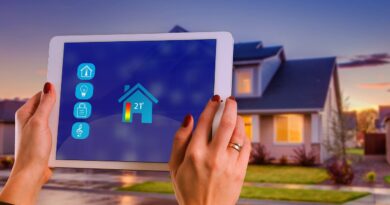
A Tuya smart home is not a single product line. It is better understood as the platform layer behind many branded smart devices. For buyers, it may be a lamp, plug, sensor, camera, thermostat, switch, or appliance that pairs with the Tuya Smart app, the Smart Life app, or a brand’s own Tuya-based app. For device makers, Tuya provides development tools across hardware, cloud, and app layers. In practice, Tuya can make a connected home easier to assemble across many product categories, but the end result still depends on the device manufacturer, wireless protocol, certification status, and update policy. Tuya reported more than 1.8 million registered developers and more than 1.2 million smart device SKUs developed on its platform by the end of 2025. (ir.tuya.com)
The important distinction is between the app a user sees and the infrastructure behind it. A product box may show a retail brand, Tuya, Smart Life, or another app name. Under the surface, the device may still use Tuya-enabled firmware, cloud services, app templates, or gateway software. That does not make every product identical. Two Tuya-compatible smart plugs, for example, can differ in relay quality, energy monitoring accuracy, electrical certification, data policy, and firmware support.
| Layer | Role in a Tuya smart home | What to check |
|---|---|---|
| Device | The physical bulb, plug, sensor, lock, camera, or appliance | Brand, rating, protocol, certifications, and firmware support |
| App | Tuya Smart, Smart Life, or a branded OEM app | Account region, device support, voice services, and update history |
| Cloud and platform | Remote access, scenes, notifications, APIs, and account services | Privacy policy, outage impact, integrations, and data handling |
| Gateway or hub | Connects Zigbee, Bluetooth mesh, Sub-GHz, or other devices | Supported protocol, Matter bridge role, and device limits |
Why the ecosystem is so common
Tuya became common because the smart home market is highly fragmented. Retailers and manufacturers often want connected products without building every mobile app, cloud service, firmware stack, and voice integration from scratch. Tuya’s model gives those companies a faster route to market. For buyers, it often means a broad range of devices that can be controlled from one familiar app.
Public Tuya investor materials show the scale behind that approach. As of March 31, 2026, Tuya said its AI Developer Platform had more than 1.97 million registered developers across over 200 countries and regions. Its 2025 annual report also described more than 3,200 product categories represented among smart device SKUs developed on the platform. Those figures are useful context, but they should not be read as a guarantee that any individual product is high quality or will receive long-term support. (ir.tuya.com)
For buyers, scale creates both value and noise. The value is choice: switches, lighting, sensors, small appliances, curtains, energy devices, and home security accessories are easy to find. The noise comes from inconsistent product pages, look-alike hardware, and broad claims such as app control, voice control, or Matter support without enough detail.
Apps, automations, and OEM versions
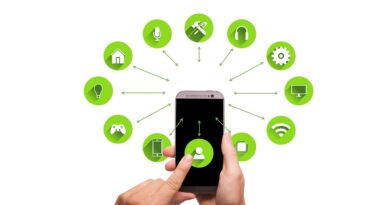
Tuya’s own documentation describes the Smart Life app and Tuya app as all-in-one apps provided by Tuya. In daily use, users can add devices, create rooms, build scenes, receive notifications, and in some cases connect with voice assistants or other smart home platforms. Tuya also offers OEM app tools that let brands create their own smart home app experience on Tuya’s platform instead of sending users to the public Tuya Smart or Smart Life app. (developer.tuya.com)
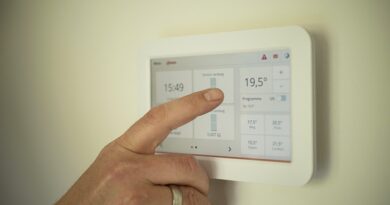
This app layer is often the main reason people choose Tuya-compatible devices. A basic automation might turn on a porch light when a door sensor opens, shut off a plug after a timer, or trigger a scene from a smart button. The value is convenience, but reliability still depends on the device connection, battery level, hub stability, router coverage, and whether the automation runs through the cloud or locally.
For brands, OEM apps can create a cleaner customer experience because the app name, interface, help content, and launch settings can be customized. Tuya’s developer documentation also shows that app store launch, privacy policy content, update notification, certificates, push services, and regional settings require configuration. In other words, an OEM app can reduce development work, but it does not remove the brand’s responsibility for support, compliance, and clear user communication. (developer.tuya.com)
How Matter changes the buying decision
Matter is important because it addresses one of the smart home’s biggest frustrations: devices locked into separate ecosystems. The Connectivity Standards Alliance released Matter 1.0 and opened the certification program on October 4, 2022. As of September 17, 2026, the latest Matter release identified in CSA’s current Matter news stream is Matter 1.6, announced on June 17, 2026, with improvements including NFC-based commissioning, Joint Fabric, thermostat suggestions, and security-related refinements. CSA also notes that the path from specification to products varies by company and product type. (csa-iot.org)
Tuya’s Matter documentation describes Matter as a unifying IP-based connectivity protocol for smart home devices, mobile apps, and cloud services. It focuses on Matter over Wi-Fi, Thread, and Ethernet, and explains that non-Matter devices using technologies such as Zigbee, Bluetooth mesh, and Sub-GHz can connect to a Matter fabric through a Matter bridge. The same documentation lists Tuya Smart alongside Amazon Alexa, Apple Home, Google Home, and Samsung SmartThings as examples of smart home platforms. (developer.tuya.com)
| Product type | What it usually means | Main caution |
|---|---|---|
| Standard Tuya Wi-Fi device | Pairs directly to Tuya Smart, Smart Life, or a Tuya-based brand app | Third-party platform support may depend on cloud integration |
| Tuya Zigbee or Bluetooth device | Often needs a compatible gateway or hub | Not every gateway supports every sub-device or feature |
| Matter-certified device using Tuya technology | Can be designed for multi-ecosystem control through Matter | Advanced settings may still live in the maker’s app |
| Matter bridge or gateway | Can expose some non-Matter devices to a Matter ecosystem | Bridged devices may not expose every native function |
For buyers and product teams, the wording on the product page matters. Matter-certified is a stronger claim than a vague statement about future support. A Matter device also still needs a suitable controller, such as a supported hub, speaker, display, phone, or platform component, depending on the ecosystem you want to use.
Buying checklist and practical limits
Before adding a Tuya smart home device, start with the job it must perform. A smart plug for a lamp is relatively low risk. An in-wall switch, lock, camera, garage controller, or heating device needs closer review because electrical safety, privacy, and failure behavior matter more. See also: Gadgets.
- Check the exact protocol. Wi-Fi is common for powered devices. Zigbee, Thread, or Bluetooth-based devices may need a hub, gateway, border router, or controller.
- Confirm the app before purchase. Do not assume Tuya Smart, Smart Life, and a retailer’s branded app are interchangeable for your specific device and region.
- Read the Matter claim carefully. Look for device type, certification status, supported platforms, and whether Matter works at launch or is only planned.
- Match electrical and regional requirements. For switches and plugs, check voltage, load type, neutral-wire needs, certifications, and installation rules. Use a qualified electrician for mains wiring.
- Ask about firmware support. A low-cost device is less attractive if the maker provides unclear update policies or no changelog.
- Test one device first. Before buying ten sensors or switches, test pairing, automations, notifications, and voice control in your actual home network.
Security and privacy deserve separate attention. CSA’s Matter FAQ explains that Matter uses device attestation certificates, requires certified product model data in its Distributed Compliance Ledger, supports over-the-air update functionality, and emphasizes privacy measures such as data minimization and end-to-end encryption. The same FAQ also notes that complete privacy protection depends on service providers and device makers, not only the standard itself. (csa-iot.org)
That point also applies to Tuya-enabled devices. A more reliable setup uses strong account passwords, multi-factor authentication where available, updated firmware, careful app permissions, and a separate guest or IoT Wi-Fi network when the router supports it. For cameras, locks, alarms, baby monitors, and other sensitive devices, prioritize brands that publish clear security, storage, and support information.
For readers comparing connected products more broadly, our Smart Home section covers related device and platform topics. The balanced conclusion is that Tuya is useful when you want device variety and fast setup, while Matter-certified products are usually the safer long-term bet when interoperability across major ecosystems is the priority.
Frequently asked questions
Is Tuya Smart the same as Smart Life?
They are closely related public apps from Tuya, and Tuya documentation describes both as all-in-one apps. However, device compatibility, account region, brand restrictions, and migration behavior can vary. Always follow the app named in the product manual or packaging.
Do Tuya devices work without the internet?
It depends on the device, protocol, hub, app, and automation type. Some local functions may continue on a local network, while remote control, cloud scenes, notifications, and third-party cloud integrations usually need internet access. Matter is designed as a local connectivity technology, but CSA explains that remote access for Matter-only devices normally requires an internet-connected controller in the home. (csa-iot.org)
Do I need a hub for a Tuya smart home?
Not always. Many Tuya Wi-Fi plugs, bulbs, and light strips connect directly to a router. Zigbee, Bluetooth mesh, Sub-GHz, and some Matter or Thread setups may require a gateway, bridge, Thread border router, or Matter controller. The product page should state this clearly.
Is a Matter Tuya device better than a normal Tuya device?
It can be better for interoperability because Matter is intended to work across supported ecosystems. It is not automatically better in hardware quality, wireless range, app design, or support policy. Treat Matter as an important compatibility feature, not a complete quality label.
Who is Tuya smart home best for?
It is a good fit for buyers who want broad device choice, app-based scenes, and affordable connected accessories. It is less ideal for users who want a tightly controlled premium ecosystem, guaranteed local-only operation, or long-term support promises from every low-cost device brand.